Read on 15 October 2026, the results page for this search contradicts itself. Most guides call an east window the forgiving one: gentle morning sun, no scorch, suits nearly everything. A plant shop second in the results calls east-facing light low to moderate, and recommends a grow light for anything set back from the glass.
Both are true, and the second one is quietly telling you why: they are describing different spots at the same window. What almost none of them do is give you a number, so this page does.

Great fit
This plant should be happy in this spot.
Just the right amount of light
Comfortable temperature
Humidity suits it
Airflow suits it
Are east-facing windows good for plants?
Two of these four sources group east and west together and one groups east with south, which is most of the reason the advice reads inconsistently.
| Published by | The figure | In its own words |
|---|---|---|
| extension.illinois.edu | High: 300 fc | “High or Bright Light (300 foot candles)”, at “East/west window: directly in front” or “South window: up to 5 feet away”. |
| extension.illinois.edu | Distance, per wall | Its low band is reached at “North window: a few feet away” but only at “South window:15-20 feet away”; its medium band at “North window: directly in front” and “South window: 3-10 feet away”. |
| extension.arizona.edu | Four and eight feet | “High Light: areas within four feet of large south-east or west facing windows”; “Medium Light: locations in a range of four to eight feet from south and east windows and west windows that do not receive direct sun.” |
| extension.msstate.edu | 1,000 fc, then 100 a few feet in | Not a floor but a falloff, from the same source: “The intensity of the light can drop from 1,000 to 100 foot-candles in the distance of only a few feet.” |
| extension.psu.edu | 100 footcandles | “a common baseline for low light is 100 footcandles.” |
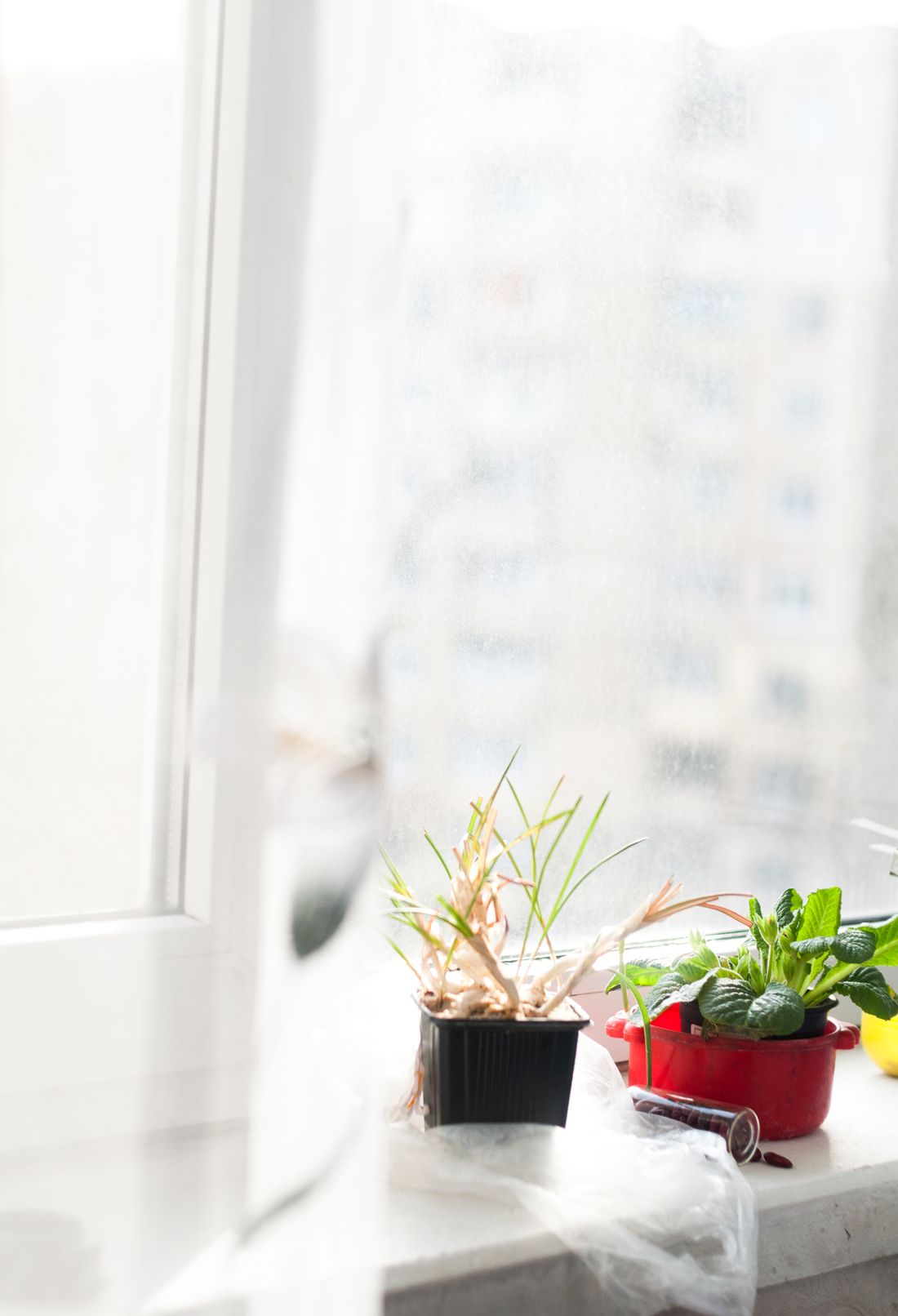
Underneath that disagreement the answer is yes, and for a reason worth knowing rather than just believing. An east window takes the sun while it is still low and cool (from sunrise until mid or late morning) and then sits in bright indirect light for the rest of the day. That is almost exactly what the care tag on a popular houseplant is asking for: a little direct sun, none of it during the hours that scorch a leaf.
The catch is in the word “window.” The forgiving reputation belongs to the glass and the step or two around it, not to the room behind it. “I have an east-facing living room” is a sentence about one wall of it.
How fast it runs out, by plant
How fast the reputation runs out depends on the plant. Five of them are scored by distance on their own pages:
- A pothos is flagged as a touch bright on the sill itself and only reaches a full score a couple of metres back.
- A rubber plant is already flagged one metre in and fails by three.
- A prayer plant carries a humidity flag the whole way, regardless of distance.
- A moth orchid is a great fit from the glass out to two and a half metres, and the thing that pulls it down is a room drying out in winter.
- A ZZ plant is flagged on the sill itself and settles from about two feet back, all the way across the room.
Worth confirming before you plan around it, because east and west look identical on a floor plan and read 6,500 against 7,800 lux at the glass with the beam at opposite ends of the day. Working out which way a window actually faces takes one observation. Some plants need the glass itself: a string of hearts here is a great fit only within about 60 centimetres, and so is an African violet.
Is an east-facing window full sun?
No. In garden terms full sun means roughly six or more hours of direct sun a day. An east window is only in the beam for the morning half of it. How many hours exactly depends on your latitude, your season and what stands outside the glass. And it collects them at the weakest intensity the day has to offer: low angle, cool air, the sun still climbing.
For a cactus or a fruiting herb, that makes it a part-sun position and they will stretch in it. For the great majority of houseplants it is close to ideal, which is the whole reason east has the reputation it does. If you want the genuinely sun-hungry list, you want a south or west sill.
The window with no beam at all is the north one, at roughly 3,640 lux at the glass against 6,500 here. It is the dimmest of the four and the steadiest, and what that steadiness is worth is its own question.
How close to the glass does the plant need to be?
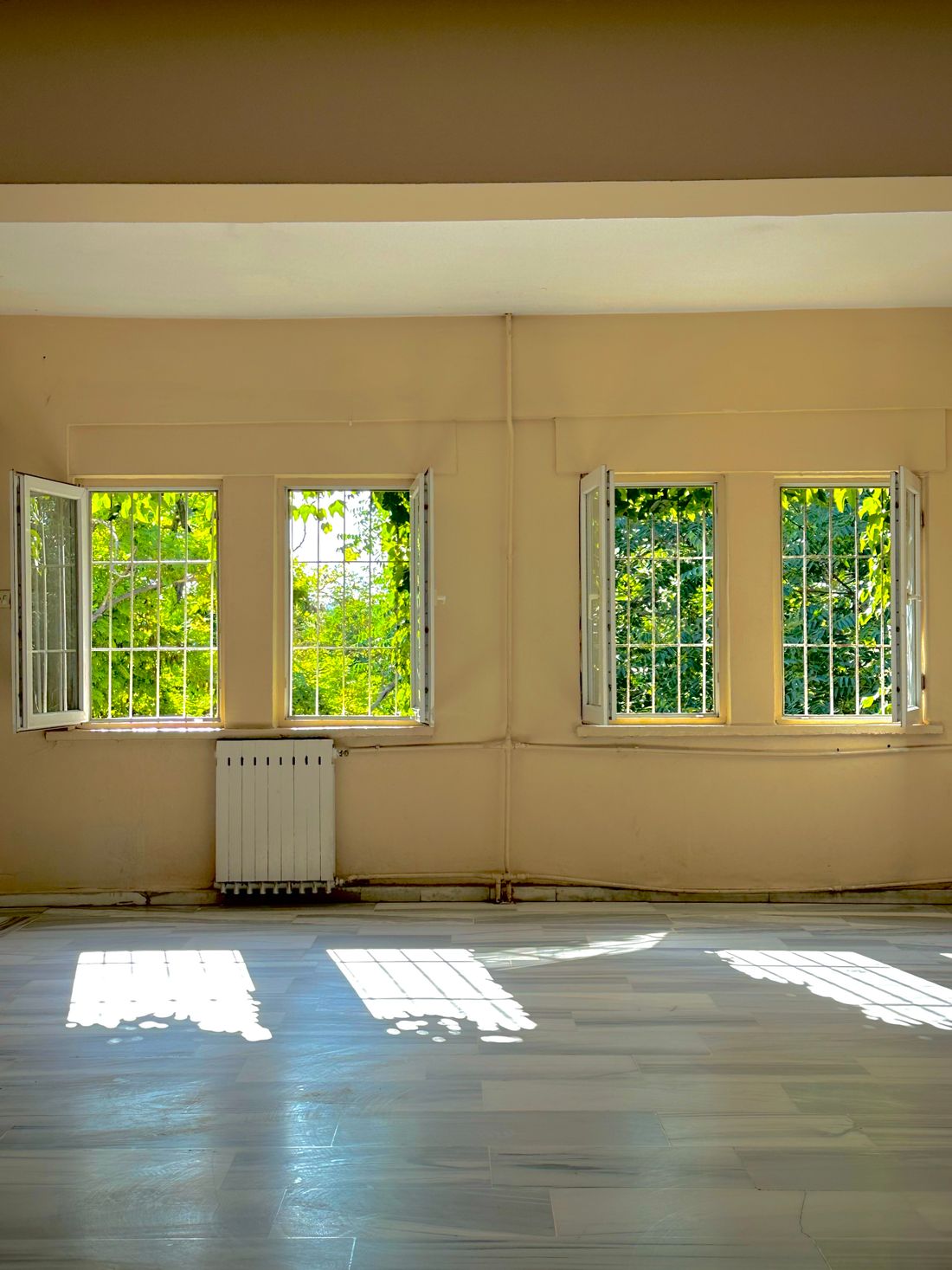
Closer than nearly everyone expects, and this is the part the plant lists leave out. So here are readings instead of adjectives.
On a clear day around midday I measured six spots in one ordinary living room. Every place a plant could plausibly live, same hour, sensor facing up, at roughly pot height:
| Spot | Reading |
|---|---|
| At the bright window | 20,000 lux |
| 1 m from the window | 15,000 lux |
| 2–3 m away, in window shade | 3,500 lux |
| Middle of the room | 570 lux |
| Darker side of the room | 119 lux |
| The dark corner | 18 lux |
The window gets about a thousand times the corner. That room’s orientation was never written down, and it does not need to be. The shape of that fall-off is what every room does, whichever way it faces. Which is the point: the gap between an east window and a south one is small next to the gap between the sill and the shelf across the room.
What the lists actually mean
So the practical translation of every “best plants for an east window” list is: on the sill, or within about a metre of it. Three metres back, “east-facing room” has stopped describing your plant’s light and gone back to describing your lease. How far a plant can sit from a window is the question underneath this one.
That translation holds for most of the plants on those lists, and there is a class of plant it inverts. Scored against a parlor palm, the sill comes out at 67 while one metre scores 99 and two and three metres back score a full hundred, because 6,500 lux at the glass is slightly more light than that plant is built to use. Worth knowing which side of the rule your plant sits on before you clear the windowsill for it.
What the glass takes before the room does
One more measured caveat, because it surprised me too: coming indoors has already taken most of the light before distance enters the picture. The glass and the walls charge a toll at the threshold, and the room charges the rest.
| Where the phone was | Reading |
|---|---|
| Outside, on the balcony rail | 19,000–21,000 lux |
| Outside, against the balcony wall | about 10,000 lux |
| Inside, right beside that window | 6,000 lux |
What plants do well facing east?
Most of the popular ones, which is why every list is long and they all look alike. The question that actually helps is where at the window each one goes.
In the morning beam, on the sill
 African violet: the classic east-window bloomer
 Hoya
Hoya Phalaenopsis orchid
 Peperomia
 Christmas cactus
 Jade: workable here, though an east sill is the dim end of what it wants
 Spider plant: a great fit from the sill to just short of 3 m
 Boston fern: morning sun is about the only direct sun a fern takes happily
 Rubber plant
Just off the beam, within a metre
 Monstera
 Pothos and philodendrons: a metre back, or a metre and a half in summer
 Peace lily: a metre and a half back, where the bright flag clears
 Calathea and prayer plant: they crisp in the beam, colour up beside it
 Fiddle leaf fig: within two feet of the glass, no further
Further back (two to three metres, still in the bright half of the room) the honest list gets shorter and changes in kind: ZZ plant, snake plant, dracaena, aspidistra, Chinese evergreen. For the first two that is not a compromise: scored by distance, a snake plant is a great fit from one metre to the far end of its table, five metres back, and it is the sill that gets flagged. Past that you are in dark corner territory, where the honest answer to “what thrives here” is nothing, and the real answer is what survives.
What won’t work here (honestly)
- Hardcore full-sun plants: most cacti, many succulents, fruiting herbs. Morning sun alone is below their budget; they stretch, pale, and stop flowering rather than die, which makes it easy to miss for a season. An east window is a common home for a kitchen herb pot, and we scored basil on every sill a kitchen can offer without finding one that clears the bar.
- Anything on the far wall. The generous reputation covers the sill and a step around it. The bookshelf opposite is a different spot with a different answer, and we measured how fast it falls off.
- An east sill with a condition attached. A radiator underneath it, a curtain that stays shut, deep eaves or a neighbouring wall outside. Each of those quietly removes the thing the list was counting on. Compass direction does not survive contact with the actual building.
The fern that struggled at a bright window had plenty of light
Three cobra ferns, same age, mounted on matching boards. Two went up on the balcony wall outside, over the air-conditioning unit. The third got what looked like the kind spot: sheltered, indoors, right by the window.
What actually separated them
The outdoor pair measured around 10,000 lux, the indoor one 6,000. Not a dramatic gap, and 6,000 at the glass is a perfectly respectable reading. On light alone the sheltered fern should have been fine.
A month later the outdoor two were pushing new fronds and looked glossy. The sheltered one had gone black at the tips, one frond at a time. Light was never the variable. The indoor air never moved, so the board took days to dry out after every watering. I stopped arguing with it and moved it out to join its siblings.
That is the case for treating a window position as a spot rather than a direction. Light, temperature, humidity and airflow all vary at the same window, and any one of them can be the one that decides. An east sill in a room where the air never moves is not the east sill the lists are describing. And you cannot see the difference, which is why plants die in rooms their owner was sure about.
Before you commit the spot
No phone to hand? The shadow test gets you the tier with nothing at all, and the ten-second method covers how to read a spot properly, including why a tier beats a precise-looking number.
By GrowSpot · Published July 23, 2026 · Last updated August 30, 2026
