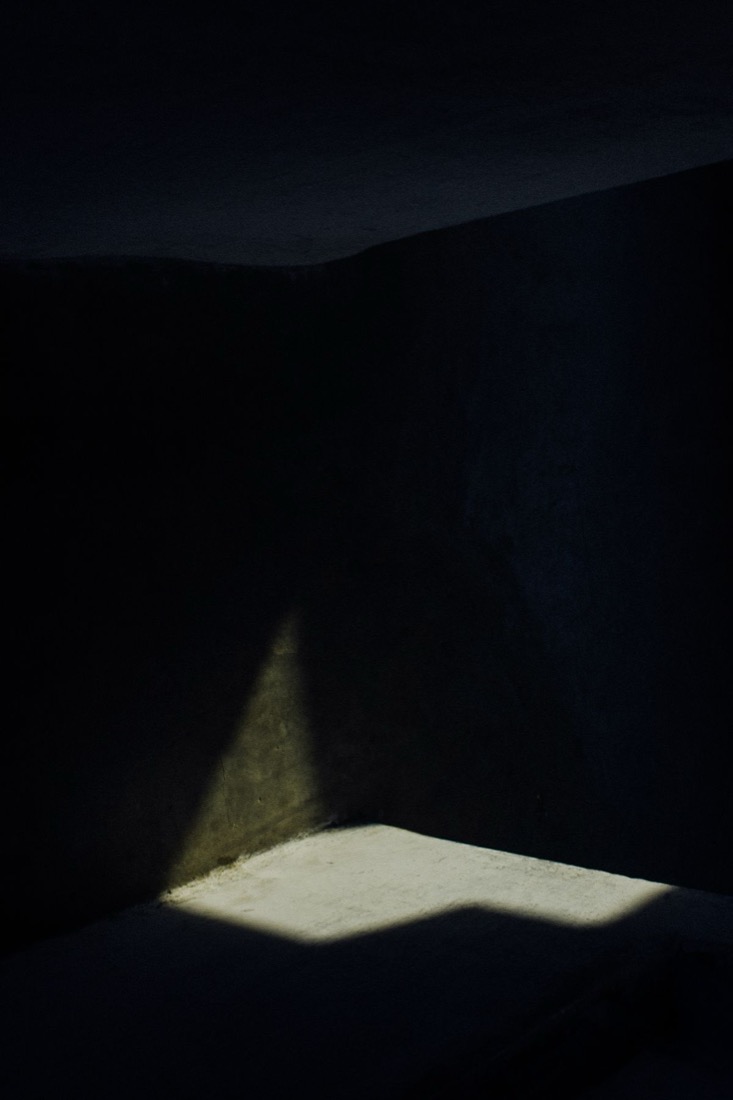
Every plant site has a “plants for dark corners” list. This page is more honest than most: the majority of dark corners cannot support any living plant. Not “only hardy ones”: none.
That’s not pessimism, it’s a number. In one living room we measured, the bright window read 20,000 lux at midday. The dark corner of the same room read 18 lux: less than 0.1%. A thousandfold drop, inside one room. See the full six-spot measurement.
Both of those came off a meter rather than out of a model, and they sit inside a wider pile we publish openly: 159 meter readings at 137 real spots, 30 of the 111 indoor ones falling below 270 lux, which is under the floor of every published low-light tier.
The corner didn’t look dark. It looked like “a spot that could use a plant.” That’s the trap: eyes adapt so smoothly that a 99.9% light drop reads as “a bit dimmer.”

Worth a try
It can work here with a little care.
A little dim, but workable
Comfortable temperature
Humidity suits it
Airflow doesn't suit it
We scored every plant those lists recommend, in the corner we measured
One of these definitions names a corner in so many words, and one names the level below which it stops being a light question.
| Published by | What it says about a corner | In its own words |
|---|---|---|
| extension.arizona.edu | More than eight feet | “Low Light: areas more than eight feet from windows as in the center of a room, a hallway or an inside wall.” |
| extension.msstate.edu | 8 or 10 feet | “It is difficult to grow plants in dimly lit areas more than 8 or 10 feet from windows.” It names “corners, bookcases, tables, or rooms with no windows at all”. |
| extension.msstate.edu | Under 50 fc | “Usually, an intensity of less than 50 foot-candles will not sustain plant life for very long.” |
| extension.psu.edu | 100 footcandles | “a common baseline for low light is 100 footcandles”, with one measured spot “as low as 25-foot candles in mid-morning”. |
| extension.msstate.edu | 1,000 fc, then 100 a few feet in | How fast a corner gets there: Not a floor but a falloff, from the same source: “The intensity of the light can drop from 1,000 to 100 foot-candles in the distance of only a few feet.” |
| extension.illinois.edu | 75 fc | Its low band is “Low Light (75 foot candles)”, against “Outdoors…10,000 to 12,000 foot-candles.” |
On 2026-08-29 we read three “dark corner” plant lists end to end and wrote down every plant each one names. Eighteen plants are named by two or more of the three. Not one of the three pages states a light level — no lux, no foot-candles, no hours. What they state instead is confidence: one says a plant handles “even absolute darkness”, another that a plant “thrives in places without sunlight”. The third, run by a horticultural brand, says the opposite in plain words: “All indoor plants need at least some light in order to survive.”
So we put all eighteen in the corner we had measured at 18 lux.
Every row, one plant each (18)
| The plant, and how many of the three lists name it | What our care data asks for | Verdict |
|---|---|---|
| Pothos · named by 3 | low, shade-friendly light | Not the best fit right now, 43/100 |
| Chinese evergreen · named by 3 | low, shade-friendly light | Not the best fit right now, 46/100 |
| Cast iron plant · named by 2 | low, shade-friendly light | Not the best fit right now, 43/100 |
| Snake plant · named by 2 | low, shade-friendly light | Not the best fit right now, 43/100 |
| Peace lily · named by 2 | low, shade-friendly light | Not the best fit right now, 43/100 |
| ZZ plant · named by 2 | low, shade-friendly light | Not the best fit right now, 43/100 |
| Spider plant · named by 2 | bright, indirect light | Not the best fit right now, 41/100 |
| Parlor palm · named by 2 | low, shade-friendly light | Not the best fit right now, 46/100 |
| Lucky bamboo · named by 2 | bright, indirect light | Not the best fit right now, 41/100 |
| Heartleaf philodendron · named by 2 | low, shade-friendly light | Not the best fit right now, 43/100 |
| Corn plant · named by 2 | bright, indirect light | Not the best fit right now, 41/100 |
| Arrowhead vine · named by 2 | bright, indirect light | Not the best fit right now, 41/100 |
| Nerve plant · named by 2 | bright, indirect light | Not the best fit right now, 35/100 |
| Bird's nest fern · named by 2 | low, shade-friendly light | Not the best fit right now, 39/100 |
| Maidenhair fern · named by 2 | bright, indirect light | Not the best fit right now, 39/100 |
| Peperomia · named by 2 | bright, indirect light | Not the best fit right now, 41/100 |
| Calathea · named by 2 | bright, indirect light | Not the best fit right now, 40/100 |
| Dieffenbachia · named by 2 | bright, indirect light | Not the best fit right now, 45/100 |
Eighteen plants, one verdict. That is not our shortlist failing to be generous. It is the whole recommended set of every list we read, put in a real corner, coming back with the same answer.
The obvious question is how much light it would take. Here is the most-recommended of the eighteen, on the same shelf, with only the light changed.
| Light on the shelf | Light | Verdict |
|---|---|---|
| The corner as measured | 18 lux | Not the best fit right now, 43/100 |
| A bright hallway | 100 lux | Worth a try, 60/100 |
| Floor of every published tier | 270 lux | Worth a try, 64/100 |
| Where our medium band starts | 800 lux | Great fit, 93/100 |
| A metre from a north window | 2,000 lux | Great fit, 94/100 |
The corner does not need a hardier plant. It needs about six times more light than it has to stop being a no, and over twenty times to be a great fit, and that is a lamp, not a shopping list.
Why don’t “low light plants” solve this?
“Low light tolerant” means the dim-but-alive middle zone of a room, not a corner light barely reaches. Even the famous survivors (snake plant, ZZ, pothos) have a floor, and a deep corner sits below it. What happens isn’t dramatic: the plant just stops. No new growth, slow color loss, then decline blamed on watering. Low-light failure is a slow leak, not a crash. Those same survivors are the ones every hard-to-kill list names, and put through five ordinary spots the gap between them opens and closes while the order never turns over.
If a list promises a plant that thrives in a genuinely dark corner, it’s telling you what you want to hear.
First: find out if your corner is actually dark
Some corners are salvageable. A corner diagonal to a big window can sit in the workable middle tier. You can’t tell by looking; you can tell in ten seconds by measuring.
Workable middle tier
 Snake plant
 ZZ plant
 Pothos
- All three are tolerators, with expectations managed
Genuinely dark
- No plant pick fixes it
- See the four honest options below
A corner does not have to be far from a window to belong on this page. Scoring the spots in a bedroom put a nightstand three and a half metres back level with the sill, while a shelf half a metre nearer, which the window could not see, was the one spot that dropped a verdict.
What is the best plant for a dark corner?
If the corner is genuinely dark, the honest answer is that there isn’t one, and the useful answer is that the question should change. Not “which plant tolerates this” but “what would make this spot able to hold a plant at all.”
If the corner turns out to be dim rather than dark, the field opens up considerably. That is the whole reason to read the spot before shopping: the difference between a corner at the level of that mid-room reading and one down near the corner reading is the difference between a workable spot and a slow disposal of money, and the two look almost identical to a person standing in the room.
One more thing worth knowing before you buy. A plant raised in a bright nursery and moved into a dim corner will look fine for weeks, because it is running on reserves built up somewhere else. The decline starts later, which is why the watering usually gets blamed. Judging a spot by how the plant looks in the first month tells you about the nursery rather than about your corner.
What to actually do with a dark corner
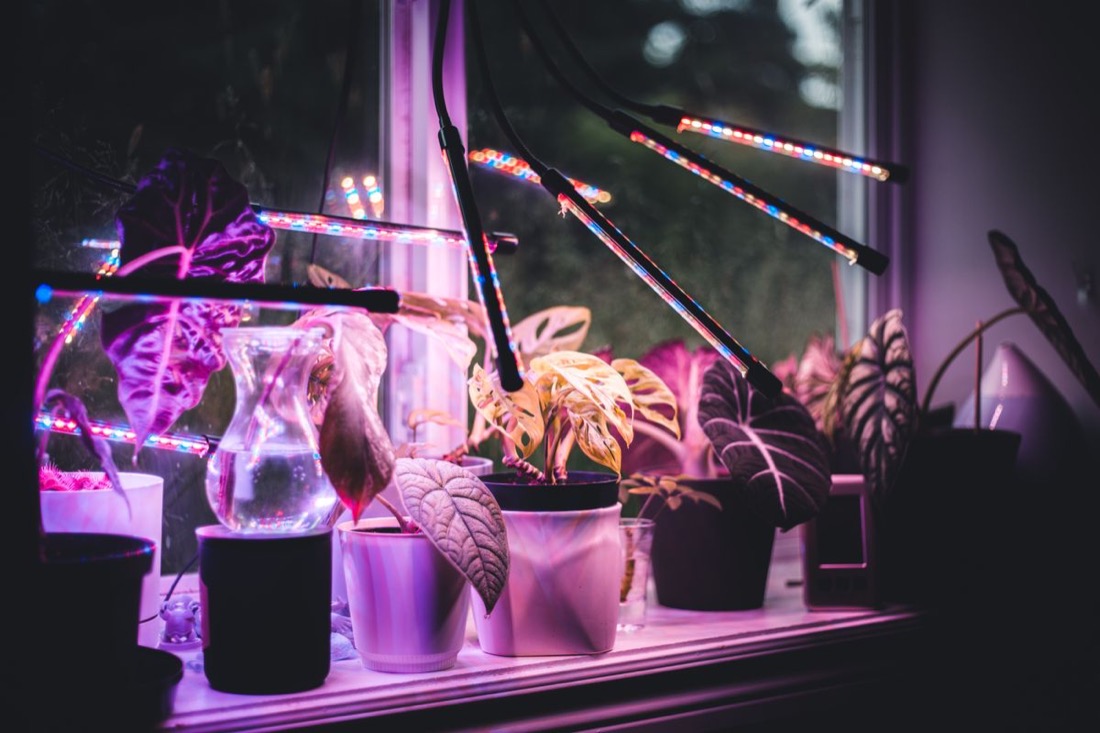
- A small grow light on a timer. The real “plant for dark corners”. It turns a dead zone into a legitimate spot, and modern ones look like normal lamps. The same setup is the honest answer for a windowless room.
- A rotation system. Two plants swapped weekly between the corner and a bright recovery spot. The corner always looks planted; no single plant slowly starves.
- Preserved or dried greenery. Zero shame in it: better than a live plant in slow decline.
- Move the wish, not the plant. Often the corner next to the dark one, a meter closer to the window, is several times brighter. The measurement tells you.
Peace lilies get sent to dark corners more than any other plant, because they tolerate one without complaining. They also stop flowering there, and two metres from a west window is where the same plant turns into a great fit.
A windowless bathroom is this same case with one extra illusion. The steam makes it feel like a greenhouse, and the light is still the dimension that decides.
By GrowSpot · Published July 23, 2026 · Last updated August 30, 2026
