The short answer: anywhere from a metre back out to three metres. An east window reads roughly 6,500 lux against the pane and the engine scores a golden pothos only 67/100 there, 99 at one metre, and a full 100 at two. The third metre changes nothing: 1,984 lux and a full 100/100. Google’s summary of this question today says to stand the plant on the sill; a care site on the same page of results says not too close. The sill they disagree about is the one spot that does not score 99 or 100.
Most placement questions produce an argument. This one produces a chorus. A pothos in an east-facing window is called ideal by care sites, best by retailers, and thriving by the people posting photographs of theirs. A grower in a plant group answers the question with fifty-five pothos, no grow lights, all of them fine.
So the useful question is not whether. Google’s own related questions include a better one, which nobody on the first page of results answers: how far away from a window can a pothos be?

Great fit
This plant should be happy in this spot.
Just the right amount of light
Comfortable temperature
Humidity suits it
Airflow suits it
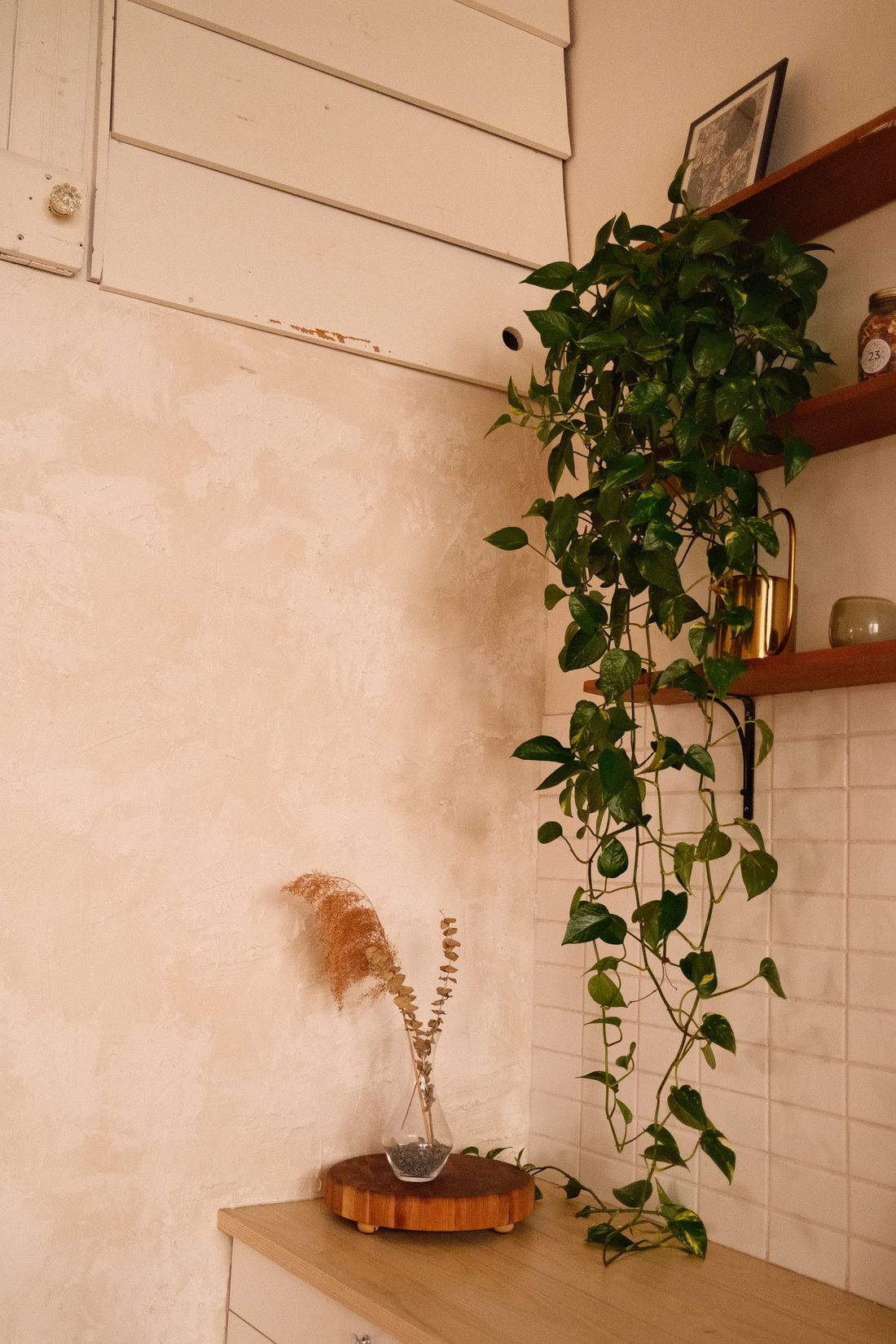
How far from an east window can a pothos sit?
Before our own scoring says anything: we gathered every published figure we could find for a pothos. 6 of them, from 5 separate sources, in 3 different units. They are reproduced below exactly as each source writes them, and nothing here is converted.
| Who publishes it | What it says a pothos needs | What the figure is |
|---|---|---|
| theplantrunner.com | 800–2,000+ lux | Standard foliage plants (pothos, Philodendron, Monstera deliciosa …) — a general band, not a single-species figure |
| houseplantjournal.com | 100 foot-candles | Pothos — minimum indirect light |
| houseplantjournal.com | 200 foot-candles | Pothos — good indirect light |
| growlightmeter.com | 5 – 10 PPFD / DLI | Pothos |
| extension.arizona.edu | 25–75 foot-candles | listed under the heading "Low Light (25–75 fc)" |
| houseplantsnook.com | 50–100 foot-candles | chart fc level |
Three metres, comfortably. At one metre the same plant scores 99, and at two metres and at three a full hundred, with all four dimensions inside their bands. That is an unusually wide band and it is why this combination gets such a consistent write-up.
At three metres the light is still just the right amount and the score is still a full hundred. The flag is at the other end of the room: pressed against the glass the light reads a bit bright and the score drops to 67 out of 100, worth a try.
Distance is not what limits every plant at this window. A prayer plant holds 91 out to two metres and loses points to humidity, not light. A monstera at this same window holds 99 out past seven feet, and loses it in the metre after that.
The numbers by distance
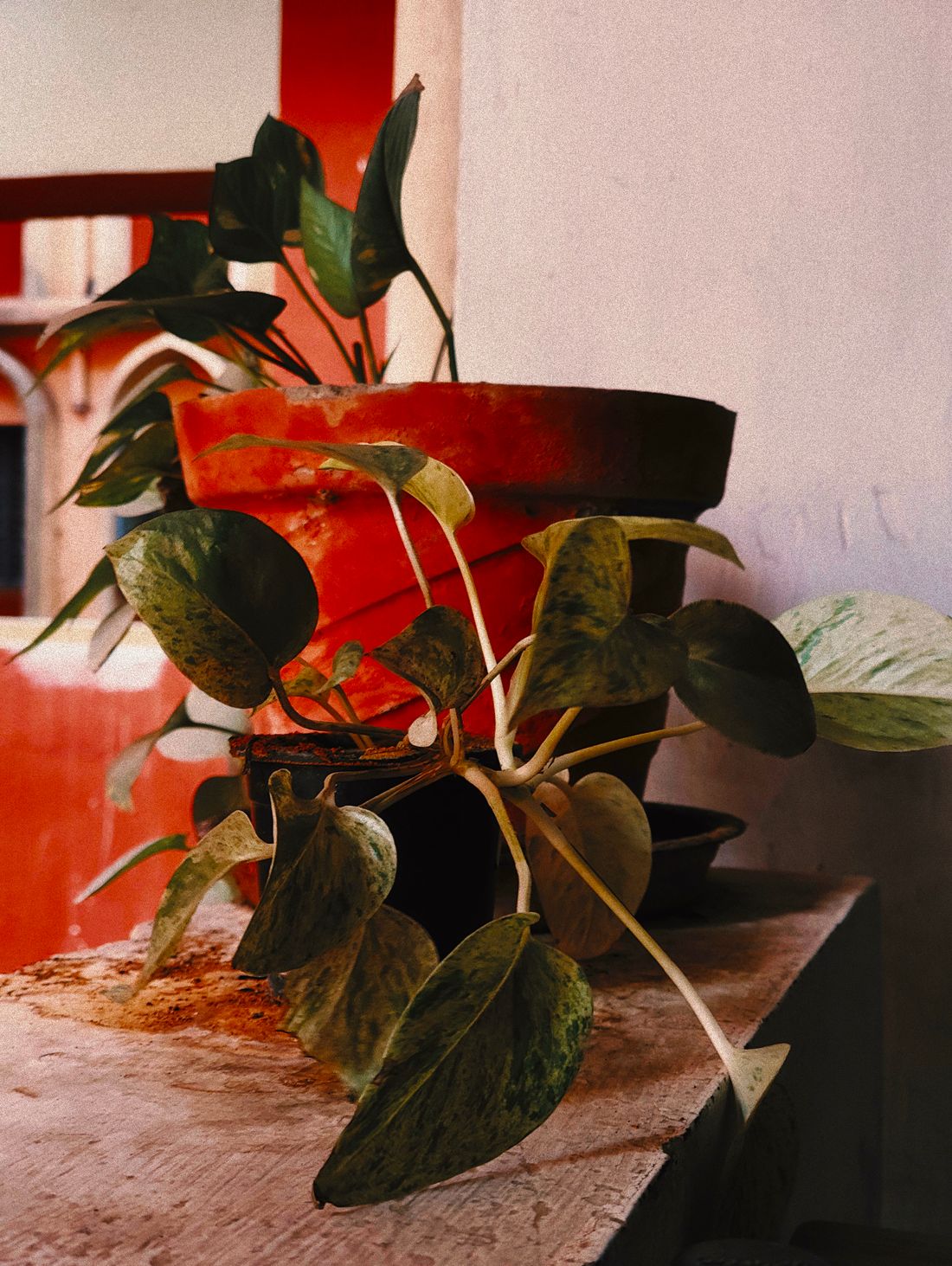
The same plant scored at four distances from the same east window, in a room at 22 °C and 55% humidity:
| Distance from the glass | Estimated light | What the light is doing | Verdict |
|---|---|---|---|
| 0.3 m, against the glass | 6,500 lux | A bit bright, but workable | Worth a try, 67/100 |
| 1 m back | 5,000 lux | Just the right amount of light | Great fit, 99/100 |
| 2 m back | 3,150 lux | Just the right amount of light | Great fit, 100/100 |
| 3 m back | 1,984 lux | Just the right amount of light | Great fit, 100/100 |
Stand a burgundy rubber plant beside it at the same four distances and the two run opposite ways: the rubber plant is at its best pressed to the glass and not a fit at all by three metres, where the pothos is only worth a try at the glass and reads 100 out of 100 from two metres back.
Those light figures are estimates rather than meter readings, built from the window direction, the distance, and typical clear-day conditions.
A 99 and two clean hundreds in a row is worth pausing on, because it is not the normal result. Most plant and window pairings have one good distance and a lot of compromise on either side of it. This one has a corridor.
East and west get written up as the same window
Care guides routinely pair them: an east- or west-facing window, as though the two were interchangeable. On the light figures they are close but not equal, and the gap runs the same direction at every distance.
| Distance from the glass | East window | West window |
|---|---|---|
| 0.3 m | 6,500 lux | 7,800 lux |
| 1 m | 5,000 lux | 6,000 lux |
| 2 m | 3,150 lux | 3,780 lux |
| 3 m | 1,984 lux | 2,381 lux |
A west window runs roughly a fifth brighter than an east window at the same distance, and it delivers that light in the afternoon on top of the day’s accumulated heat rather than in the cool of the morning. For a pothos both windows work, so the pairing is fair enough in practice.
Where it stops being fair is the near end of the room. Because the west figures start higher, a pothos at a west window is only worth a try out to a metre, while at an east window it is already a great fit one metre back. By two metres the two windows agree, and both hold a full score at three. The west table has a page of its own now, and the striking thing about it is that it never moves: the same verdict at the glass and at three metres. The west window has its own trade-offs, and heat is the main one.
Which plants belong at an east window, and how far in each one can go, is the whole of the east-facing window plants guide.
Not every pothos is filed the same way
Everything above is scored for a golden pothos. Our curated care data does not treat the cultivars as one plant: some are filed in a lower light band than others, and the split does not follow the pattern most people would guess from looking at the leaves.
We are not going to invent a tidy rule for that here, because the honest position is that the bands come from the care data and we have not measured the cultivars against each other ourselves. If the plant on your shelf is a Marble Queen, a Neon or a Manjula rather than a plain golden, it is worth checking that specific one against your specific spot instead of assuming the numbers above carry over.
Rather than describe the split, here it is. Same three-metre spot, same room, six cultivars:
| Cultivar | What our care data asks for | Verdict |
|---|---|---|
| Golden pothos | low, shade-friendly light | Great fit, 100/100 |
| Neon pothos | bright, indirect light | Worth a try, 69/100 |
| Pothos N’Joy | bright, indirect light | Worth a try, 69/100 |
| Marble Queen pothos | low, shade-friendly light | Great fit, 100/100 |
| Manjula pothos | low, shade-friendly light | Great fit, 100/100 |
| Snow Queen pothos | low, shade-friendly light | Great fit, 100/100 |
Two of those could sit side by side on the same shelf, one at a hundred and the other flagged, which is the whole argument for checking the plant you own rather than the plant its family is named after. Resist reading a rule into which ones landed where. The two lower rows are not the two most variegated ones, and we have not measured any of this ourselves.
What the variegation is telling you
A golden pothos in good light keeps its marbling. The same plant a few metres further into the room, or in a hallway, gradually stops producing it: new leaves come out plainer and greener than the ones before them.
That is not the plant getting sick. It is the plant economising, dropping the pale tissue that does not photosynthesise in favour of the green that does. It also means variegation is a slow light meter you already own, and it reads the last few months rather than today.
Long bare vine is a distance symptom
The other reliable tell is spacing. Leaves set close together along the vine mean the plant is satisfied where it is. Long stretches of bare stem between leaves mean it is travelling, and plants travel toward light.
Cutting the leggy sections back does not solve it and neither does more fertiliser. Stretching is a placement problem with a placement answer.
The room is not the spot
We put a phone down in six places in one bright living room, all six inside the same hour:
| Spot | Reading |
|---|---|
| At the bright window | 20,000 lux |
| 1 m from the window | 15,000 lux |
| 2–3 m away, in window shade | 3,500 lux |
| Middle of the room | 570 lux |
| Darker side of the room | 119 lux |
| The dark corner | 18 lux |
That room’s orientation was never recorded, so those are not east-window figures and we are not presenting them as any. The shape is the transferable part: a hook by the glass and a hook on the far wall of the same room are not the same offer, even though both get described as being in the east room. The two hooks are the same room, measured end to end, in the six-spot light survey.
Published July 31, 2026 · Last updated August 30, 2026
