Scored for a Burgundy rubber tree at 22 °C and 50% humidity, an east sill at 6,500 lux comes back 98 out of 100, one metre back 67, two metres 64, and three metres back, at 1,984 lux, 47 with the light failing. Near has to mean within about a metre.
This is one of the friendlier questions to search. A rubber plant will appreciate an east-facing window, says one care site. It can do well in an east-facing window, says another. They do best when placed near an east-facing window, says a third. In front of, next to, near: everyone agrees, and everyone uses a preposition instead of a number.
We scored the same plant at four distances from the same east window. It went from 98 out of 100 to a failing verdict inside three metres, which is the steepest fall of any plant and window pairing in this series.

Worth a try
It can work here with a little care.
A little dim, but workable
Comfortable temperature
Humidity suits it
Airflow suits it
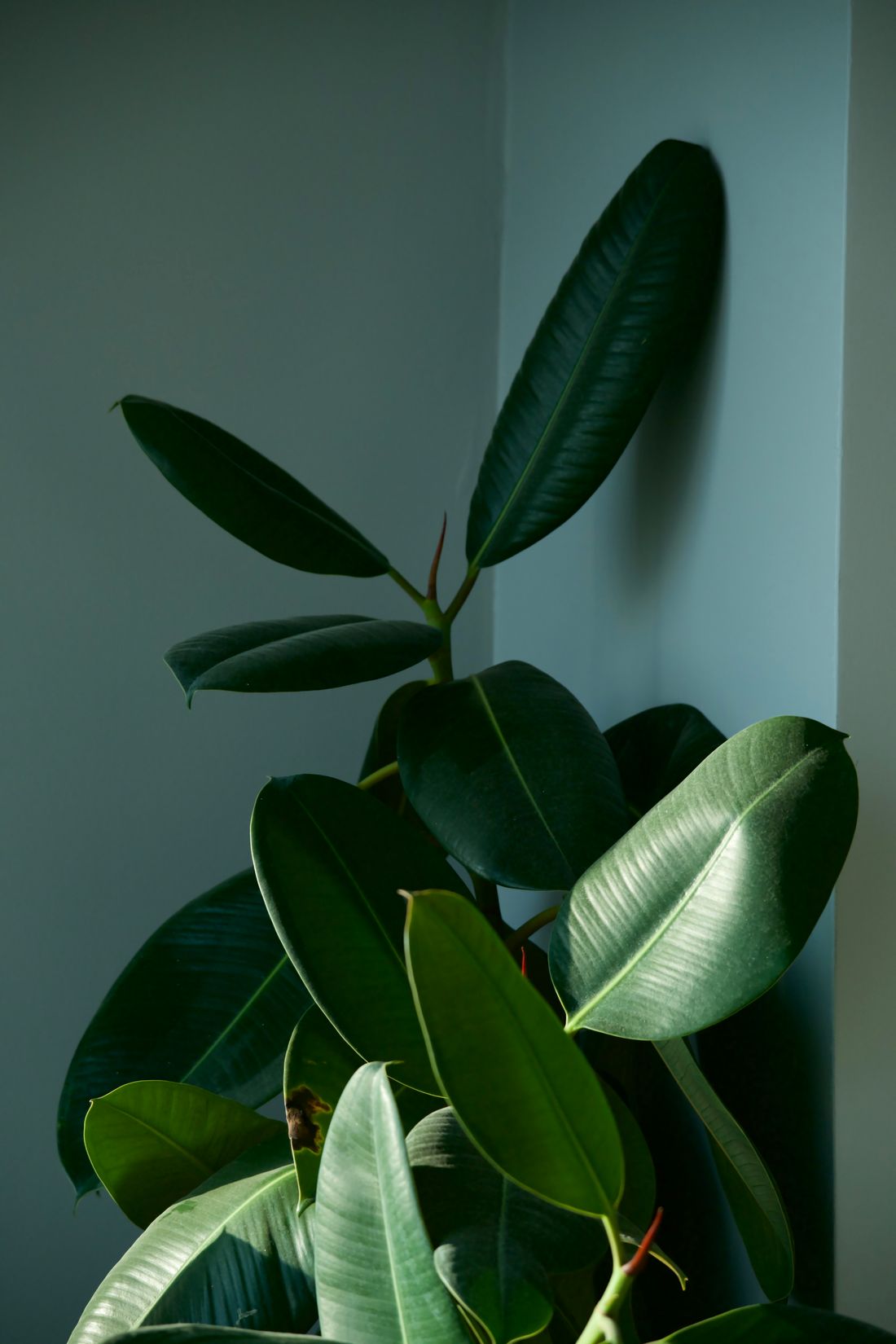
How near is near?
Before our own scoring says anything: we gathered every published figure we could find for a rubber plant. 7 of them, from 5 separate sources, in 2 different units. They are reproduced below exactly as each source writes them, and nothing here is converted.
| Who publishes it | What it says a rubber plant needs | What the figure is |
|---|---|---|
| theplantrunner.com | 800–2,000+ lux | Standard foliage plants (pothos, Philodendron, Monstera deliciosa …) — a general band, not a single-species figure |
| bbg.org | as little as 250 foot-candles | India Rubber Tree (Ficus elastica) |
| bbg.org | 4,000 to 8,000 foot-candles | India Rubber Tree (Ficus elastica) |
| extension.arizona.edu | 75–150 foot-candles | listed under the heading "Medium Light (75–150 fc)" |
| houseplantjournal.com | 400 FC (80 µmol) foot-candles | minimum indirect light level |
| houseplantjournal.com | 800 FC (160 µmol) foot-candles | good indirect light level |
| houseplantsnook.com | 200–400 foot-candles | chart fc level |
Against the glass this plant scores 98/100, with all four dimensions in band. One metre back the light dimension is already flagged and the score has dropped by a third. At three metres, roughly where a sofa sits, the light dimension fails outright and the verdict drops to not the best fit.
That is the entire finding. There is no comfortable corridor here, which is what makes the vague advice expensive: a person reading “near an east window” and putting the pot on a plant stand a metre away has followed the instruction and landed outside the band.
| Distance from the glass | Estimated light | What the light is doing | Verdict |
|---|---|---|---|
| 0.3 m, against the glass | 6,500 lux | Just the right amount of light | Great fit, 98/100 |
| 1 m back | 5,000 lux | A little dim, but workable | Worth a try, 67/100 |
| 2 m back | 3,150 lux | A little dim, but workable | Worth a try, 64/100 |
| 3 m back | 1,984 lux | Too dim here | Not the best fit right now, 47/100 |
Those light figures are estimates rather than meter readings, built from the window direction, the distance, and typical clear-day conditions.
Compare that with the same table for a pothos, which holds 100/100 to a metre and 99 at two metres from the same window. Two plants, one window, and completely different amounts of room to work with. The pothos version is here.
Why an east window at all, then?
Because the alternative most people reach for is worse in a different way. A rubber plant is a high-light plant that also marks permanently when it scorches, and it does not shed and replace foliage quickly enough to grow out of a mistake.
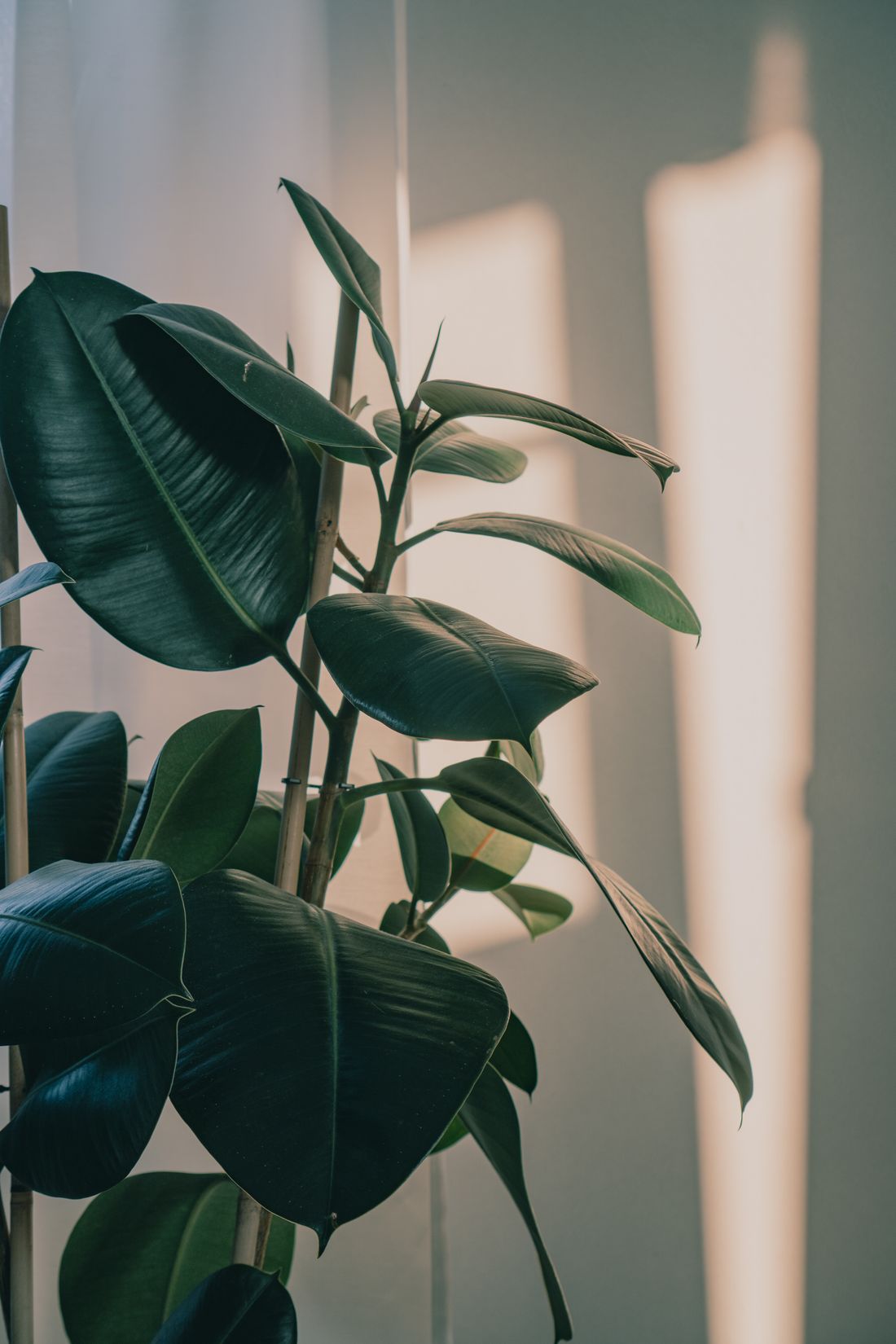
An east window gives it strong light in the cool half of the day, which is the combination that suits it: enough intensity to keep the leaves dark and the growth moving, without the afternoon heat that comes with a west sill or the midday load of an unshaded south one. The trade is that east light is weaker to begin with, so the margin for distance is thin.
How thin is easiest to see by swapping the window. At a west one the same plant is still on 98/100 a metre back, where an east window has already dropped it to 67. A west window is worth about that extra metre, and it charges for it in afternoon heat.
Swap the plant, not the window
Swapping the plant instead of the window gives the sharper comparison. A parlor palm at these same four spots scores 67 against the glass, 99 at one metre and 100 at two and three metres back, which is this table read backwards. On that plant the same east light is a surplus rather than a budget, and the sill is the position it likes least.
The same window suits plenty of others, and where each one goes at an east window is the question that guide answers.
What going too far back looks like
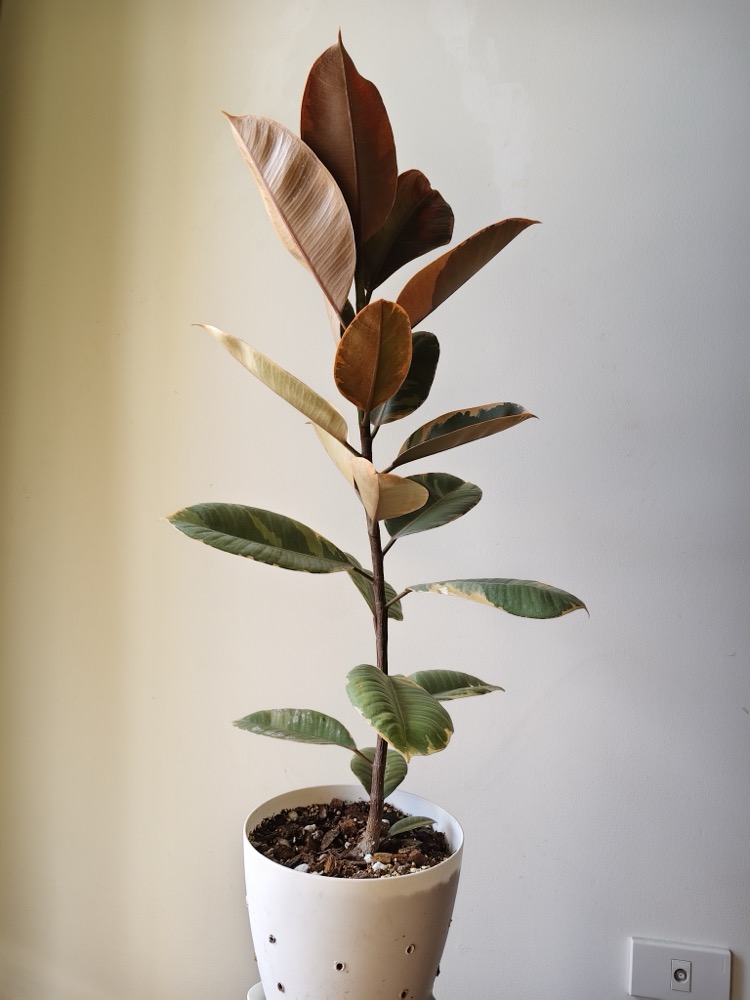
The failure here is slow and easy to misread as normal ageing.
- Leaves get further apart. New growth arrives with longer bare stem between the leaves, so the plant looks sparse rather than sick. That spacing is a light reading.
- The bottom leaves go first. Lower leaves yellow and drop while the top keeps growing, because the plant is triaging a light budget that no longer covers the whole plant.
- Burgundy varieties turn green. The dark red pigment is expensive to maintain, and it is the first thing dropped when light gets tight. A plant that arrived deep maroon and is now plain green has usually moved, or has been left where the light changed around it.
- New leaves come out smaller. Compare the newest leaf to one from a year ago. That comparison is more reliable than anything you can judge by eye about the room.
Not every east-window plant is this sensitive to the walk backwards: a prayer plant holds the same 91 at the glass, at one metre and at two.
The move that causes most of the damage
The other common failure runs the other way. A rubber plant that has been living a few metres back, correctly diagnosed as light-starved, gets carried to the sill in one step and marks its leaves within days.
Both the diagnosis and the destination were right. The speed was wrong. Move it in stages over two or three weeks, roughly half the remaining distance at a time, and the same sill is fine.
The room is not the spot
We measured six spots in one bright living room, and the spread inside that single room is larger than the spread between any two window directions.
| Spot | Reading |
|---|---|
| At the bright window | 20,000 lux |
| 1 m from the window | 15,000 lux |
| 2–3 m away, in window shade | 3,500 lux |
| Middle of the room | 570 lux |
| Darker side of the room | 119 lux |
| The dark corner | 18 lux |
That room’s orientation was never recorded, so those are not east-window figures and we are not presenting them as any. What carries over is the steepness, and for this plant the steepness is the whole story: it has less room to absorb that fall than anything else we have scored. How fast that fall happens is in the six readings we took.
By GrowSpot · Published July 31, 2026 · Last updated August 30, 2026
