You can’t eyeball plant light. Human eyes adapt so smoothly that a spot with a fraction of a window’s light still reads as “bright enough”, which is why so many plants decline in spots their owner was sure about. The good news: the instrument you need is already in your pocket, and the whole thing takes about ten seconds a spot.

Worth a try
It can work here with a little care.
A little dim, but workable
Comfortable temperature
Humidity suits it
Airflow suits it
The method
The published sources measure in two different units, on several different scales, and one of them supplies the reason a reading has to be taken where the pot is.
| Published by | What it measures | In its own words |
|---|---|---|
| extension.psu.edu | Both units | “The light meter I purchased reads both foot candles and the metric measurement of lux.” |
| extension.psu.edu | 100 footcandles | “a common baseline for low light is 100 footcandles”, with one plant’s own spot measured “as low as 25-foot candles in mid-morning”. |
| extension.msstate.edu | 1,000 fc, then 100 a few feet in | Not a floor but a falloff, from the same source: “The intensity of the light can drop from 1,000 to 100 foot-candles in the distance of only a few feet.” |
| extension.arizona.edu | Four and eight feet | “High Light: areas within four feet of large south-east or west facing windows”; “Low Light: areas more than eight feet from windows as in the center of a room, a hallway or an inside wall.” |
| open.edu | 200–300 lux | “Daylight penetrating windows into a building can provide illuminance levels of around 200–300 lux in typical naturally lit offices for most of the day.” |
| open.edu | 100 000 lux | “Sunlight is extremely bright and its illuminance can reach 100 000 lux on the ground.” Overcast is still “at least 5000 lux”. |
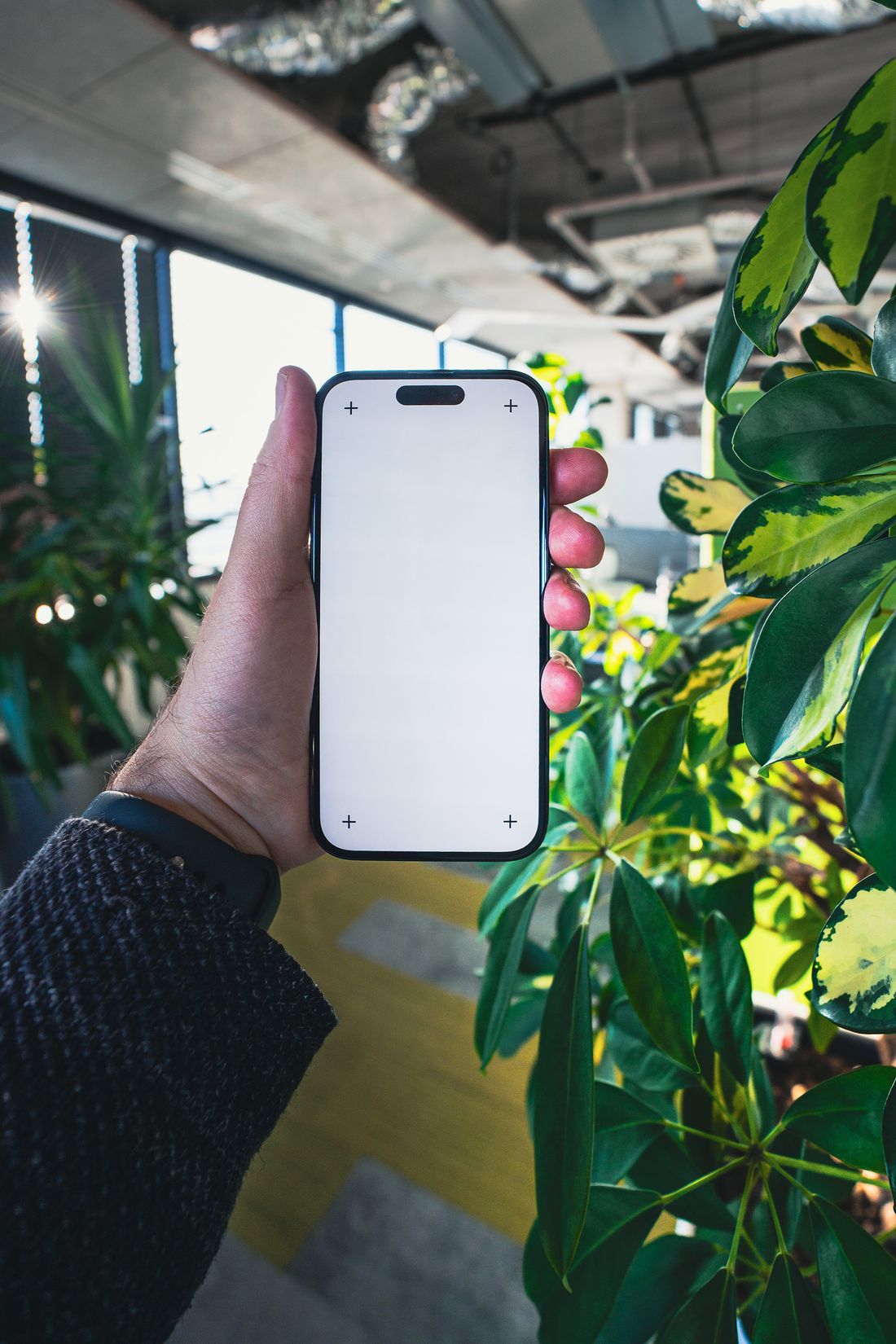
- Pick a clear day, and one hour. Measure every spot at roughly the same time (late morning to early afternoon is ideal) so you’re comparing like with like.
- Set the phone down at the exact spot. Not near it: on the sill, on that shelf, in that corner, at the height the pot will actually sit, lying flat and screen up.
- Read the tier, not the third digit. Phone light sensors are rough, and that’s fine. You’re sorting the spot into a tier (dim, workable, bright, direct) not measuring to the lux. Compare the pattern across your spots.
Why rough numbers are enough
For deciding where a plant can live, the tier a spot falls into matters far more than the exact reading. Two phones will disagree on the absolute number and agree completely on the pattern. Every step from the window costs a large share of the light, and the losses compound. That pattern is the whole insight. Six spots in one measured room ran from 20,000 lux at the glass to 18 in the corner: you don’t need precision to act on a gap like that.
| The plant you are holding | What the light is doing | Verdict |
|---|---|---|
| Wax plant (Hoya) | A little dim, but workable | Worth a try, 67/100 |
| Cast iron plant | Just the right amount of light | Great fit, 99/100 |
| Swiss cheese plant | Just the right amount of light | Great fit, 100/100 |
| Aloe vera | Too dim here | Not the best fit right now, 42/100 |
| Where you held the phone | Estimated light | What the light is doing | Verdict |
|---|---|---|---|
| 0.3 m, against the glass | 6,500 lux | Just the right amount of light | Great fit, 98/100 |
| 1 m back | 5,000 lux | A little dim, but workable | Worth a try, 67/100 |
| 2 m back | 3,150 lux | A little dim, but workable | Worth a try, 64/100 |
| 3 m back | 1,984 lux | Too dim here | Not the best fit right now, 47/100 |
| 4 m back | 1,250 lux | Too dim here | Not the best fit right now, 46/100 |
If your meter reports foot-candles rather than lux, multiply by 10.764 to compare, or just multiply by ten. The unit is the easy part. Agreeing on what the numbers mean is where it falls apart.
Can you use your phone as a light meter?
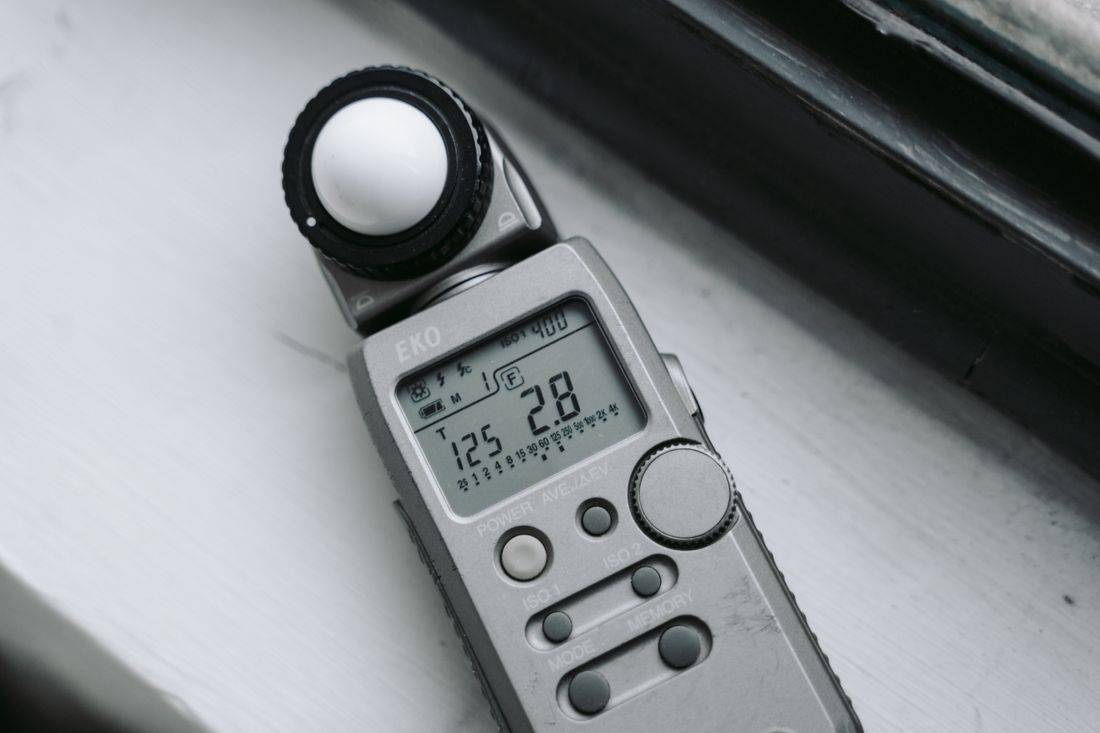
Yes. For the decision you are actually making. Not for a figure you would quote.
That distinction is hardware: no iPhone app can read the light sensor.
Here is the honest limit, from our own calibration rounds: one identical phone reading, taken twice, sat on top of real values of 1,800 and 3,500 lux: nearly a factor of two apart. A phone reads light through whatever is in front of it, so its answer shifts with the spectrum and the angle of the scene; consumer ambient-light sensors carry a wide spread of their own before any software touches the number.
Those calibration values are ours, and so is the pile behind them: 159 readings at 137 real spots, published as aggregates rather than asserted.
That is why a tier, labelled an estimate, is the honest output. And three confident digits are not. A number that looks precise and isn’t is worse than a band, because it makes you sure about the one thing you should stay humble about.
Where a phone is dependable
Where a phone is dependable: ranking. Read two spots the same way, minutes apart, and the order they come out in holds even when the absolute figures wander. Ranking is exactly what placing a plant needs.
Whether a gap that size actually changes where the plant goes is a separate question, and we put it through our own engine to find out: at 1,800 lux and at 3,500 lux the same monstera scores 66 and 94, while 900 and 10,764 land four points apart, at 62 and 66. The error lands somewhere, but only inside one narrow band.
No phone handy? Use the shadow
The shadow test gets you the tier with nothing at all. The shape of the shadow a spot casts tells you most of what you need to know.
| Shadow your hand casts | What the spot is |
|---|---|
| Sharp, dark, hard-edged | Direct sun. Too much for most houseplants, right for succulents and cacti |
| Soft-edged but clearly there | Bright indirect. The band nearly every care tag is written for |
| Faint, or no shadow at all | Low light. Tolerators only, and nothing will grow quickly |
The shadow has a second use. A soft-edged but clear one is also how you check whether a spot is genuinely bright indirect, where a sharp dark shadow means direct sun and a faint one means too dim.
The ten-second version
- Clear day, late morning.
- Phone flat at the spot, screen up, at the height the pot will sit.
- Read the tier the number lands in; ignore the digits.
- Repeat at the next candidate spot and trust the order: whichever reads higher really is brighter, even when neither number is exact.
Then give the tier a job. Describe the spot to the free spot checker (direction, distance from the glass, the plant you mean to put there) and it turns that description into a verdict for that plant, in the browser, nothing to install.
By GrowSpot · Published July 23, 2026 · Last updated August 30, 2026
