Search “low light plants” and you’ll get cheerful lists of twenty species that supposedly thrive in the dark. Most of it is a wish list. Here’s the honest shortlist, and the one distinction that saves plants: low light is not no light.
What “low light” really means
Two different questions get the same phrase in published guidance: where low light begins, and where a plant stops being able to live in it.
| Published by | The figure | In its own words |
|---|---|---|
| extension.arizona.edu | 25–75 / 75–150 / 150–1000 fc | “In general, there are three categories of light intensity for interior plants: high, 150–1000 foot-candles (fc); medium 75–150 fc; and low, 25–75 fc.” |
| extension.illinois.edu | 75 / 150 / 300 / 1500 fc | Its four bands, verbatim: “Low Light (75 foot candles)”, “Medium (average) Light (150 foot candles)”, “High or Bright Light (300 foot candles)”, “Direct (1500 foot candles)”. |
| extension.psu.edu | 100 footcandles | “a common baseline for low light is 100 footcandles”, with one plant’s own spot measured “as low as 25-foot candles in mid-morning”. |
| extension.msstate.edu | Under 50 fc | “Usually, an intensity of less than 50 foot-candles will not sustain plant life for very long.” |
| extension.msstate.edu | 1 to 3 feet | “For best results, most plants grown under artificial light must be grown within 1 to 3 feet from the light source.” |
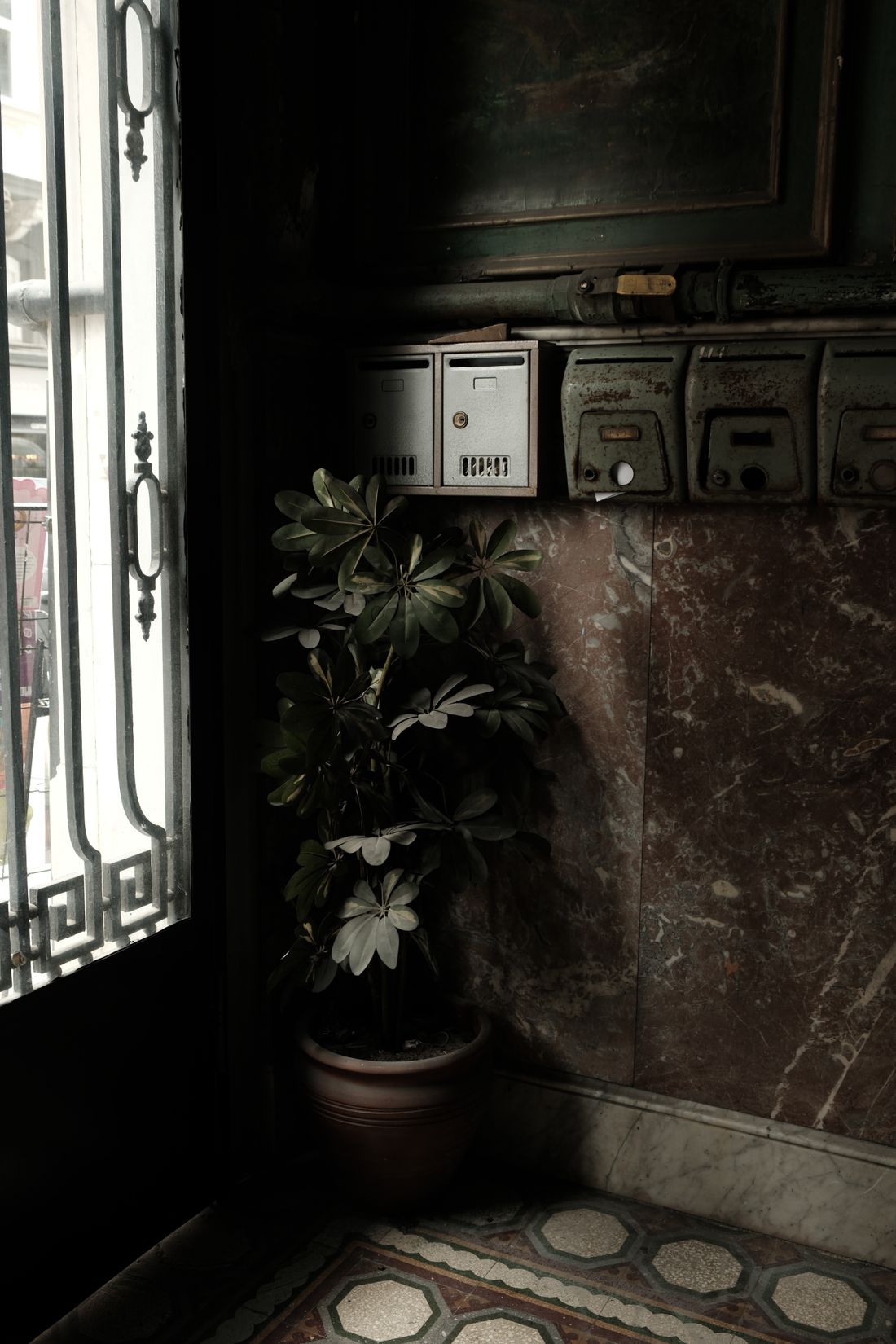
On a care tag, “low light tolerant” describes the dim-but-alive middle zone of a room that still has a window: a few meters back from the glass, workable for tough plants. It does not mean a windowless room or a dark corner where light barely reaches. Even the famous survivors have a floor, and below it they don’t die dramatically. They just stop. No new growth, slow fade, then a decline that gets blamed on water.
The blame lands on water because surviving is slow: a plant that is barely growing is barely drinking, and a watering habit set in brighter months keeps delivering the old amount. The winter version of this page documents the same trap, with the season doing what the dim corner does here.
The honest shortlist
Genuinely tolerate low light
 Snake plant
 ZZ plant
 Pothos
 Cast iron plant
 Chinese evergreen (aglaonema)
 Heartleaf philodendron
Tolerate, but want more
- Peace lily: survives dim, but won’t bloom without brighter light
- Ferns: often listed for low light; they really want bright indirect and humidity
“Tolerate” is the honest verb. The hard-to-kill lists lean on the same handful of names as the low-light ones, which is why scoring those five across five different spots separates the two questions: surviving dimness and surviving neglect are not the same tolerance. These plants endure low light and grow slowly; none of them thrive in it. Give any of them a spot nearer a north window and they’ll do far better; a sunny sill is another matter, as the table below shows.
Where the floor is, and the ceiling nobody mentions
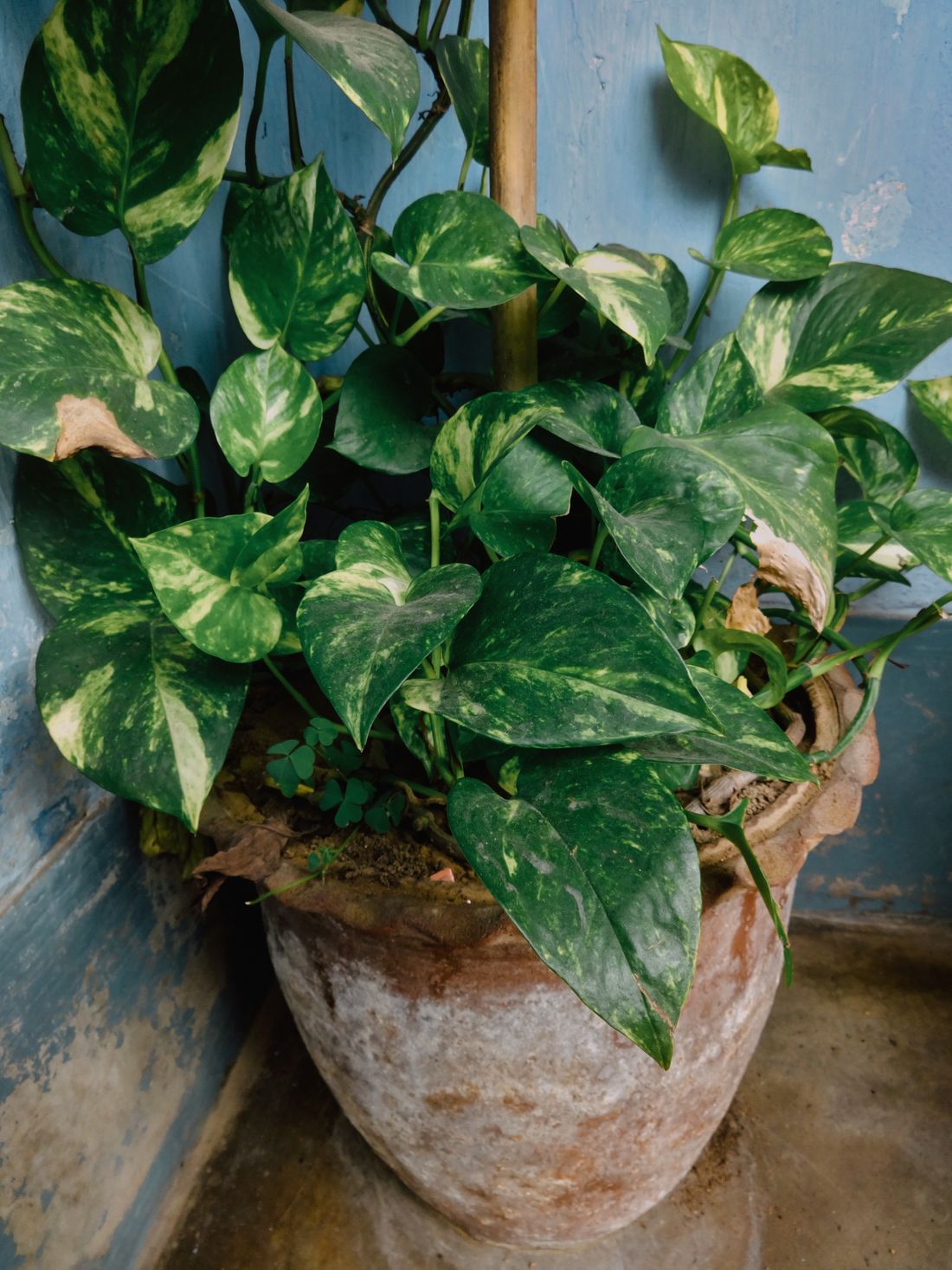
Snake plant, ZZ, cast iron plant, aglaonema and heartleaf philodendron all sit in the same light band in our care data, so they share one floor rather than each having its own. It sits just under 400 lux. Score any of them at 400 and it reads as a great fit; score it at 350 and it drops to a compromise; at 50 it is out. At a north window, an aglaonema clears that floor with a full score.
One line on where these numbers come from, because that floor is doing a lot of work: we estimate a spot’s light from how you describe it (window direction, distance from the glass), and the floor itself is the comfort band our care data holds for these species. We have no sensor in your room, and a meter reading at the spot beats our estimate every time: 159 of ours are published, 62 of the 111 indoor ones under 800 lux. The estimate’s job is the comparison, which plant belongs at which end of dim.
The ceiling is the half the lists leave out, and it is a lot closer than the floor:
| The sill it is standing on | Estimated light | What the light is doing | Verdict |
|---|---|---|---|
| No direct sun at all | 650 lux | Just the right amount of light | Great fit, 93/100 |
| North window | 3,640 lux | Just the right amount of light | Great fit, 94/100 |
| East window | 6,500 lux | A bit bright, but workable | Worth a try, 65/100 |
| West window | 7,800 lux | A bit bright, but workable | Worth a try, 64/100 |
| South window | 13,000 lux | Too bright here | Not the best fit right now, 41/100 |
A cast iron plant scores the same at a window that never gets direct sun as it does on a north sill, and it does worse on a south sill than on either of them. So the shortlist is not a tolerance list. It is a band, and a bright sill overshoots the top of it while a dim room is still comfortably inside the bottom. The cast iron plant’s comfort at the dim end stops being a curiosity in a basement, where its remaining complaint turns out to be the still air rather than the dark. In a hallway it goes further still. That is the practical reading: a plant sold for dark corners can be ruined by promoting it, which is one of the ways a plant dies in a bright room. Here is that promotion, scored: the heartleaf philodendron from the shortlist above, moved up onto a south sill.

Not the best fit right now
The plant's fine, this spot just isn't a match.
Too bright here
Comfortable temperature
Humidity suits it
Airflow isn't quite ideal
Light is a deal-breaker here. The other three cannot make up for it.
First, find out if your spot is low light or actually dark
If you want this answered for your own spot rather than in general, the free spot checker estimates it from your window direction and distance, in your browser.
By GrowSpot · Published July 23, 2026 · Last updated August 30, 2026
