You don’t need an app, a meter, or anything at all to get a fast read on a spot’s light. You need your hand and a sunny-ish day. The shadow a spot casts tells you almost everything about whether a plant can live there, and it’s the honest fallback for when your phone’s in the other room.
How to do it
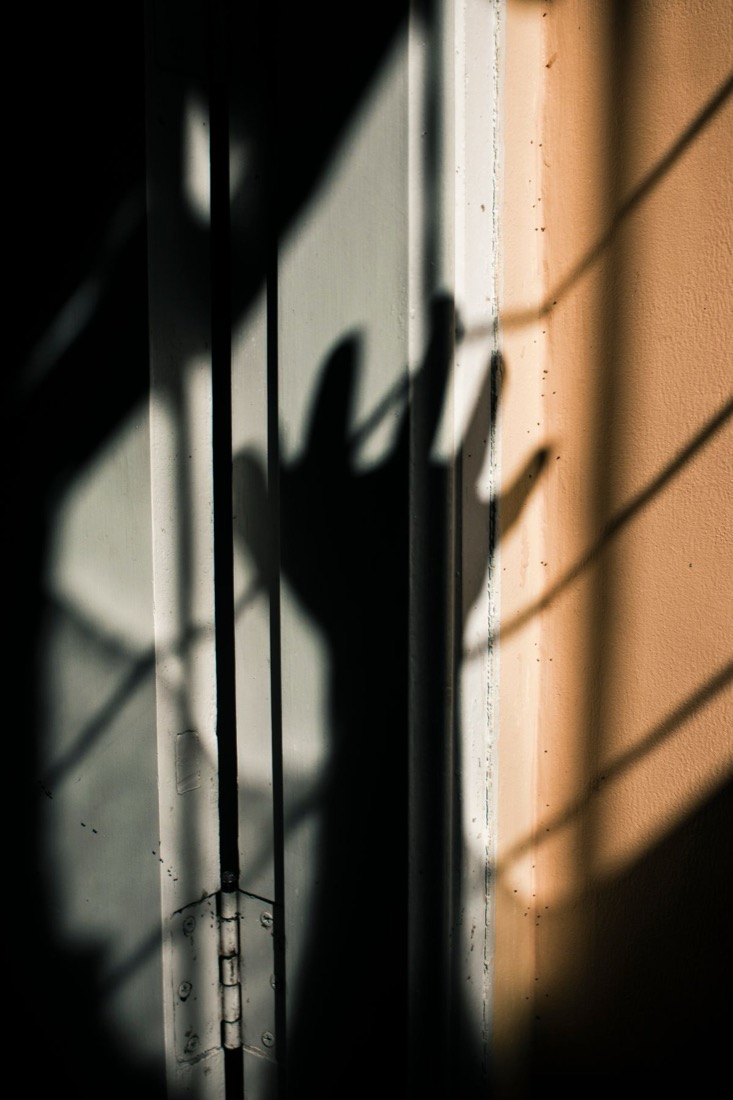
Around midday on a reasonably clear day, hold your hand (or a sheet of paper) a foot or so above the exact spot (the sill, the shelf, the corner) and look at the shadow it throws.
A shadow also sidesteps the problem a meter app has. On an iPhone no app can read the light sensor, so the number comes from the camera and shifts with whatever is in frame — the reasons are here. A shadow has no calibration to get wrong.
- Sharp, dark, crisp-edged shadow → direct sun. Full-sun territory: great for sun-lovers, a scorch risk for shade plants.
- Soft-edged but clearly visible shadow → bright indirect light. The sweet spot most houseplants want.
- Faint, fuzzy, barely-there shadow → low light. Tolerators only, and they’ll grow slowly.
- No shadow at all → too dark for most plants. Think grow light, rotation, or a different spot.
Why it works
The test is not ours; it is everywhere. We read eight sources describing it on 29 August 2026 and copied down what each says the shadow should look like, and what it tells you to hold constant.
| Source | How it describes a bright spot’s shadow | Which of the three conditions it states |
|---|---|---|
| gardeningknowhow.com | “a good shadow throughout the day” | midday · where to hold your hand · a clear sky |
| backtotheroots.com | “A well-defined shadow” | midday · where to hold your hand |
| usbg.gov | “strong, distinct shadow” | where to hold your hand · a clear sky |
| greeneryunlimited.co | “Crisp, well defined shadows and stark contrast” | midday |
| libguides.nybg.org | “well-defined shadow” | where to hold your hand |
| deepgreenpermaculture.com | “A sharp, clearly defined shadow” | None of the three |
| richmond.ces.ncsu.edu | “crisp shadow” | None of the three |
| yardandgarden.extension.iastate.edu | “bright enough to cast a distinctive shadow but does not have sun rays hitting the foliage directly” | None of the three |
The wording is close enough across all eight. The conditions are not: three say midday, four say where to hold your hand, two say the sky must be clear, and one says all three. Three say none of them — and a shadow read at four o’clock under cloud, with your hand a metre up, is a different shadow. That is why the instructions above name all three.
Shadow sharpness tracks how directional and how strong the light is. Exactly the thing your adapted eyes can’t judge from brightness alone. It won’t give you a number, but it reliably sorts a spot into the tier that decides what can live there. That’s the decision that matters. If you are working the other way round, starting from a plant that already looks unhappy, the signals it gives off and what they mean are here.
When you want more than a tier
A tier is a wide thing. The bracket the shadow test calls high light runs from 150 to 1,000 foot-candles — a factor of nearly seven — and the shadow looks the same at both ends of it. Here is what that hides.
That is not only our brackets talking. Two of the eight put numbers on their own and leave the top open: high light is “1,000 lux and above” in one and “at least 150 foot-candles” in the other. An open-topped bracket cannot say where inside it you are standing.
| Reading, in foot-candles | Estimated light | Fiddle leaf fig | Monstera |
|---|---|---|---|
| 150 fc | 1,615 lux | Not the best fit right now (47) | Worth a try (67) |
| 250 fc | 2,691 lux | Worth a try (64) | Great fit (99) |
| 400 fc | 4,306 lux | Worth a try (66) | Great fit (100) |
| 600 fc | 6,458 lux | Great fit (98) | Great fit (100) |
| 800 fc | 8,611 lux | Great fit (99) | Great fit (100) |
| 1,000 fc | 10,764 lux | Great fit (100) | Worth a try (69) |
Same tier, same shadow, and one plant goes from not the best fit to great fit while the other peaks in the middle and comes back down. That is the honest limit of a shadow: it puts you in the right bracket, and the bracket is wide enough to hold both answers. It is enough when you are choosing a room. It is not enough when you are choosing between two spots in one.
If you do have a phone, the next question is whether to believe it. We scored our own calibration pair through the engine and the two readings came out 28 points apart, which is smaller than it sounds and larger than it looks.
A tier is where the shadow stops. It will tell you a spot is low light; it will not tell you whether the plant you have in mind can live there, because light is one of four things the spot is doing to it. Here is that same faint-shadow reading carried the rest of the way, for one plant, with the other three stated rather than assumed.

Worth a try
It can work here with a little care.
A little dim, but workable
Comfortable temperature
Humidity suits it
Airflow isn't quite ideal
The tier is the same for every plant. The answer is not.
A shadow belongs to the spot, so it reads the same whoever is standing in it. That is what makes it quick, and it is also exactly where it stops. Hold that one faint-shadow spot still, swap the plant, and the verdicts come apart.
| The plant in that spot | What the light is doing | Verdict |
|---|---|---|
| Chinese evergreen | A little dim, but workable | Worth a try, 62/100 |
| ZZ plant | A little dim, but workable | Worth a try, 60/100 |
| Snake plant | A little dim, but workable | Worth a try, 60/100 |
| Golden pothos | A little dim, but workable | Worth a try, 60/100 |
| Peace lily | A little dim, but workable | Worth a try, 60/100 |
| Boston fern | Too dim here | Not the best fit right now, 36/100 |
Nothing about the light moved between those rows. What moved is what each plant asks of it: five of the six can live in that spot and one cannot, and the one that cannot is a Boston fern, which turns up on low-light lists. Twenty-six points separate the top of that table from the bottom, and the shadow was identical for every row.
So a faint shadow has not told you no. It has told you which shortlist to draw from. The tier is still worth having, because it settles the two ends cheaply: no shadow at all is a grow-light conversation, and a hard-edged one is a scorch risk. The middle is the part that wants a plant name before you decide anything.
If you want this answered for your own spot rather than in general, the free spot checker estimates it from your window direction and distance, in your browser.
By GrowSpot · Published July 23, 2026 · Last updated August 29, 2026
