Search this phrase and you get lists: sixteen, thirty indoor plants that “like direct sunlight”, nearly all led by jade, aloe and cacti. What the lists don’t say is what direct sunlight through a window actually measures, or which of those plants a real sill genuinely satisfies. So we held one unshaded south sill steady (warm afternoon, 26 °C at the glass) and scored nine plants on it with the same engine that runs the free spot checker.

Great fit
This plant should be happy in this spot.
Just the right amount of light
Comfortable temperature
Humidity suits it
Airflow suits it
How much light does a sunny window actually give?
The published top of the indoor scale, and the published figure for outdoors, in the same table.
| Published by | The figure | In its own words |
|---|---|---|
| extension.illinois.edu | Direct: 1500 fc | “Direct (1500 foot candles)”, reached at “South window: directly in front”. |
| extension.illinois.edu | 10,000–12,000 fc | “Outdoors, the amount of sunlight that is cast may be 10,000 to 12,000 foot-candles.” |
| open.edu | 100 000 lux | “Sunlight is extremely bright and its illuminance can reach 100 000 lux on the ground”; overcast daylight is “at least 5000 lux”. |
| extension.msstate.edu | 1,000 fc, then 100 a few feet in | Not a floor but a falloff, from the same source: “The intensity of the light can drop from 1,000 to 100 foot-candles in the distance of only a few feet.” |
| extension.arizona.edu | Four and eight feet | “High Light: areas within four feet of large south-east or west facing windows”; “Medium Light: locations in a range of four to eight feet from south and east windows and west windows that do not receive direct sun.” |
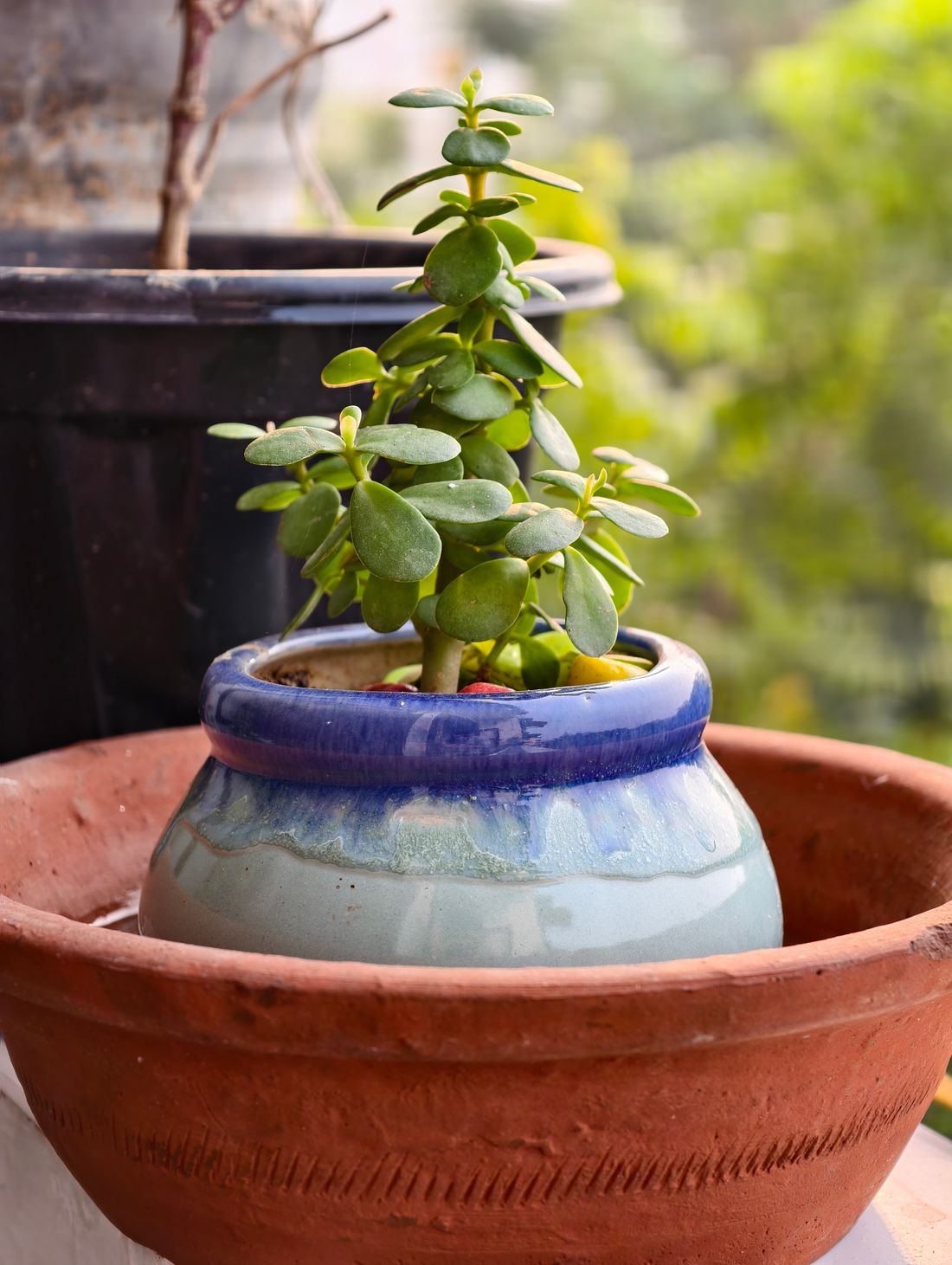
About 13,000 lux right at the glass on an unfiltered south sill with midday sun, and about 7,800 on a west sill through a hot afternoon. Outdoor summer sun runs tens of thousands, so the pane is where most of the budget goes. That is the whole allowance, and it falls off fast as you step back:
| Distance from the glass | Estimated light | What the light is doing | Verdict |
|---|---|---|---|
| 0.3 m, against the glass | 13,000 lux | A little dim, but workable | Worth a try, 63/100 |
| 1 m back | 10,000 lux | A little dim, but workable | Worth a try, 61/100 |
| 2 m back | 6,300 lux | A little dim, but workable | Worth a try, 58/100 |
| 3 m back | 3,969 lux | Too dim here | Not the best fit right now, 40/100 |
By one metre the same window is down to 10,000. By three, at 3,969 lux, the engine stops calling it direct-sun territory at all: the aloe that was “workable” on the sill drops to 40, too dim. Indoor full sun is a windowsill phenomenon, roughly two metres deep.
Part of why the lists and the sill disagree is that the phrase itself was borrowed from outdoors. On a nursery label, full sun means six hours or more of direct sun in open ground — a budget running into tens of thousands of lux. Indoors those same words have to survive a pane of glass, a wall with one hole in it, and a sun that crosses that hole for part of the day. The table above is that translation: the best the sill offers is 13,000 lux against the glass, a fraction of the outdoor budget the label was written for. A plant labelled full sun is simply not being asked for the same thing indoors as it was outside.
Which indoor plants actually like direct sunlight?
Not the ones the lists lead with — or rather, not only them. The plants named here are the ones every list reaches for, and they do belong on a sunny sill. But scored on one, the succulents among them do not top the table. Two bright-band tropicals do, the croton on this list and the fiddle leaf fig, and the sweep below is where that shows up.
Built for direct sun
 Cacti and most succulents: jade, aloe, echeveria
 Ponytail palm
 Croton (needs the light to color up)
Take it once acclimated
- Bird of paradise
- String of pearls
- Sun-loving herbs: basil, rosemary
- A small citrus
- Hoya
| The plant at the glass | What the light is doing | Verdict |
|---|---|---|
| Sunset jade | A little dim, but workable | Worth a try, 63/100 |
| Aloe vera | A little dim, but workable | Worth a try, 63/100 |
| Echeveria | A little dim, but workable | Worth a try, 63/100 |
| Ponytail palm | A little dim, but workable | Worth a try, 63/100 |
| Croton | Just the right amount of light | Great fit, 99/100 |
| Sweet basil | A little dim, but workable | Worth a try, 65/100 |
| Sweet orange | A little dim, but workable | Worth a try, 65/100 |
| Fiddle leaf fig | Just the right amount of light | Great fit, 100/100 |
| Peace lily, the control row | Too bright here | Not the best fit right now, 40/100 |
Read the sweep twice, because it breaks the listicle two ways. First: every classic “sun-lover” (jade, aloe, echeveria, basil, citrus) holds the sill at 63–65, and the light column says a little dim. That is not a typo. These are outdoor-sun species; even the brightest indoor sill sits at the dim end of their range, which is why an indoor jade never quite looks like a garden one. They still belong here; it is the closest thing to home your house has. Second: the two “great fit” rows are croton and fiddle leaf fig, high-band tropicals whose ideal is exactly what glass delivers. The plants that like indoor direct sunlight most are not the desert crew; they’re the bright-band tropicals one shelf over. And the control row cuts the other way: a peace lily on the same sill reads “too bright”, 40 — the same spot fails both ends. A croton on its own south-window page holds that great fit out to two metres.
What goes wrong on a sunny sill?
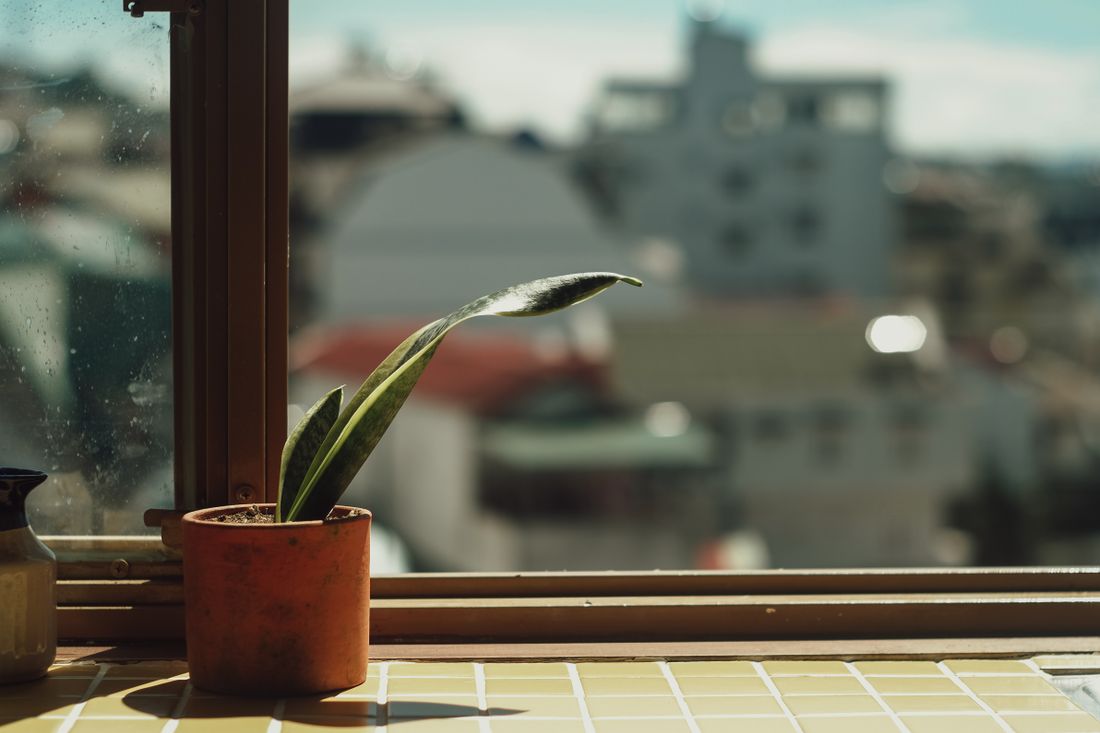
- Acclimate, don’t dump. Even a sun-lover moved straight from a shop’s shade into a full-sun sill can burn. Step it into the light over a week or two.
- Mind the hot glass. Leaves pressed against a sunny pane cook. Leave a small gap.
- Water follows the heat. A hot sill dries small pots fast: check the soil, not the calendar.
Is your bright spot really direct sun?
The lux values here are estimates the spot checker’s engine derives from a window’s direction and distance; they are not readings taken at this particular sill, and the scores are that same engine judging one plant against one described spot. What the arithmetic cannot see is your own glass — a coating, a screen or a building opposite will take a real bite out of that budget, and nothing on our side knows it is there.
All the numbers above sit on one ladder: how many lux plants actually need walks the whole thing. For your own sill, the free spot checker estimates the reading from window direction and distance, in your browser, and scores the plant you have in mind.
Published July 23, 2026 · Last updated August 30, 2026
