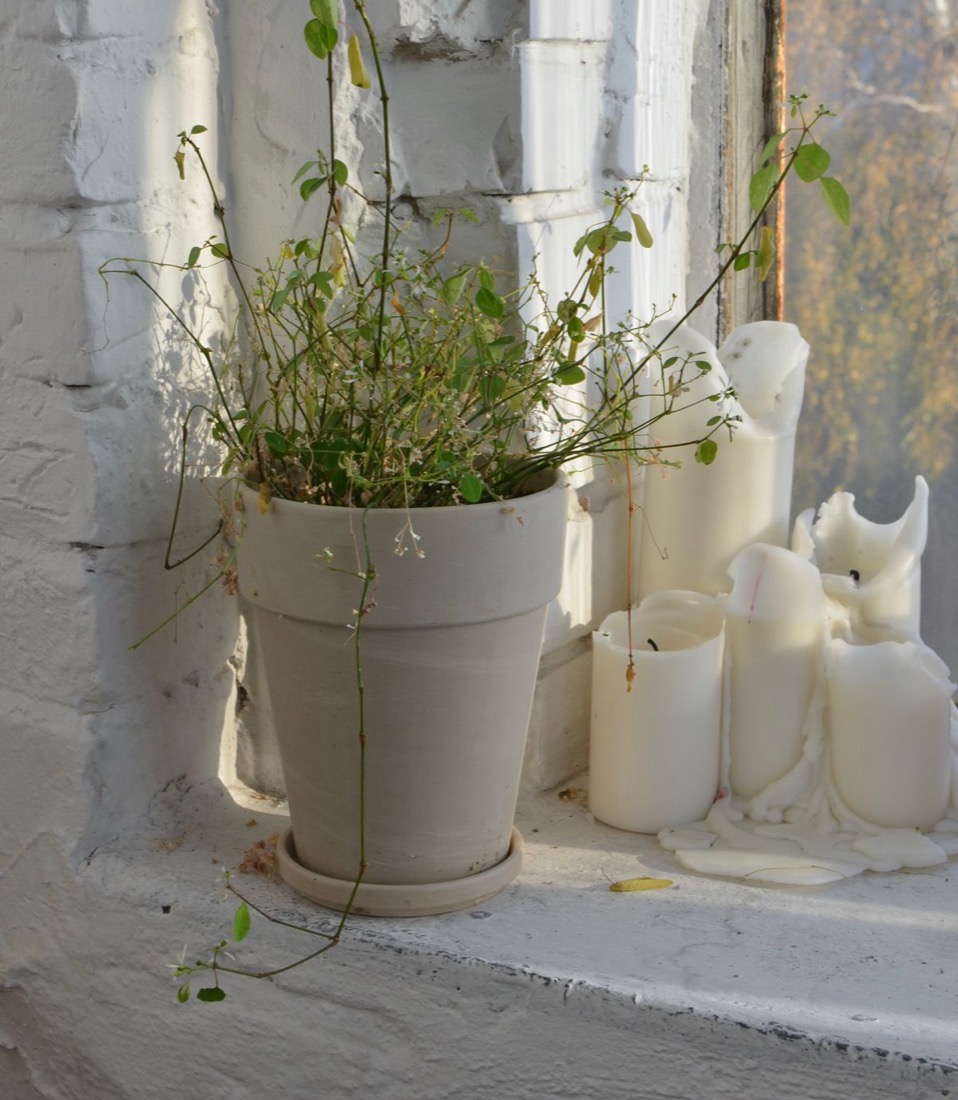
Leggy is the shape a plant takes when it is reaching: stem stretching between leaves, the gaps getting longer, leaves arriving smaller and paler than the ones before, and the whole thing tipping toward the window. It looks like neglect. It is closer to the opposite. The plant is spending everything it has on getting closer to the light, because from where it is standing there isn’t enough.
Which makes legginess unusually informative. Most plant symptoms have half a dozen candidate causes. This one is nearly always the same cause, and it is one you can check. A plant that is not stretching and not growing either is the harder version of the same reading.
Every source we read on leggy houseplants gives the same instruction — move it toward the light — and this page gave it too. So we ran that instruction on the plants those same sources name. For 11 of the 19 plants they name, a north-facing sill scores better than the brightest window in the house.

Worth a try
It can work here with a little care.
A little dim, but workable
Comfortable temperature
Humidity suits it
Airflow doesn't suit it
Before any of our own scoring comes into it: we read thirty-four sources on 29 August 2026, drawn from ten separate populations. University extension services, botanic gardens, the interior-landscaping trade, growers, lighting and photometry references, research papers, apps and publishers. From them we transcribed 433 published light figures and checked every number and unit against its page afterwards. Twenty-two were thrown out.
Those sources scatter badly on where the tiers sit. On the floor for keeping an ordinary foliage plant alive they do not scatter: twenty-four figures from ten independent sources all land between 25 and 100 foot-candles, which is 269 to 1,076 lux, with a median of 538. They are not quoting each other. A state extension service, a botanic garden and a firm that maintains office plantings for a living arrive at the same band from different directions.
| Who publishes it | The floor it gives | What kind of source, and for what |
|---|---|---|
| bbg.org | as low as 25 footcandles | Botanic garden · Aspidistra (cast iron plant) |
| floraplantcare.com | 25 ft-c – 75 ft-c | Publisher · Low |
| planterra.com | below 30 fc | Interior landscaping contractor · the lowest light tolerant plant — death floor |
| houseplantjournal.com | 30-50 FC | Publisher · Dracaena — observed survival note |
| theplantrunner.com | ~500 lux | Publisher · Survival/slow-motion zone (the article’s own three-line su |
| mobilane.com | 500-1,000 lux | Green-wall manufacturer · Most indoor plants — healthy growth |
| planttalk.colostate.edu | below 50 foot candles | University extension · floor below which few plants tolerate |
| content.ces.ncsu.edu | approximately 85 fc | University extension · the average houseplant, to maintain its original quality f |
| hgic.clemson.edu | About 100 ft-c | University extension · simply to maintain plant quality for one year |
| costafarms.com | 100 FC | Grower · low-light-tolerant plants — bare minimum |
Now put that band against what rooms actually deliver. The same corpus carries 77 published indoor illuminance figures from 16 sources: lighting standards, room-by-room recommendations, and measured interiors. Their median is 300 lux, about 28 foot-candles, which is below the floor every one of those ten sources gives.
Our own readings land in the same place. Across the 49 indoor spots we have measured, a quarter came in at 420 lux or less, about 39 foot-candles, while the median was 2,349 lux, or 218. The full aggregates are here. Three separate bodies of evidence, and only the last is ours: a plant that stretches is standing in a room that the people who publish numbers for this would call too dark to keep it, let alone grow it.
Why do indoor plants get leggy?
- Not enough light: the overwhelming case. Stretching toward a light source is a specific growth response, not general poor health. The plant is trading thickness and leaf size for reach.
- Light from one side only. Every indoor plant is side-lit, so some leaning is normal. Pronounced leaning with bare stem on the dark side is the same shortage showing up directionally, and the direction it leans is worth reading before you rotate it away. It is also why turning the pot regularly is standard advice.
- Too much nitrogen. Heavy feeding can push soft, fast, weak growth that reads as leggy even in decent light. Worth ruling out if you have been fertilising enthusiastically, but it is the less common of the two.
Note what is not on that list: watering, humidity, pot size, drafts. Those cause other things. Legginess is a light readout, and it is close to the only symptom that is. The distance at which that light stops being enough is measurable: a monstera keeps 99 out of 100 seven feet back from an east window.
Two plants in one room are not in the same light
Because “bright enough” is not a property of a room, and different plants in the same room are standing in wildly different light. The same six spots scored for three different plants are here, and they produce three different answers. Here is one ordinary living room, measured on a clear day around midday, phone laid flat at roughly pot height, same hour for every spot:
| Spot | Reading |
|---|---|
| At the bright window | 20,000 lux |
| 1 m from the window | 15,000 lux |
| 2–3 m away, in window shade | 3,500 lux |
| Middle of the room | 570 lux |
| Darker side of the room | 119 lux |
| The dark corner | 18 lux |
The window gets about a thousand times the corner: in one room, on one afternoon. Two plants three metres apart on the same rug are not in the same conditions in any sense that matters. The one that goes leggy is standing in the part of that table you were not thinking about. The full six-spot walkthrough is here.
That table is why the standard fix — move it closer to a bright window — sounds obviously right. In lux it is: going from the middle of that room to a metre off the glass is a twenty-six-fold change, and the first metre does most of the work. But lux is not what a plant is scored on, and the instruction leaves out the part that decides the answer: which window.
We ran that advice on the plants the advice is about
We read twenty-four sources end to end on 29 August 2026 — four each from university extension services and botanic gardens, houseplant publishers, plant-care apps, grow-light makers, community threads and reference works — and wrote down every plant each one names in connection with stretching, whether or not it suited the argument. A second pass re-fetched every page and checked each entry against it: none of the 235 was thrown out, and 26 the first pass had missed were added back. That leaves 259 entries and 184 distinct names. Seventy-eight resolve to a single species in our own care data; the nineteen that two or more sources agree on are the table below. Every number in it is computed when the page is built, not typed.
Every row, one plant each (19)
| The plant our sources name | What the light is doing | Verdict |
|---|---|---|
| Jade plant | A little dim, but workable | Worth a try, 63/100 |
| Spider plant | A bit bright, but workable | Worth a try, 65/100 |
| Snake plant | A bit bright, but workable | Worth a try, 64/100 |
| ZZ plant | A bit bright, but workable | Worth a try, 64/100 |
| African violet | Just the right amount of light | Great fit, 100/100 |
| Fiddle leaf fig | Just the right amount of light | Great fit, 100/100 |
| Coleus | Just the right amount of light | Great fit, 93/100 |
| Echeveria | A little dim, but workable | Worth a try, 63/100 |
| Golden pothos | Too bright here | Not the best fit right now, 41/100 |
| Weeping fig | Just the right amount of light | Great fit, 100/100 |
| Christmas Cactus | A bit bright, but workable | Worth a try, 67/100 |
| Swiss cheese plant (Monstera) | A bit bright, but workable | Worth a try, 65/100 |
| Satin pothos | A bit bright, but workable | Worth a try, 65/100 |
| Inch plant | A bit bright, but workable | Worth a try, 65/100 |
| Norfolk Island Pine | A bit bright, but workable | Worth a try, 64/100 |
| Aloe vera | A little dim, but workable | Worth a try, 63/100 |
| Swiss Cheese Vine | A bit bright, but workable | Worth a try, 59/100 |
| Cast iron plant | Too bright here | Not the best fit right now, 41/100 |
| Peace lily | Too bright here | Not the best fit right now, 40/100 |
Every row, one plant each (19)
| The plant our sources name | What the light is doing | Verdict |
|---|---|---|
| Jade plant | Too dim here | Not the best fit right now, 40/100 |
| Spider plant | Just the right amount of light | Great fit, 94/100 |
| Snake plant | Just the right amount of light | Great fit, 94/100 |
| ZZ plant | Just the right amount of light | Great fit, 94/100 |
| African violet | A little dim, but workable | Worth a try, 65/100 |
| Fiddle leaf fig | A little dim, but workable | Worth a try, 65/100 |
| Coleus | A little dim, but workable | Worth a try, 62/100 |
| Echeveria | Too dim here | Not the best fit right now, 40/100 |
| Golden pothos | Just the right amount of light | Great fit, 94/100 |
| Weeping fig | A little dim, but workable | Worth a try, 65/100 |
| Christmas Cactus | Just the right amount of light | Great fit, 94/100 |
| Swiss cheese plant (Monstera) | Just the right amount of light | Great fit, 93/100 |
| Satin pothos | Just the right amount of light | Great fit, 93/100 |
| Inch plant | Just the right amount of light | Great fit, 93/100 |
| Norfolk Island Pine | Just the right amount of light | Great fit, 95/100 |
| Aloe vera | Too dim here | Not the best fit right now, 40/100 |
| Swiss Cheese Vine | Just the right amount of light | Good fit, 81/100 |
| Cast iron plant | Just the right amount of light | Great fit, 94/100 |
| Peace lily | Just the right amount of light | Great fit, 94/100 |
So the question a leggy plant asks is not how much light it needs, but which window it can stand in front of. The ones that want low light do better on a north sill than on any brighter one; the ones that want high light are the group the brightest sill suits. If yours is in the first group, the fix is not a brighter window but a different one.
Can plants recover from being leggy?
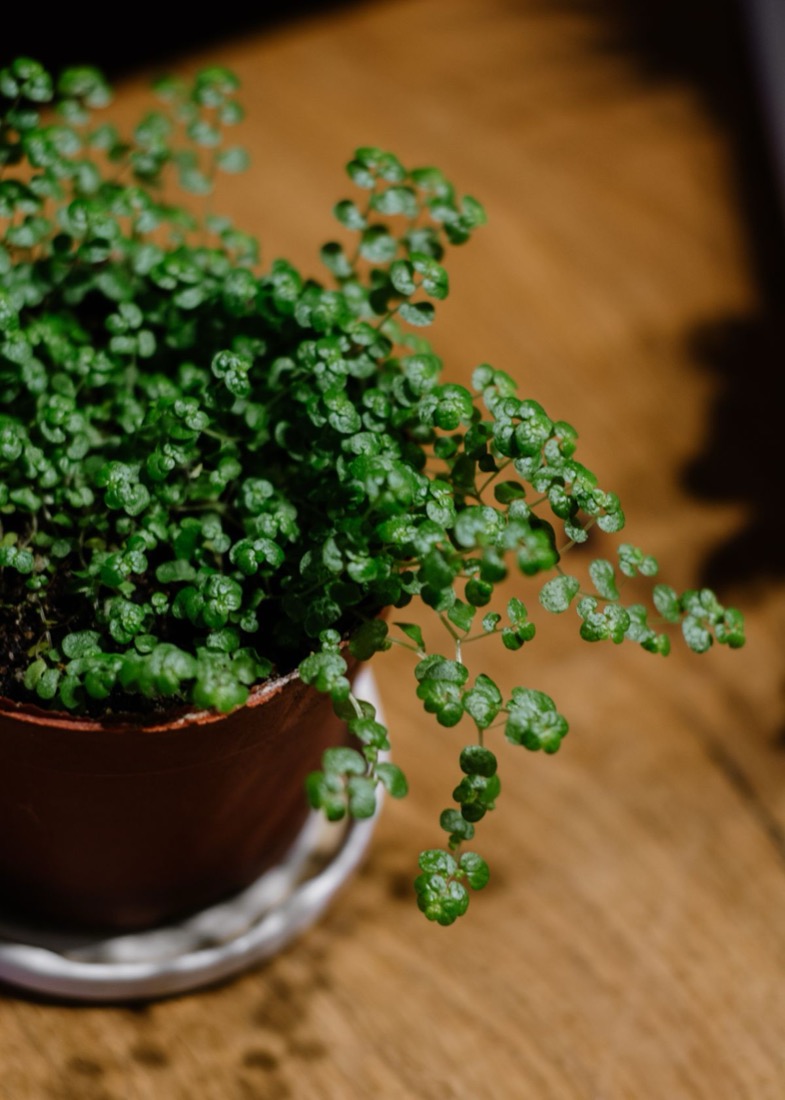
The plant recovers. The stretched stem does not. Those long bare internodes are built and they stay built, no amount of subsequent light shortens them. What better light changes is everything that grows after the move: shorter gaps, larger leaves, denser habit.
So recovery is two moves, in this order:
- Fix the spot first. Pruning a leggy plant that stays where it is simply produces new leggy growth, on a shorter plant.
- Then cut back, once the light is sorted, to force branching from lower down. For trailing plants the cuttings usually root and can go back into the same pot to thicken it.
Doing those in the other order is the single most common way people spend a season not fixing this.
How to make a leggy plant fuller
- Move it, and move it further than feels necessary. A step is not a move; a metre is.
- Turn the pot a quarter every time you water, so the reach is even rather than one-sided.
- Prune after the move, not before, and cut back to a node so it branches.
- Ease off the feed if you have been generous with it.
- Do not reach for a bigger pot. Stretching is a light reading, not a root reading, and the repot check runs on four conditions that a leggy plant does not meet just by being leggy.
- Check the new spot rather than assuming it. The bookshelf across from the window looks bright and generally is not. That is the same mistake one metre to the left.
Rule out the position before you cut anything
No phone to hand? The shadow test gets you the tier with nothing at all.
Succulents show it earliest, and one of them has nowhere to be moved to. A jade in a north-facing room scores 40 out of 100 on the sill and 38 at the back wall, which is why pruning and a brighter room are the only two levers there.
If the stretch started in autumn rather than after a move, the spot is still the answer but the cause is seasonal: four things changed at once and none of them was the plant.
By GrowSpot · Published July 29, 2026 · Last updated August 29, 2026
