Nothing about the plant changed. It is the same plant, in the same pot, on the same windowsill, being looked after by the same person. What changed is the spot, and it changed in four ways at once while nobody moved anything.
| What changed | What it does | What you see |
|---|---|---|
| Less light | Growth slows down | Stretching, small pale new leaves |
| The watering did not change | Soil stays wet far longer than it did | Yellowing lower leaves, soft stems |
| Heating dries the air | Humidity falls below what tropicals hold | Crisp brown edges, papery tips |
| The glass turns cold | Air at the pane sits below the rest of the room | Sudden leaf drop with no yellowing first |
That is the whole difficulty with winter losses. In summer a struggling plant usually has one thing wrong with it and you can find it. In January all four arrive at once. Each one on its own is survivable. Arriving together, in a plant that is also growing much more slowly, they are not.

Worth a try
It can work here with a little care.
Just the right amount of light
A little cool, but workable
A little dry, but workable
Airflow isn't quite ideal
The light drops, and it drops further than it looks
Winter does two things to a room at once, and both of them have published numbers.
| Published by | The figure | In its own words |
|---|---|---|
| hgic.clemson.edu | 60 °F | “ZZ plants are sensitive to cold and should be kept above 60 °F.” |
| hgic.clemson.edu | 60 °F | “Try to avoid temperatures below 60 °F as cold damage may occur.” |
| extension.unh.edu | 50 °F | “Aloe is sensitive to cold temperatures and shouldn’t be grown in a room that dips below 50°F.” |
| yardandgarden.extension.iastate.edu | 45 °F | “Several species of indoor plants will see damage when temperatures drop below 45°F”, and “nearly all will die if exposed to below-freezing temperatures.” |
| extension.psu.edu | Below 30% | “indoor relative humidity levels can easily fall below 30%” during the heating season. |
| yardandgarden.extension.iastate.edu | 10 to 20 percent | “the humidity level in many homes during the winter months may be only 10 to 20 percent.” |
| extension.umd.edu | No registers | “Indoor plants, especially flowering varieties, are sensitive to drafts or heat from registers.” |
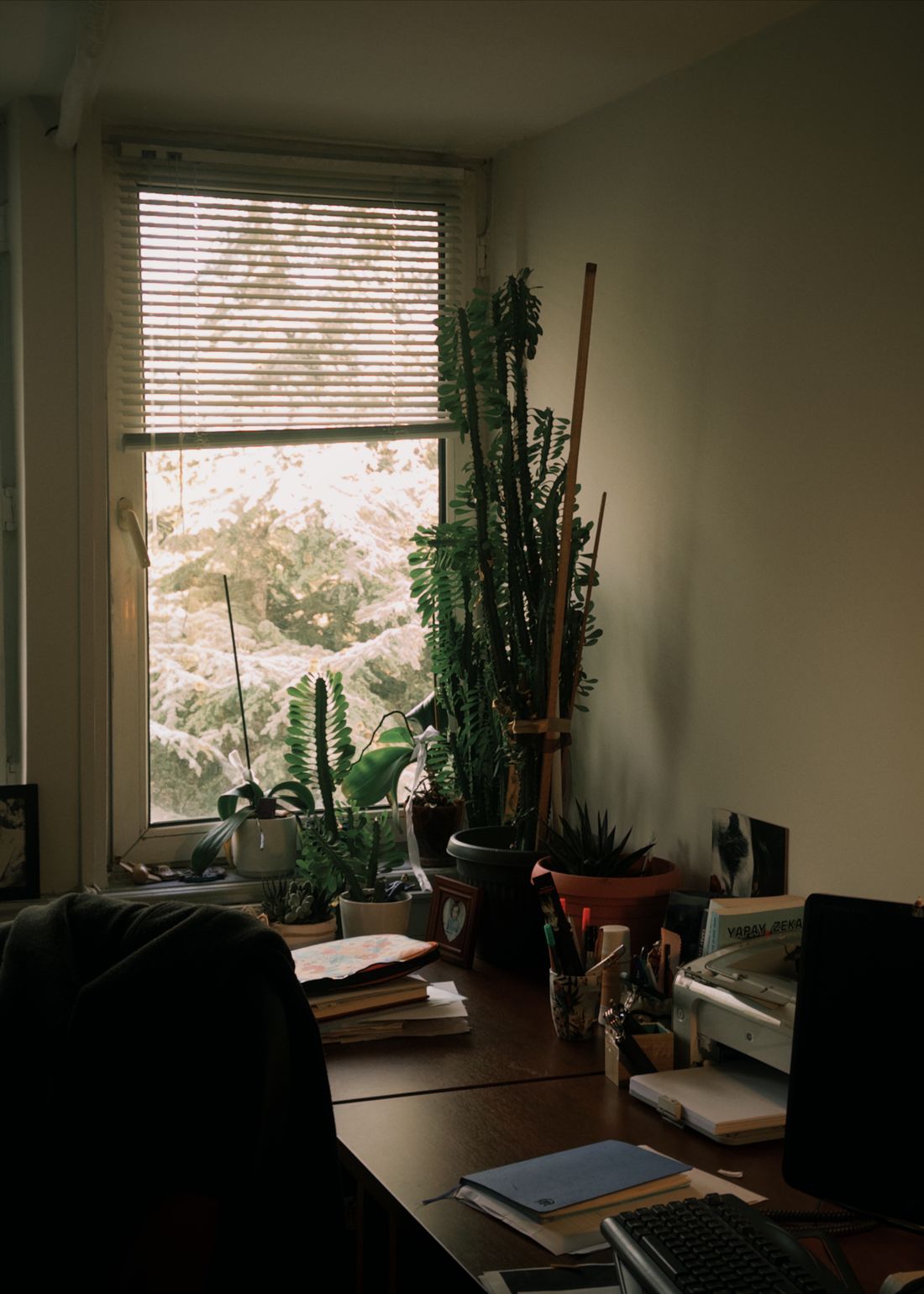
Shorter days, a lower sun, and more cloud all pull in the same direction. Your eyes will not tell you by how much, because they adjust: a room at a tenth of its summer brightness still reads as “bright enough”.
Here is one ordinary living room, measured on a clear day around midday, phone laid flat at roughly pot height, the same hour for every spot:
| Spot | Reading |
|---|---|
| At the bright window | 20,000 lux |
| 1 m from the window | 15,000 lux |
| 2–3 m away, in window shade | 3,500 lux |
| Middle of the room | 570 lux |
| Darker side of the room | 119 lux |
| The dark corner | 18 lux |
Those are six places in one room on one afternoon, not a summer reading and a winter reading. We have not measured the same room across seasons. What the table is good for is scale. The distance from a window to the middle of a room costs a plant more than a factor of thirty. Winter does something similar to every spot in the room at once, without anyone moving a pot. A plant that was comfortably inside its range in July can be several rungs down that ladder by January. The full six-spot walkthrough is here.
This is also why the standard advice to move it closer for winter is right: it buys back rungs on that ladder, and the first metre buys the most.
What we can do instead is score the same sill month by month
The sun sits lower in December than in June, by an amount that follows from the date and your latitude, and our estimate carries that. So here is one north sill in a house at 51 degrees, nobody moving anything, scored four times through the year.
| The month it is | Estimated light | What the light is doing | Verdict |
|---|---|---|---|
| March | 3,608 lux | Just the right amount of light | Great fit, 95/100 |
| June | 4,368 lux | A bit bright, but workable | Worth a try, 67/100 |
| September | 3,624 lux | Just the right amount of light | Great fit, 94/100 |
| December | 1,820 lux | Just the right amount of light | Great fit, 95/100 |
Read the last row first. December is not this plant’s bad month. June is. The peace lily spends midsummer flagged as slightly too bright on a north sill and comes back into its best band as the sun drops. Whatever is wrong with a peace lily in January, on this sill, it is not the light.
Those rows are computed, not measured, from one thing: how high the sun climbs at noon at that latitude. The model does not know that a December day is also short (real winter light falls further than the table shows), and it knows nothing about your cloud, your trees or the building opposite. The direction is solid; the figures are a clear-day estimate.
| The month it is | Estimated light | What the light is doing | Verdict |
|---|---|---|---|
| March | 3,608 lux | Just the right amount of light | Great fit, 94/100 |
| June | 4,368 lux | Just the right amount of light | Great fit, 94/100 |
| September | 3,624 lux | Just the right amount of light | Great fit, 94/100 |
| December | 1,820 lux | A little dim, but workable | Worth a try, 66/100 |
Same glass, same months, opposite shape. The spider plant holds its rating for three quarters of the year and loses it in December, which is the story everyone tells about winter. The peace lily standing beside it was doing the reverse the whole time.
Two things follow. “Winter is darker” is a fact about the window, not a verdict about the plant. And March and September come out the same, as they should: the year is a there-and-back rather than a slope, so a spot measured at either equinox was measured at its average and not at either end.
How far the swing goes depends on where you live rather than on the plant. Between midsummer and midwinter our estimate moves a spot by roughly a quarter near the equator and by about two and a half times by the latitude of northern Europe, where it runs into a floor we put in the model on purpose. So the same winter advice lands very differently in Manila and in Copenhagen.
You did not start overwatering. The light changed and the watering did not
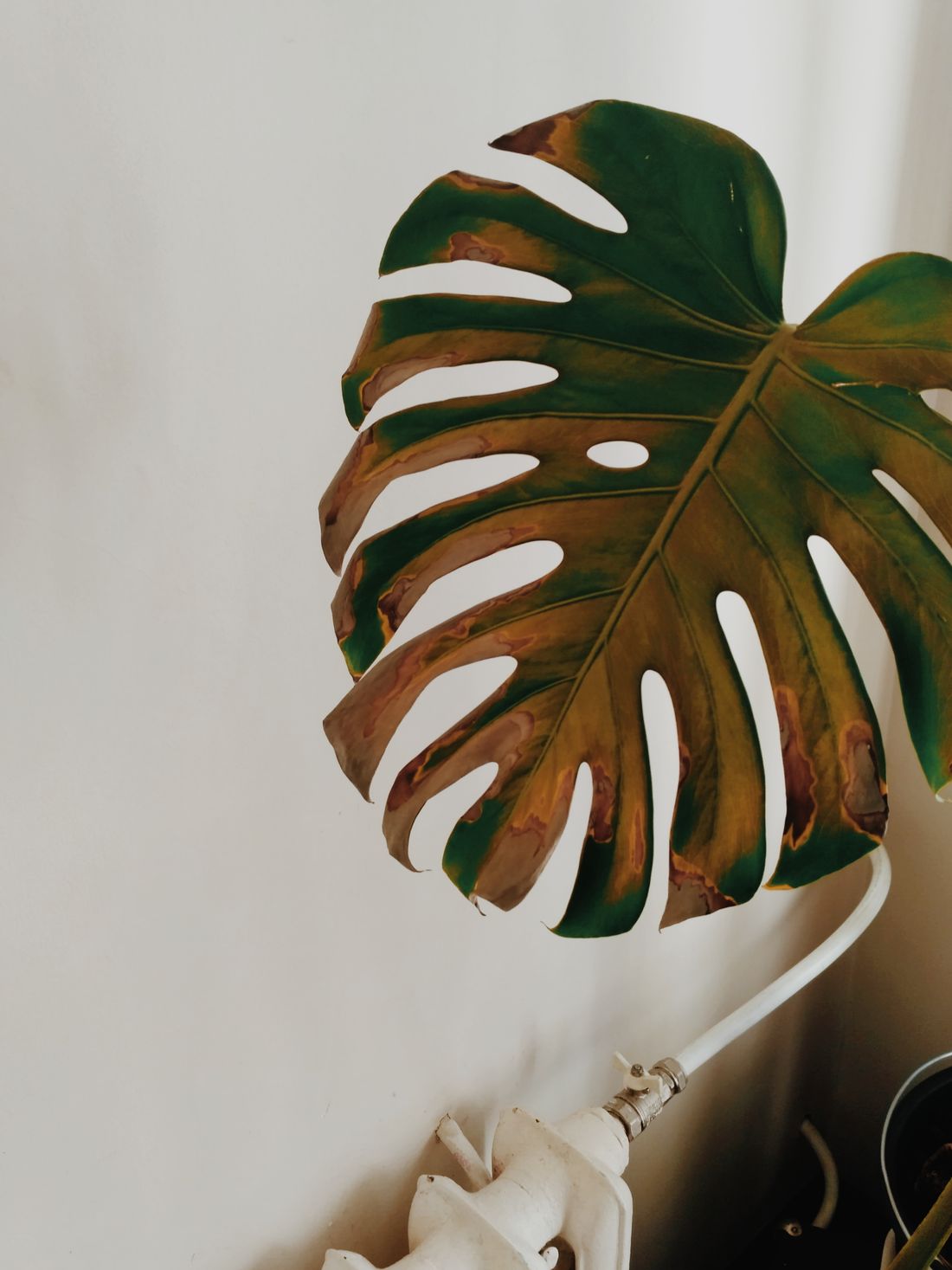
Most winter losses get filed under overwatering, and root rot really is where a lot of them end up. But the cause is usually further back than the watering can. Cold is one of the places it starts, and the published minimum temperatures disagree with each other by eleven degrees, which is more than the plants themselves do.
A plant in less light grows more slowly and uses less water. Same pot, same soil, same room, and it is now drinking at maybe half the rate it did in August. If the watering stayed on its summer schedule, the soil is staying wet longer, and roots sitting in cold wet soil is the actual mechanism behind most of what people call winter overwatering.
So the fix is not really a watering fix. It is either more light or less water, and the spot reading tells you which. Water by the weight of the pot rather than by the calendar, which in winter usually means longer gaps.
The heating dries the air out
Radiators and forced air both drop indoor humidity, often well below what the plants that mind dry air are used to. The symptoms are the boring ones people ignore: crisp brown edges, tips that go papery, new leaves that come out smaller and slightly deformed.
Which plants that actually rules out depends entirely on the plant, and the spread is wider than most advice suggests. A prayer plant is asking for 60% before it stops coping, while a jade is comfortable down at 20%, so the same heated room is a problem for one and unremarkable for the other. Our page on the ideal humidity for houseplants sets those bands side by side.
Two things make it worse. Warm dry air pulls moisture out of leaves faster than cool dry air does, and plants nearest the heat source are usually the ones on the windowsill.
The sill that was perfect in July is a cold trap in January
Glass is a poor insulator. On a cold night the air in the few centimetres next to a window can sit well below the rest of the room, and a leaf actually touching the pane is colder still. Meanwhile the same sill may get a blast of hot dry air every time the heating cycles on.
Then there are draughts. A gap under a door or a vent aimed at a shelf gives a plant a repeated cold shock rather than a steady cool, and the repetition is the part that does damage. Watch for leaves dropping suddenly without yellowing first, which is a fairly reliable cold signature rather than a watering one.
Nudging a plant a hand’s width back from the glass fixes most of this and costs almost no light, because the steep part of the light fall-off is further into the room than people expect.
What to do, in order
- Re-check the spot rather than assuming it held. The spot is a different place in January than it was in July, and it is the one variable in this list you can actually read instead of guess.
- Move it toward the light if the reading has dropped out of range, and move it properly. A step is not a move. A metre is.
- Stop watering on a schedule. Check the pot instead, and expect the gap to stretch: the seasonal factor alone runs from half to two and a half times the reference rate.
- Get leaves off cold glass and out of the direct path of any vent or radiator. A hand’s width is usually enough.
- Stop feeding until growth picks up again, though the month is not what decides that: a bright sill can keep a plant growing through December.
- Leave repotting until spring. A pot that suddenly dries in a day has three explanations that are not roots.
- Lower your expectations for new growth. A plant that holds steady through winter and produces nothing is doing fine. Not every dormant plant is a sick one.
Check the spot before you change the watering
Lay the phone flat where the pot sits, near midday, and read the spot rather than the room around it. The spot checker turns that reading into a tier for the plant you have, and the tier is what tells you whether to move it or to water it less.
No phone to hand? The shadow test gets you the tier with nothing at all.
Which symptom points at which cause
- Stretching, with long bare gaps and small pale new leaves. Light, almost always. The stretch is a readable signal and it is one of the more useful ones.
- Leaning harder than it used to. Also light, and specifically the direction of it. A lean is a direction reading.
- Yellowing lower leaves, soft stems, soil staying wet for days. Water sitting too long, usually because growth slowed and the schedule did not.
- Crisp brown edges and papery tips. Dry air, often plus a radiator underneath.
- Sudden leaf drop with no yellowing first. Cold shock. Look for glass contact or a draught before anything else.
By GrowSpot · Published August 3, 2026 · Last updated August 30, 2026
