Search for a monstera and an east-facing window and the first thing Google returns is not an article. It is a four-year-old forum thread, and the line it surfaces is somebody reporting that theirs sits about seven feet back from the glass and is thriving.
Further down the same page, somebody else asks about a monstera six or seven feet from an east window. The reply with the most votes tells them it is far too far from the light to keep the plant happy.
Same plant, same window, same distance, opposite verdicts, and not one number anywhere on the page. So here is that distance with a number on it. Every figure below is scored by the same engine the app runs, and every table prints the inputs it held still.

Great fit
This plant should be happy in this spot.
Just the right amount of light
Comfortable temperature
Humidity suits it
Airflow suits it
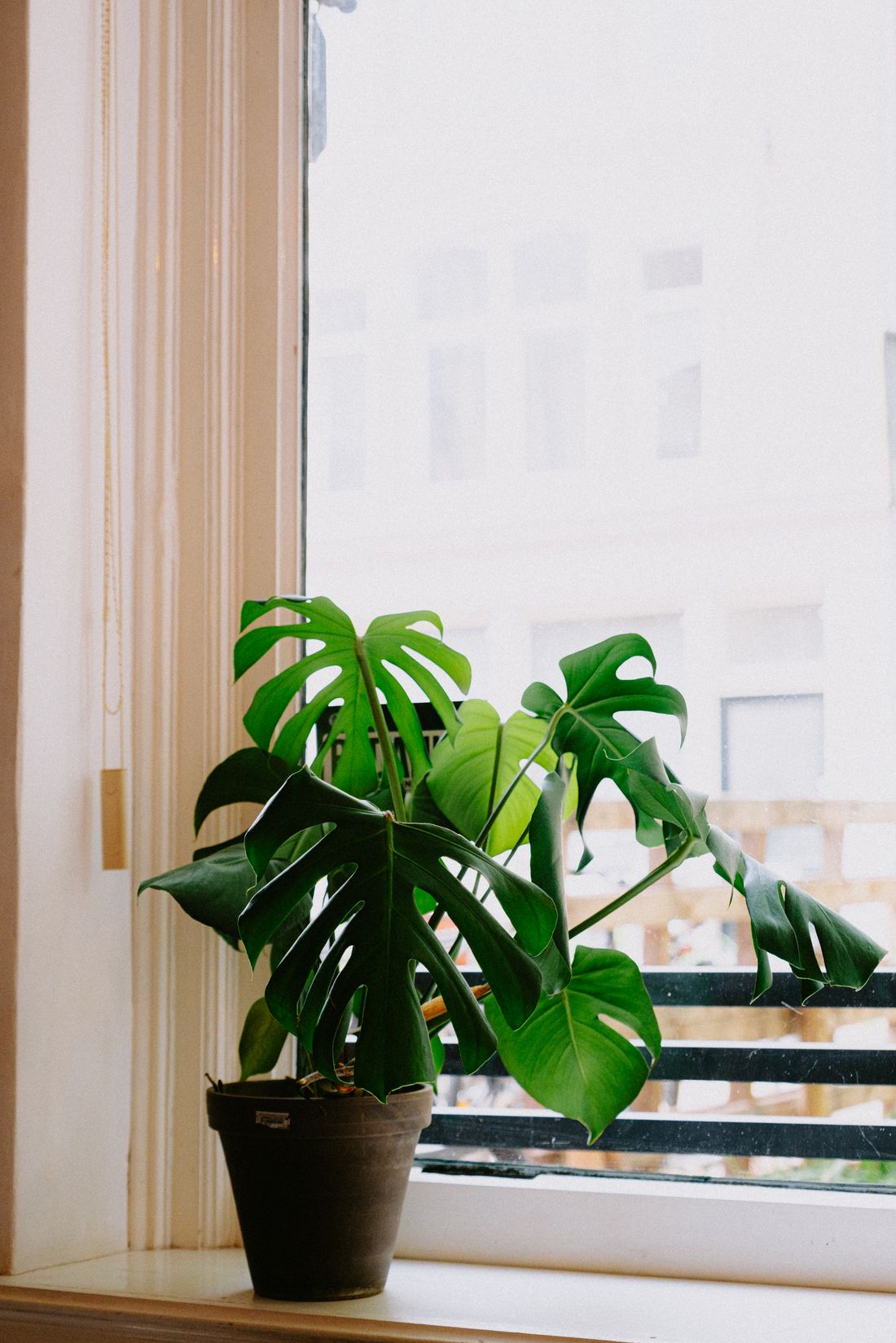
How far back the east light reaches
Before our own scoring says anything: we gathered every published figure we could find for a monstera. 9 of them, from 5 separate sources, in 3 different units. They are reproduced below exactly as each source writes them, and nothing here is converted.
| Who publishes it | What it says a monstera needs | What the figure is |
|---|---|---|
| theplantrunner.com | 800–2,000+ lux | Standard foliage plants (pothos, Philodendron, Monstera deliciosa …) — a general band, not a single-species figure |
| theplantrunner.com | 1,500–5,000 lux | Light-hungry aroids & Ficus divas (Fiddle Leaf Fig, variegated Monstera) |
| growlightmeter.com | 8 – 12 PPFD / DLI | Monstera |
| houseplantjournal.com | 100 FC (20 µmol) foot-candles | minimum indirect light level |
| houseplantjournal.com | 200 FC (40 µmol) foot-candles | good indirect light level |
| houseplantsnook.com | 50–100 foot-candles | chart fc level |
| houseplantsnook.com | 200–400 foot-candles | chart fc level |
| soltech.com | around 288–325 PPFD / DLI | Monstera FAQ — large / extra-large plant PPFD |
| soltech.com | 80–500 PPFD / DLI | Monstera — Photone's published PPFD range, cited by Soltech |
The same monstera, walked away from an unobstructed east window one step at a time:
| Distance from the east glass | Estimated light | What the light is doing | Verdict |
|---|---|---|---|
| 0.3 m, against the glass | 6,500 lux | Just the right amount of light | Great fit, 99/100 |
| 1 m back | 5,000 lux | Just the right amount of light | Great fit, 99/100 |
| 1.5 m back | 3,969 lux | Just the right amount of light | Great fit, 99/100 |
| 2.1 m back | 3,008 lux | Just the right amount of light | Great fit, 99/100 |
| 3 m back | 1,984 lux | A little dim, but workable | Worth a try, 69/100 |
| 4 m back | 1,250 lux | A little dim, but workable | Worth a try, 65/100 |
Seven feet is 2.1 metres, and at 2.1 metres the score is 99/100 with all four dimensions inside their bands. The person whose monstera is thriving there is not getting away with anything. That is simply what the spot is.
The corridor is wide, and then it ends abruptly. From the glass out to seven feet the verdict does not move at all, because 6,500 lux and 3,008 lux sit in the same band for this plant. What moves is the next step. Between 2.1 and 3 metres the light falls from 3,008 to 1,984 lux and the score drops from ninety-nine to sixty-nine. Ninety centimetres costs a third of the light.
That step is where the argument lives. The advice that seven feet is too far is describing something real; it just belongs a metre further into the room. The general version of this question — how far from a window any plant can sit — has the same shape for most species.
Whether the plant is what decides it
Those threads argue about plants as much as they argue about distance, so it is worth asking whether a different plant would come out anywhere else at that spot.
| What else is standing there | What the light is doing | Verdict |
|---|---|---|
| Monstera | Just the right amount of light | Great fit, 99/100 |
| Golden pothos | Just the right amount of light | Great fit, 100/100 |
| ZZ plant | Just the right amount of light | Great fit, 99/100 |
| Snake plant | Just the right amount of light | Great fit, 99/100 |
| Peace lily | Just the right amount of light | Great fit, 93/100 |
It would not. Four of the five land on ninety-nine or a hundred and the peace lily on ninety-three, and all five read as a great fit. At seven feet from an east window the plant you choose is not the variable. Scored for a pothos, the same window runs out at about the same place.
East against the other three
The other half of the argument is the compass, and people ask whether east or west is better for a monstera as though the two were far apart. Held at the same seven feet, with nothing changing but the direction the window faces, east reads 3,008 lux and west 3,609 — and both come back a great fit at 99 out of 100, as does south at 6,015. Only north drops, to 68, and a room with no direct sun at any window falls to 46.
East, west and south are one answer. North is a different one: 1,684 lux and sixty-eight, which is the workable band east only reaches at three metres. A spot that gets no direct sun at any point in the day falls to 301 lux and forty-six. A north window is its own case, and it is the one to read if that is what you have.
Inside one room, a metre of distance moves the number further than three of the four compass directions do. People argue about the window; the window is mostly settled by the time they start.
The same spot in a cold room
Everything above holds the room at 21 °C. That is the assumption doing the quiet work, because a spot seven feet from an east window in February is not the spot it was in July. Same light, same plant, same distance, read again across a range of room temperatures: 99 out of 100 at 21 °C and at 25, but 66 at 18, 46 at 14, 44 at 10, and back down to 67 at 30.
The light does not move. It reads the same at ten degrees as at twenty-one, because the light genuinely is the same — the sun is indifferent to what the radiator is doing. The verdict moves anyway, from ninety-nine at 21 °C down to forty-four at ten, and the top band turns out to be narrower than the distance band was: 21 and 25 hold it, 18 does not.
Which is the part worth carrying away from a page about a window. The spot everybody was arguing over is settled on light, and can still be lost on something the argument never mentioned.
What the score does not cover
One thing the number does not tell you is whether the leaves will split. Fenestration is a light question but not only a light question — leaf size and the age of the plant come into it too, so a monstera can sit at the top of the scale and still put out solid leaves. That is a separate question with a separate answer.
Those light figures are estimates rather than meter readings. We build them from the window direction, the distance and a clear day, on the same curated care data the app scores with.
All of the above also assumes an unobstructed window. A blind, a small pane, or a building across the street each cut what actually arrives, and none are inputs here. Every table above prints what it held still. For your own window rather than a clean one, the free spot checker takes a photo and does the same arithmetic on what it sees.
Published August 19, 2026 · Last updated August 30, 2026
