Most light guides answer in adjectives. Bright indirect, medium, dappled shade. If you are here, you have probably moved past that: you have a meter reading, a number from a grow light manual, or a phone app telling you the shelf reads 1,400 lux. What you need now is the missing half of the sentence, the part that says what 1,400 lux is actually enough for.
Here it is as a lookup. Type your reading, or tap one of the presets.
Your light reading
Tier boundaries follow the foot-candle brackets interior growers have used for decades, converted to lux. They are conventions, not physics: treat readings near a line as belonging to both sides of it.
The four tiers, and who lives in each
Most horticultural sources answer this in foot-candles and most building sources answer it in lux, which is the first reason the numbers look incompatible.
| Published by | The figure | In its own words |
|---|---|---|
| open.edu | 100 000 lux | “Sunlight is extremely bright and its illuminance can reach 100 000 lux on the ground.” Overcast is still “at least 5000 lux”. |
| open.edu | 200–300 lux | “Daylight penetrating windows into a building can provide illuminance levels of around 200–300 lux in typical naturally lit offices for most of the day.” |
| open.edu | 150 / 300 / 500 lux | Recommended task levels: circulation areas 150, classroom desk 300, office desk 500. |
| extension.illinois.edu | 75 / 150 / 300 / 1500 fc | Its four bands, verbatim: “Low Light (75 foot candles)”, “Medium (average) Light (150 foot candles)”, “High or Bright Light (300 foot candles)”, “Direct (1500 foot candles)”. |
| extension.msstate.edu | 50–500 / 500–1,000 / 1,000+ fc | “High represents light conditions that are 1,000 or more foot-candles in intensity”, “medium represents 500 to 1,000 foot-candles”, “low represents 50 to 500 foot-candles” — and the same page also heads sections at 25–75, 75–150 and 150–1,000. |
| extension.psu.edu | Both units | “The light meter I purchased reads both foot candles and the metric measurement of lux.” |
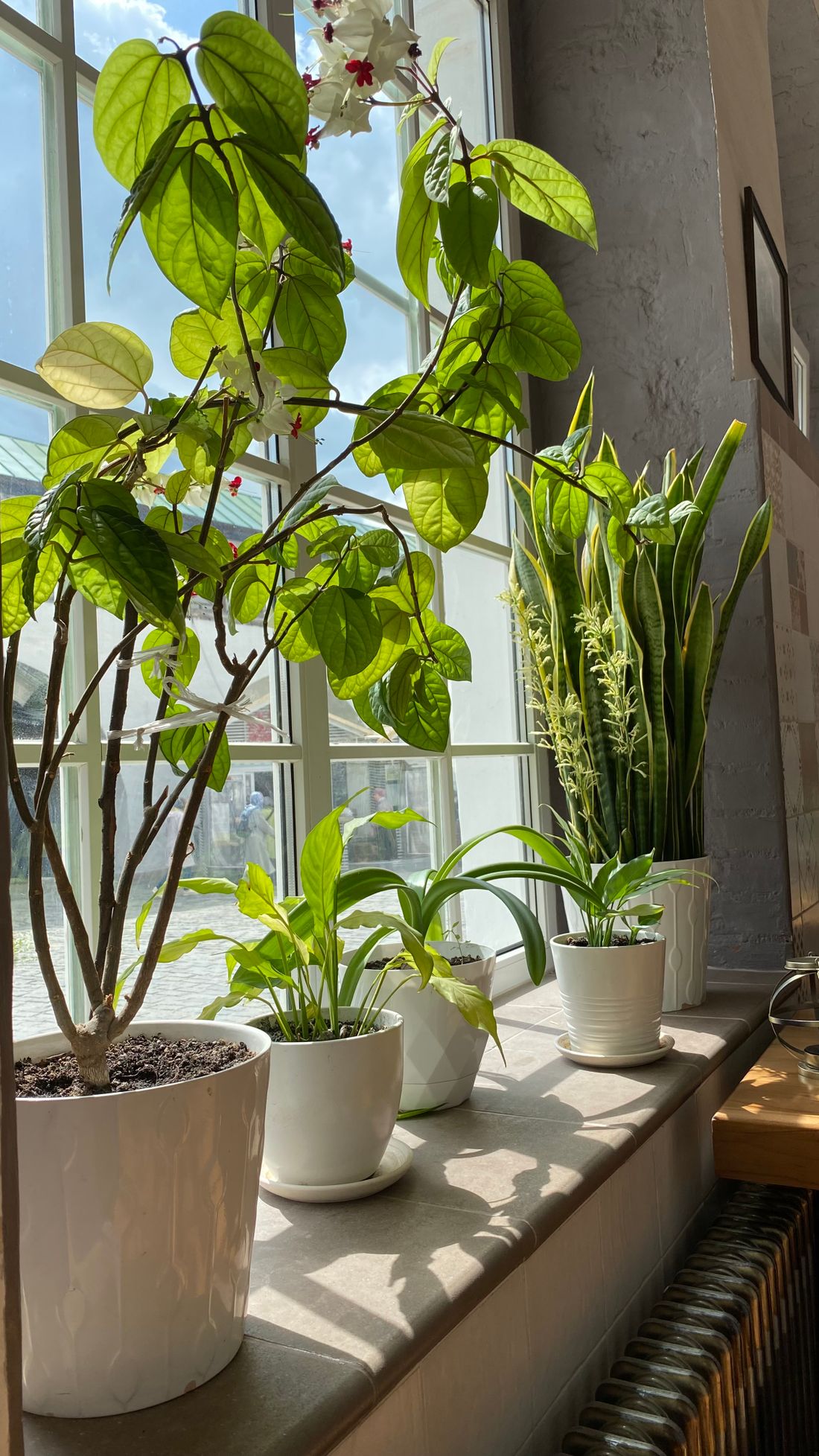
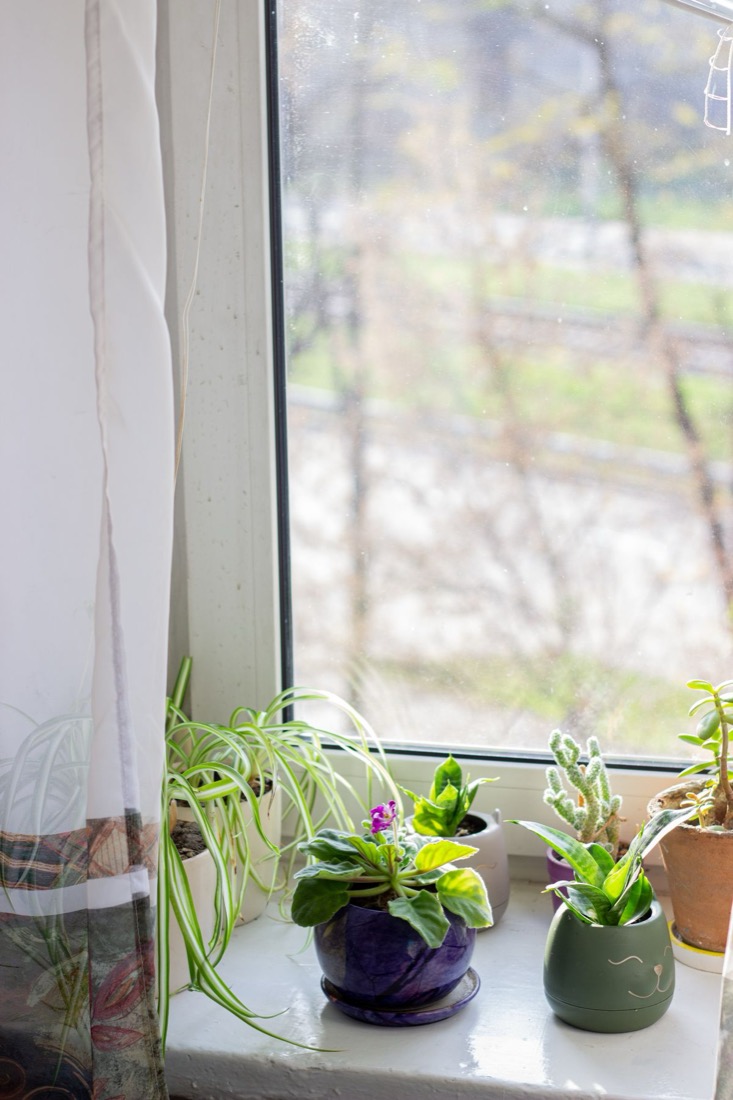
Nearly every houseplant you can buy is sold into one of four light tiers. The boundaries below are the classic interior-growing brackets, written in both units. Our own care data files each species into the same four tiers, which is where the plant lists on this page come from.
| Tier | Foot-candles | Lux, roughly | What it means in a room |
|---|---|---|---|
| Low | 25–75 | 270–800 | A few metres from a window, or a north room. Survival light for tough species; nothing grows fast here. |
| Medium | 75–150 | 800–1,600 | The middle of a decently lit room. The big foliage group is comfortable from here up. |
| High | 150–1,000 | 1,600–10,800 | Near a window without midday sun on the leaves. Where bright-light plants actually want to live. |
| Very high | 1,000+ | 10,800+ | Sun on the sill for part of the day. Succulents, citrus and most herbs only really run here. |
Two things about that table are worth saying plainly. The tiers overlap in practice, because a plant does not read the bracket it was filed under. And the lux column is rounded on purpose: a boundary like 800 lux is a convention that different references draw at slightly different places, so a reading of 750 is not meaningfully different from one of 850.
Where those conventions meet real rooms is the part we can show rather than assert: 204 readings taken at 104 real spots, of which seven of the 49 indoor ones fall below 270 lux, under the floor of the lowest tier on this page.
What is already published, and in what units
Before answering it ourselves we read what is already published. Twenty-four sources end to end on 29 August 2026, from which we transcribed 569 numeric light figures, then re-fetched every page to check each number and its unit; six were thrown out.
Two things came out of that. Only 51 of the 569 are in lux — the unit your phone gives you. 258 are in foot-candles, 106 in PPFD or DLI, 80 are hours of exposure. And on the five plants where two of those sources both publish a foot-candle range, the two ranges share only a quarter to a half of their combined span: a golden pothos is 25–75 fc in one and 50–100 fc in the other.
They are not contradicting each other about physics. They are drawing a convention in slightly different places, for a plant, in a unit you do not have. So this page answers the other question instead — the one our own data can answer exactly.
What your reading actually unlocks
The tiers above are the convention. This is the part the convention leaves out: how much of the planted world a given reading opens up, and how often a real room reaches it.
| If your reading is at least | It meets the floor for | Indoor spots we measured that reach it |
|---|---|---|
| 270 lux | 5% | 86% |
| 800 lux | 44% | 69% |
| 1,600 lux | 79% | 61% |
| 10,800 lux | 100% | 22% |
Two things fall out of that table. Going from 800 lux to 1,600 nearly doubles what will grow for you, and costs only a few percentage points of the rooms that can supply it — that is the move worth making. The last tier is the opposite trade: it opens the remaining fifth of the library, and barely one indoor spot in five ever gets there. That is why the herbs and the succulents keep failing on windowsills that look bright.
The sources, read end to end on 29 August 2026: extension.illinois.edu, extension.msstate.edu, extension.arizona.edu, yardandgarden.extension.iastate.edu, growlightmeter.com, floraplantcare.com, apps.apple.com, terraforums.com, staugorchidsociety.org, libanswers.nybg.org, en.wikipedia.org, hgic.clemson.edu, missouribotanicalgarden.org, pmc.ncbi.nlm.nih.gov, houseplantjournal.com, epicgardening.com, plantophiles.com, houseplantsnook.com, soltech.com.
What sits in each tier
These are common, buyable examples from our care library rather than a complete roll call. If your reading landed in a tier above, these are the plants the number is enough for. The top tier is the one that catches people out indoors: it is where the herbs live, and scoring basil on every sill a kitchen can offer did not turn up one that reaches it.
Low tier, from 270 lux
 Snake plant
 ZZ plant
 Peace lily
 Heartleaf philodendron
 Chinese evergreen
 Cast iron plant
Medium tier, from 800 lux
 Pothos
 Monstera
 Spider plant
 Pilea
Pilea Satin pothos
 Phalaenopsis orchid
High tier, from 1,600 lux
 Fiddle leaf fig
 Rubber plant
 Hoya
Hoya Croton
 African violet
Very high, sun on the sill
 Jade
Jade Succulents
 A small citrus
 Sun-loving herbs like basil & rosemary
A plant listed in a lower tier is almost always happy in the tier above it, within reason. The reverse is where trouble starts: a high-tier plant in a medium-tier spot declines slowly enough that the light rarely gets the blame.
Where did your number come from?
The tier lookup is only as honest as the reading you feed it, and readings go wrong in predictable ways. A number taken at eye level, by the window, at noon, describes the brightest moment of the best spot in the room. The plant lives somewhere else: lower, further in, and all day long.
If you are using a phone as the meter, lay the phone down flat at the spot the pot actually occupies, screen up, at pot height. Do not point it at the window; that measures the window, not the spot. And treat a single reading as a snapshot. The same shelf can read 2,000 lux on a clear morning and 400 on an overcast afternoon, which is why serious estimates work from the typical day rather than the lucky one.
The same reading is not the same answer
Here is the point of this whole page in one worked example. Take a spot 1.5 metres in from a north-facing window. Under typical clear conditions that estimates to about 2,200 lux, which lands just inside the high tier: a pothos or a monstera there is comfortable, with room to spare.
Now put a croton in the same spot. Same light, same 2,200 lux, and the verdict drops to a caution, because a croton is a high-tier plant and the number that flattered the pothos runs thin for it.

Worth a try
It can work here with a little care.
A little dim, but workable
Comfortable temperature
Humidity suits it
Airflow suits it
Everything else on that card is green. The temperature suits it, the humidity suits it, the air suits it. Light is the one dimension you cannot judge by standing in the room, and it is the one that quietly decides whether this plant grows or merely persists.
The numbers that look wrong
Below about 50 lux you are not in a low-light spot, you are in a no-light spot. When we measured six points across one ordinary living room, the dark corner read 18 lux. No tier contains that number. Tolerance gets a tough plant through a dim winter; it does not get any plant through a corner the light never reaches. That 18 comes from a six-spot walk across one ordinary living room.
Above about 30,000 lux you are reading direct sun. That is not an error, it is just a different question. Direct sun readings swing enormously with the hour and the season, and for most foliage plants the concern flips from not enough to too much, too fast. The sill plants in the very-high tier are the ones built for it.
And if your reading seems to disagree with a plant that is visibly thriving, believe the plant. A reading is one moment; the plant is the average of every hour it has stood there.
About this page
The tier boundaries are conventions, the foot-candle brackets long used in interior growing, converted at one foot-candle to 10.76 lux and rounded. Different references draw the lines in slightly different places, which is why the lookup flags readings near a boundary instead of pretending the line is sharp.
The plant lists come from our curated care data, where each species carries a light tier along with its temperature, humidity and airflow preferences. The worked example above is a real engine result, not a drawing of one: the light estimate comes from window direction and distance under typical clear conditions, and the verdict is produced by the same scoring that runs in the app and in the free spot checker on this site.
The 18 lux corner was measured, modestly: a phone laid flat at pot height, one clear day, one room, single samples. Where a figure on this page is an estimate we have said so.
By GrowSpot · Published August 6, 2026 · Last updated August 30, 2026
