Say your meter reads 300 foot-candles and you want to know whether that counts. The first answer you find says bright indirect light is 500 to 1,000 fc, so you are short. The next says 1,000 to 2,000 fc, so you are nowhere near. A third works in lux and puts the same phrase at roughly 90 to 465 fc, so you are comfortably inside it. All three of those were on the first page of the same Google search on the day this was written.

Worth a try
It can work here with a little care.
A little dim, but workable
Comfortable temperature
Humidity suits it
Airflow suits it
What does page one of Google actually say?
Four extension services put a number on the same phrase, and, with one exception, no two of them draw the boundary in the same place.
| Published by | The bands it gives | In its own words |
|---|---|---|
| extension.illinois.edu | 75 / 150 / 300 / 1500 fc | Its four bands, verbatim: “Low Light (75 foot candles)”, “Medium (average) Light (150 foot candles)”, “High or Bright Light (300 foot candles)”, “Direct (1500 foot candles)”. |
| extension.arizona.edu | 25–75 / 75–150 / 150–1000 fc | “In general, there are three categories of light intensity for interior plants: high, 150–1000 foot-candles (fc); medium 75–150 fc; and low, 25–75 fc.” |
| extension.msstate.edu | 50–500 / 500–1,000 / 1,000+ fc | “High represents light conditions that are 1,000 or more foot-candles in intensity”, “medium represents 500 to 1,000 foot-candles”, “low represents 50 to 500 foot-candles” — and the same page also heads sections at 25–75, 75–150 and 150–1,000. |
| extension.psu.edu | 100 footcandles | “a common baseline for low light is 100 footcandles”, with one plant’s own spot measured “as low as 25-foot candles in mid-morning”. |
| extension.illinois.edu | Distance, per wall | For its low band: “North window: a few feet away” but “South window:15-20 feet away”. |
| extension.illinois.edu | 10,000–12,000 fc | “Outdoors, the amount of sunlight that is cast may be 10,000 to 12,000 foot-candles.” |
These are published bands for the same phrase, read on 2 August 2026 from a signed-out US search. Where a source published lux, the foot-candle column is converted rather than quoted.
| Source | “Bright indirect” in foot-candles |
|---|---|
| Google AI Overview, for this exact question | 500 to 1,000 fc |
| Google AI Overview, for “foot candles chart for plants” | 500 to 1,000 fc, labelled high light |
| How Many Plants | 1,000 to 2,000 fc |
| Thursd (from the results page) | 500 to 1,000 fc |
| Spider Farmer (published as 1,000 to 5,000 lux) | about 90 to 465 fc |
| r/houseplants, top answer (from the results page) | 400 to 800 fc |
| Arkansas Cooperative Extension, high light (from the results page) | 500 to 1,000 fc preferred |
Two things in that table are worth sitting with. The first is that Google’s own AI Overview calls 500 to 1,000 fc bright indirect on one query and high light on another, on the same day. The second is that the two extremes do not overlap at all: everything Spider Farmer calls bright indirect is dimmer than anything How Many Plants calls bright indirect. There is no reading that both would accept.
How do you convert foot-candles to lux?
One foot-candle is one lumen per square foot. One lux is one lumen per square metre. A square metre holds about 10.764 square feet, so the conversion is fixed: 1 fc = 10.764 lux, and multiplying by ten in your head is close enough for a plant.
Which unit you meet depends on where the writing came from. Handheld meters sold in the US and older horticultural tables use foot-candles. Phone apps and most sources outside the US report lux. Neither is more accurate, and a source quoting foot-candles to three digits is not being more precise, it is just using smaller numbers.
If you already have a reading and only want the bracket it lands in, type the number straight in: the same four tiers, written in both units.
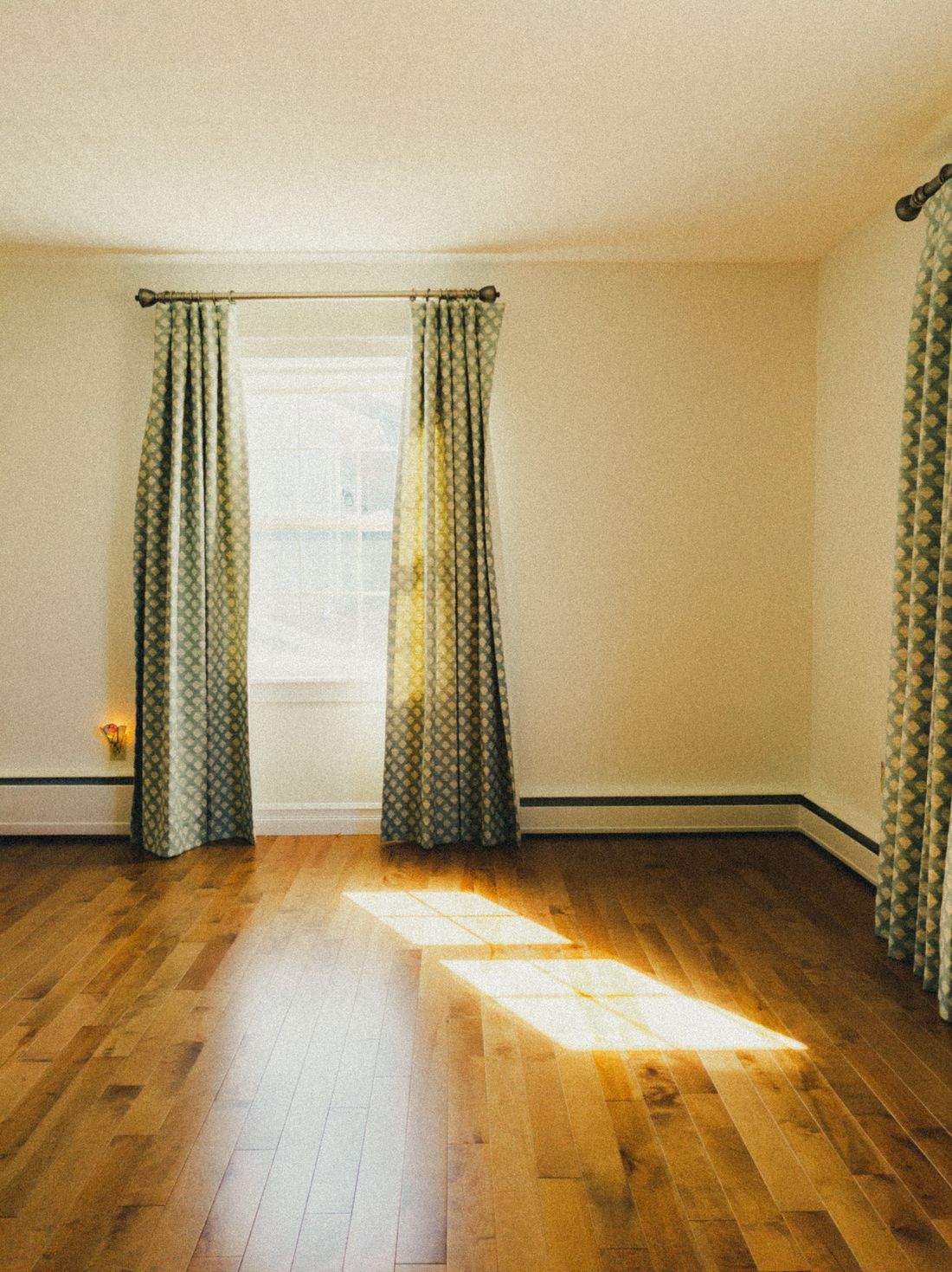
What do those numbers look like in a real room?
One ordinary living room, one clear day, every reading taken within the same hour at roughly pot height.
| Spot | Reading | Foot-candles |
|---|---|---|
| At the bright window | 20,000 lux | about 1,860 fc |
| 1 m from the window | 15,000 lux | about 1,390 fc |
| 2–3 m away, in window shade | 3,500 lux | about 325 fc |
| Middle of the room | 570 lux | about 53 fc |
| Darker side of the room | 119 lux | about 11 fc |
| The dark corner | 18 lux | about 2 fc |
Now put that against the table above. The middle of that room reads 53 fc, which sits at or below the bottom of every published low-light band and nowhere near any bright indirect band, and it is the spot most people describe as bright because standing in it genuinely feels bright. The window itself reads about 1,860 fc, which one source on page one would call bright indirect and another would call direct sun. Both labels get applied to the same spot, which is why we went and measured how bright is the middle of a room.
Why do the published numbers disagree?
- They are answering different questions. A band built around a plant growing quickly sits higher than one built around a plant staying healthy. Both are legitimate, and neither says which one it is doing.
- The phrase describes a quality, not a quantity. “Bright indirect” originally meant plenty of light with no direct beam landing on the leaves. That describes the path light takes, not how much arrives, and a bright north room and a shaded spot beside a south window can both satisfy it at very different intensities.
- Where the meter was held changes the answer. Held up at the window facing out, a meter reads the sky. Laid flat where the leaves actually are, it reads what the plant gets, which is often a small fraction of the first number. If you are using a phone, set the phone down at the spot with the screen facing up rather than pointing it anywhere.
How often does the disagreement land on a real reading?
Everything above is an argument about definitions. This is a count. Take the lowest floor in the table of bright-indirect bands above and the highest — 1,000 lux at one end, 1,000 fc (10,764 lux) at the other — and sort our own indoor light-meter readings into the three groups that fall out of them: too dim for anybody’s definition, bright enough for everybody’s, and the stretch in between where the published sources contradict each other.
| Where the reading falls | Lux | Readings (of 49) |
|---|---|---|
| Below every published floor | under 1,000 | 17 |
| Inside the stretch they disagree about | 1,000–10,764 | 21 |
| At or above every published floor | 10,764+ | 11 |
Twenty-one of forty-nine. Nearly half the indoor spots we have measured sit where one published source would tell you the spot qualifies as bright indirect and another would tell you it does not. The disagreement in the table of bright-indirect bands is not a quarrel about edge cases: it lands squarely on the range ordinary indoor readings actually fall in.
Seventeen readings sit below every floor on offer: no source on that page would call those spots bright indirect. Eleven are at or above all of them, so every source agrees those clear the bar — even where they then disagree about whether the spot has gone past it. It is the twenty-one in the middle that no amount of further reading will settle, because the sources are not disagreeing about your spot. They are disagreeing with each other.
Is the same reading the same answer for every plant?
Here is the part the band cannot cover. Take one spot, a metre back from a bright window with no direct sun, the exact thing the phrase is describing. Scored against four common houseplants, with the room held identical for all four at 22 °C, 50% humidity and light airflow, the light dimension alone comes out two different ways.
| Distance from the glass | Monstera | ZZ plant | Croton | Bambino fiddle leaf fig |
|---|---|---|---|---|
| 0.3 m against the glass3,640 lux | 94/100 | 93/100 | 65/100 | 65/100 |
| 1 m back2,800 lux | 93/100 | 93/100 | 64/100 | 64/100 |
| 2 m back1,764 lux | 66/100 | 93/100 | 47/100 | 47/100 |
| 3 m back1,111 lux | 62/100 | 92/100 | 46/100 | 46/100 |
At that one metre the four scores are 93, 93, 64 and 64, and the two lower ones are lower because of light. Nothing about the spot changed. The reading did not change. The phrase certainly did not change. Walk backwards and they separate further: the ZZ holds its score all the way to three metres while the monstera starts to slip at two.
That is why a number on its own, in either unit, cannot finish the job. It has to be compared against something, and the something is the plant.
Both pages are reading the same living room, in different units. The 53 fc middle and the 2 fc corner are 570 lux and 18 lux, which is worth seeing once in whichever unit you think in.
How fast does bright indirect stop being enough?
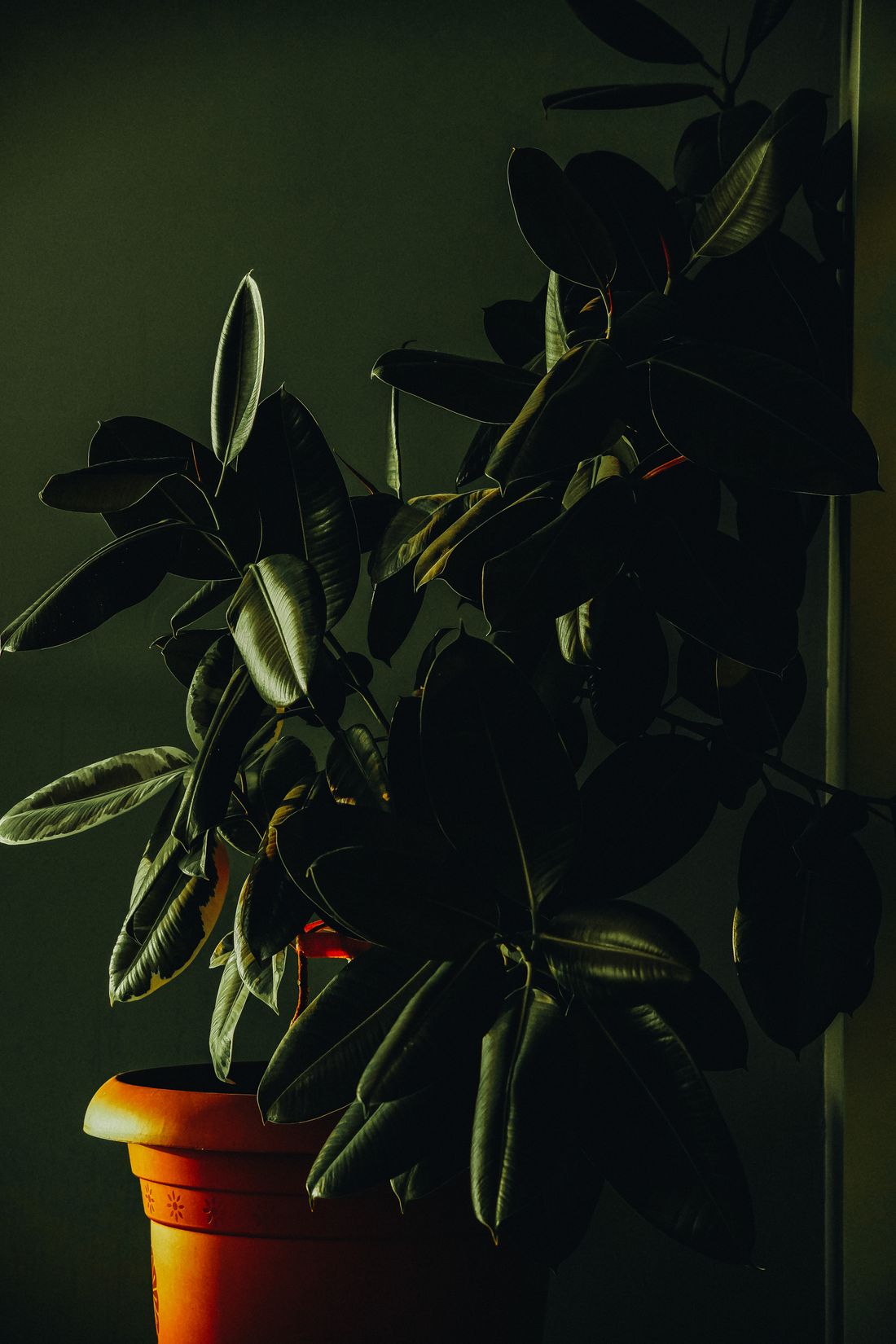
Same window, same plant, walking backwards, with the croton from the card above:
| Where the pot sits | Estimated light | Verdict |
|---|---|---|
| 0.3 m, against the glass | 3,640 lux | Worth a try, 65/100 |
| 1 m back | 2,800 lux | Worth a try, 64/100 |
| 2 m back | 1,764 lux | Not the best fit right now, 47/100 |
| 3 m back | 1,111 lux | Not the best fit right now, 46/100 |
Every row in that table would be called bright indirect light by somebody, because every row is bright ambient daylight with no beam on the leaves. Two of them work for this plant and two do not. The label held all the way down and stopped meaning anything about halfway.
What can a light reading not tell you?
Light is the dimension people measure because it is the one with a gadget attached. It is also only one of four things a spot does to a plant. A bright kitchen windowsill above a radiator and a bright bedroom windowsill are the same light and different places to live, which the meter has no way of telling you. Hold one reading still and change only the room around it: not a fit at all at 13 °C, only worth a try at 16 and at 32, and a great fit at 20, 24 and 28.
The reading is identical every time. The verdict runs from a failure to the low nineties and back down again, and a meter would have reported the same number in all six rooms.
So take the reading, by all means. Then check it against the plant you actually own, in the spot you actually meant, rather than against a phrase whose published bands do not even overlap.
Published August 2, 2026 · Last updated August 30, 2026
