How far off is a phone reading?
Before any phone is involved, the published sources are already using two units and three different scales for the same thing.
| Published by | What it measures in | In its own words |
|---|---|---|
| extension.psu.edu | Both units | “The light meter I purchased reads both foot candles and the metric measurement of lux.” |
| extension.psu.edu | 25 fc, measured | “the reading for the snake plant measured as low as 25-foot candles in mid-morning”, against “a common baseline for low light is 100 footcandles.” |
| extension.illinois.edu | Foot-candles | Its bands: “Low Light (75 foot candles)” through “Direct (1500 foot candles)”. |
| extension.arizona.edu | Foot-candles, different scale | “high, 150–1000 foot-candles (fc); medium 75–150 fc; and low, 25–75 fc.” |
| extension.msstate.edu | Foot-candles, third scale | “High represents light conditions that are 1,000 or more foot-candles in intensity”, “low represents 50 to 500 foot-candles”. |
| open.edu | Lux | “Daylight penetrating windows into a building can provide illuminance levels of around 200–300 lux”, against sunlight that “can reach 100 000 lux on the ground.” |
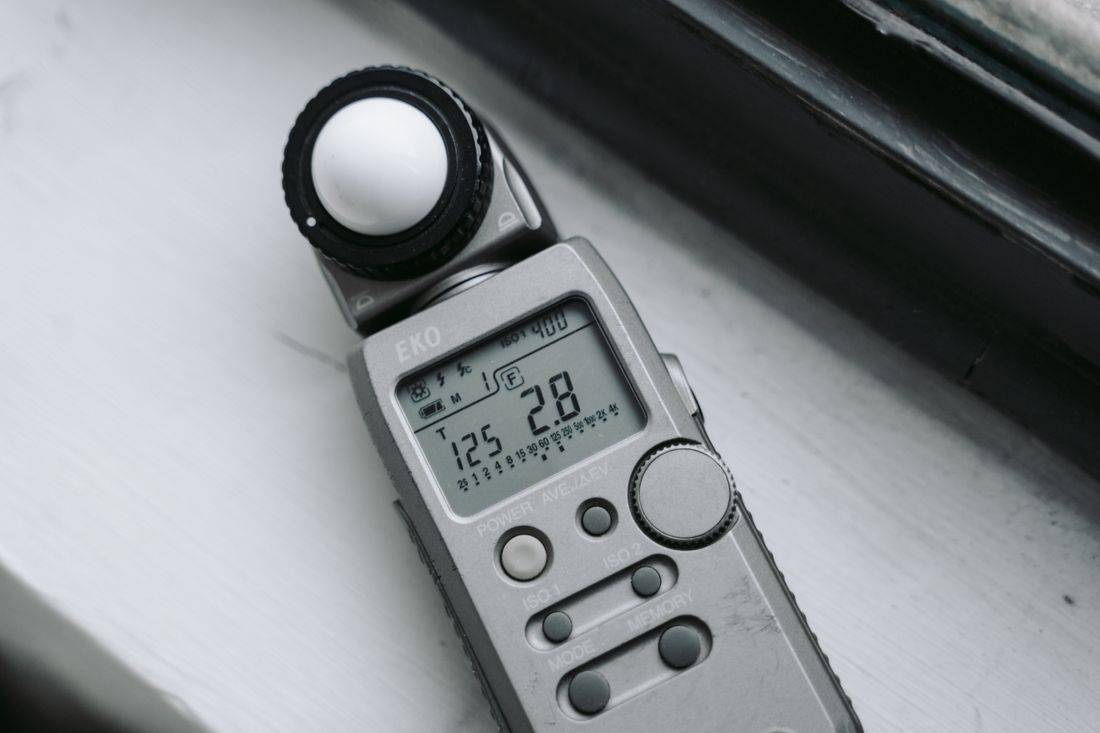
The phone itself is off far enough that you should not quote the number, and not far enough to stop you using it. In two of our own calibration rounds, one identical phone reading sat on top of real values of 1,800 and 3,500 lux. Same phone, same kind of spot, nearly a factor of two between what it said and what was there.
The reason is in the hardware. A phone reads light through whatever sits in front of the sensor, so its answer shifts with the spectrum and the angle of the scene, and consumer ambient-light sensors carry a wide spread of their own before any software touches the figure.
On an iPhone there is a further step: no app can read the ambient light sensor at all, so the figure is reconstructed from the camera’s exposure — why iPhone light meter apps disagree takes that apart.
Three things move a reading without you noticing:
- The angle the phone is lying at, which changes how much of the sky the sensor can see.
- The colour of the light, since grow lights and daylight land differently on a sensor calibrated for human vision.
- Bright sun, where the sensor clips and stops reporting the top of the range at all.
Does being off by double change the answer?
Sometimes yes, and the useful answer is about where in the range you are standing.
A doubled reading near the middle of a plant’s comfort band moves the score a long way. The same doubling out at either edge moves it hardly at all. Here is one monstera scored straight off a ladder of readings, with our own two calibration values sitting next to each other in the middle:
| What the meter really was | Light | What the light is doing | Verdict |
|---|---|---|---|
| A dark corner, measured | 120 lux | Too dim here | Not the best fit right now, 42/100 |
| A dim wall away from the window | 900 lux | A little dim, but workable | Worth a try, 61/100 |
| One end of a pair our phone read identically | 1,800 lux | A little dim, but workable | Worth a try, 65/100 |
| The other end of that same pair | 3,500 lux | Just the right amount of light | Great fit, 93/100 |
| A bright sill on an overcast day | 10,764 lux | A bit bright, but workable | Worth a try, 66/100 |
| Right at the glass in full sun, measured | 20,000 lux | A bit bright, but workable | Worth a try, 61/100 |
Read the two middle rows first, because they are the calibration pair and the engine does not treat them alike. At 1,800 lux the monstera is worth a try at 65. At 3,500 it is a great fit at 93. A phone that cannot separate those two costs you 28 points of confidence about the spot. So the error is real, and it lands somewhere.
What it does not cost you is the decision. Both of those rows say the plant can live there. The row that says otherwise is 120 lux, fifteen times below the pair, and no sensor is subtle enough to confuse a dark corner with a dim wall.
The shoulders are where precision stops paying
Then look at the shoulders. 900 lux scores 61 and 10,764 lux scores 66: a five-point gap across a twelve-fold spread, against 28 points for the two-fold gap at the peak. Push further out and the gap closes completely, with 900 lux and 20,000 lux both landing on 61. Precision is worth the most in a narrow band around the peak and close to nothing on either side of it. That is an awkward result for meters generally, ours included, because the band where accuracy pays is also the band where every reading is hardest to trust.
It is worth knowing how wide the disagreement is upstream of all this. The published floors for “bright indirect light” run from 1,000 lux at the low end to 10,764 at the high end, collected source by source on our foot-candle page. Both of those numbers sit on the shoulders of the curve above, where the score barely moves. The sources are arguing about a stretch where the plant cannot tell the difference.
What does a phone get right?
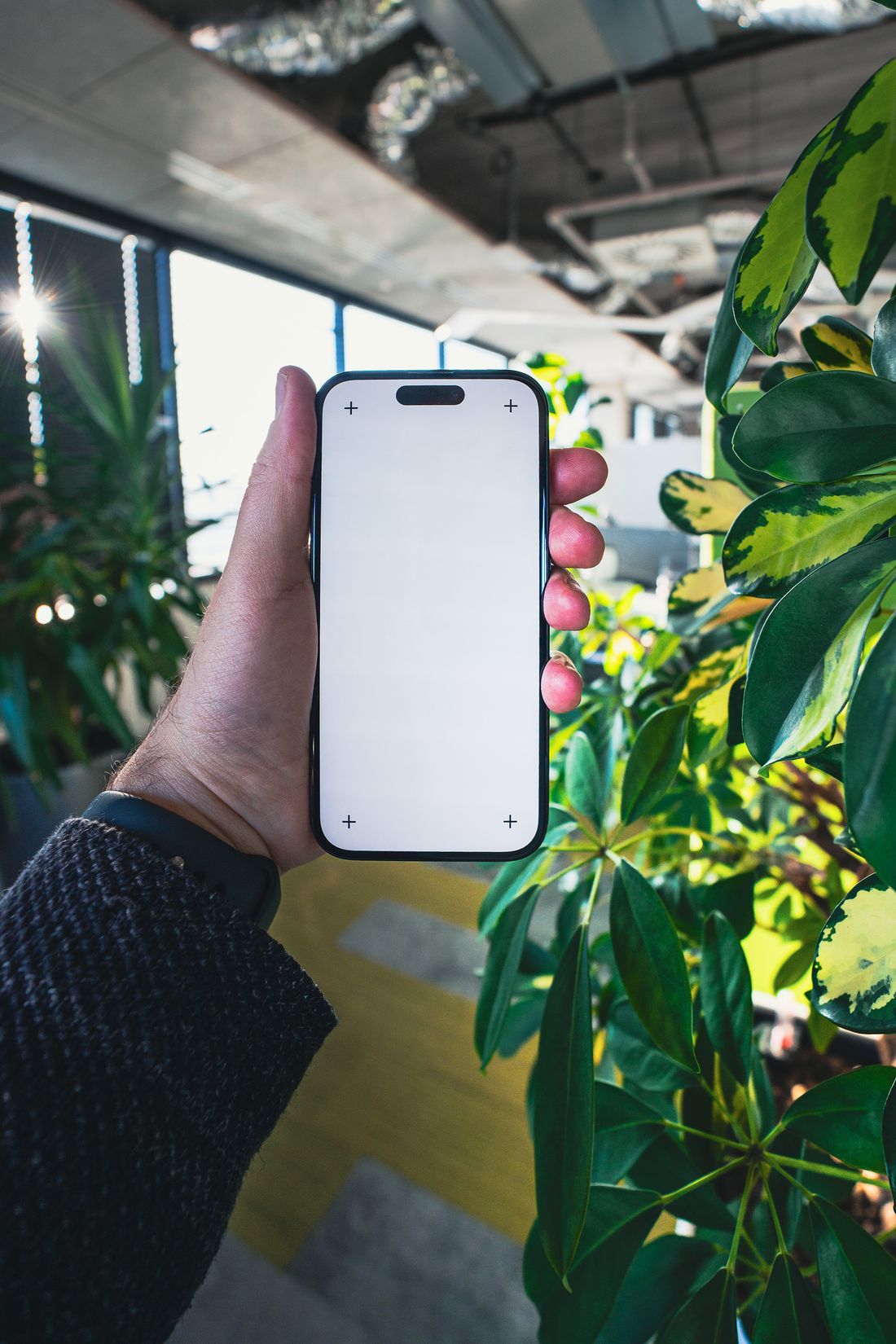
What a phone gets right is order. Read two spots the same way a few minutes apart and the ranking holds even when both absolute numbers wander, because whatever the sensor is getting wrong, it gets wrong the same way twice.
| Spot | Reading |
|---|---|
| At the bright window | 20,000 lux |
| 1 m from the window | 15,000 lux |
| 2–3 m away, in window shade | 3,500 lux |
| Middle of the room | 570 lux |
| Darker side of the room | 119 lux |
| The dark corner | 18 lux |
That shape is the useful output. A meter that reproduces it tells you which end of the room the plant belongs at, whether or not it agrees with a laboratory about any single figure. Every step away from the glass costs most of the light, and no phone is subtle enough to hide a drop that size.
Does the white paper trick help?
It helps with one specific thing. A sheet of ordinary printer paper over the sensor diffuses light arriving from an angle, so the sensor integrates the whole hemisphere above it instead of whatever bright patch happens to be in frame. That is a real improvement to a real problem, and it is why several apps ask for it.
It does not fix the spectrum, and it does not turn an estimate into a laboratory figure. If you want the reading to mean something, the paper matters less than reading every spot the same way. Four rules do most of the work:
- One hour, one day. Late morning to early afternoon, and all your spots inside that window.
- The phone flat and screen up, at the height the pot will actually stand.
- Nothing of yours over the spot. Lean back before you read, or you are measuring your own shadow.
- Read the tier the number falls in, and write the tier down rather than the digits.
We make one of these apps, so read this part sceptically
GrowSpot ships a light meter, which makes us the wrong people to ask whether light meters are trustworthy. So here is the position that costs us something: the honest output of a phone is a labelled tier, not three confident digits, and any app handing you a precise-looking number for a room is selling you a precision it does not have.
What we did instead of arguing about it was publish the readings. 159 of them, taken at 137 real spots with a light sensor or through white paper over the camera, as aggregates anyone can check, under a licence that lets you reuse them. The card below is our engine scoring one ordinary spot on four dimensions rather than one, which is the other half of the answer: light is the hardest of the four to judge by eye, and it is still only one of four.

Worth a try
It can work here with a little care.
A little dim, but workable
Comfortable temperature
Humidity suits it
Airflow isn't quite ideal
You can do the same check without installing anything. Describe the spot to the free spot checker and it scores it in the browser, no account needed. There is a cap on how many spots you can save on the free tier; the check itself costs nothing.
By GrowSpot · Published August 26, 2026 · Last updated August 30, 2026
