Search for this and the answers arrive with the confidence of a fact and none of the agreement. Here is the whole first page of results, with the last column showing what each one comes to if you read it the way a worried person reads it, as the lowest safe number:
| What the source prints | What it is | Taken as a minimum |
|---|---|---|
| Above 50 °F, with 60 better | A floor | 10 °C |
| 18 to 25 °C, tolerates 12 to 15 | A range and a floor, stated separately | 12 °C |
| 70 to 80 °F by day, 60 to 68 at night | A comfort range | 16 °C |
| 65 to 75 °F by day | A comfort range | 18 °C |
| 18 to 21 °C | What British homes are kept at | 18 °C |
| 21 to 27 °C | A comfort range | 21 °C |
Only two of them are floors. The rest are comfort ranges printed under headings that read like minimums, and taken that way the published minimum runs from 10 °C to 21 °C. Eleven degrees is not a rounding difference. It is the difference between a room you need to heat and a room that is fine.

Not the best fit right now
The plant's fine, this spot just isn't a match.
Just the right amount of light
Too cold here
Humidity suits it
Airflow suits it
Temperature is a deal-breaker here. The other three cannot make up for it.
What the plants actually ask for
Nine published minimums, and the two that describe the same plant are ten degrees apart.
| Published by | The figure | In its own words |
|---|---|---|
| hgic.clemson.edu | 60 °F | “ZZ plants are sensitive to cold and should be kept above 60 °F.” |
| ask.ifas.ufl.edu | 50 °F | For the same plant: “Active growth will be reduced and injury may occur below 50°F.” Ten degrees below the line above. |
| hgic.clemson.edu | 60 °F | “Try to avoid temperatures below 60 °F as cold damage may occur.” |
| hgic.clemson.edu | 50 to 55 °F at night | “Temperatures between 65 °F and 75°F during the day and 50 °F to 55 °F at night are ideal.” |
| hgic.clemson.edu | 50 to 55 °F at night | “Jade plants do best with daytime temperatures between 65 and 75 °F, and nighttime temperatures between 50 and 55 °F.” |
| extension.unh.edu | 50 °F | “Aloe is sensitive to cold temperatures and shouldn’t be grown in a room that dips below 50°F.” |
| homegarden.cahnr.uconn.edu | Below 55 degrees | “the house is heated to 55 degrees, which is above their lower temperature tolerance”, of a snake plant. |
| extension.umd.edu | 60 to 68 °F at night | “In general, foliage indoor plants grow best between 70° and 80°F during the day and from 60° to 68°F at night.” |
| yardandgarden.extension.iastate.edu | 45 °F | “Several species of indoor plants will see damage when temperatures drop below 45°F”, and “nearly all will die if exposed to below-freezing temperatures.” |
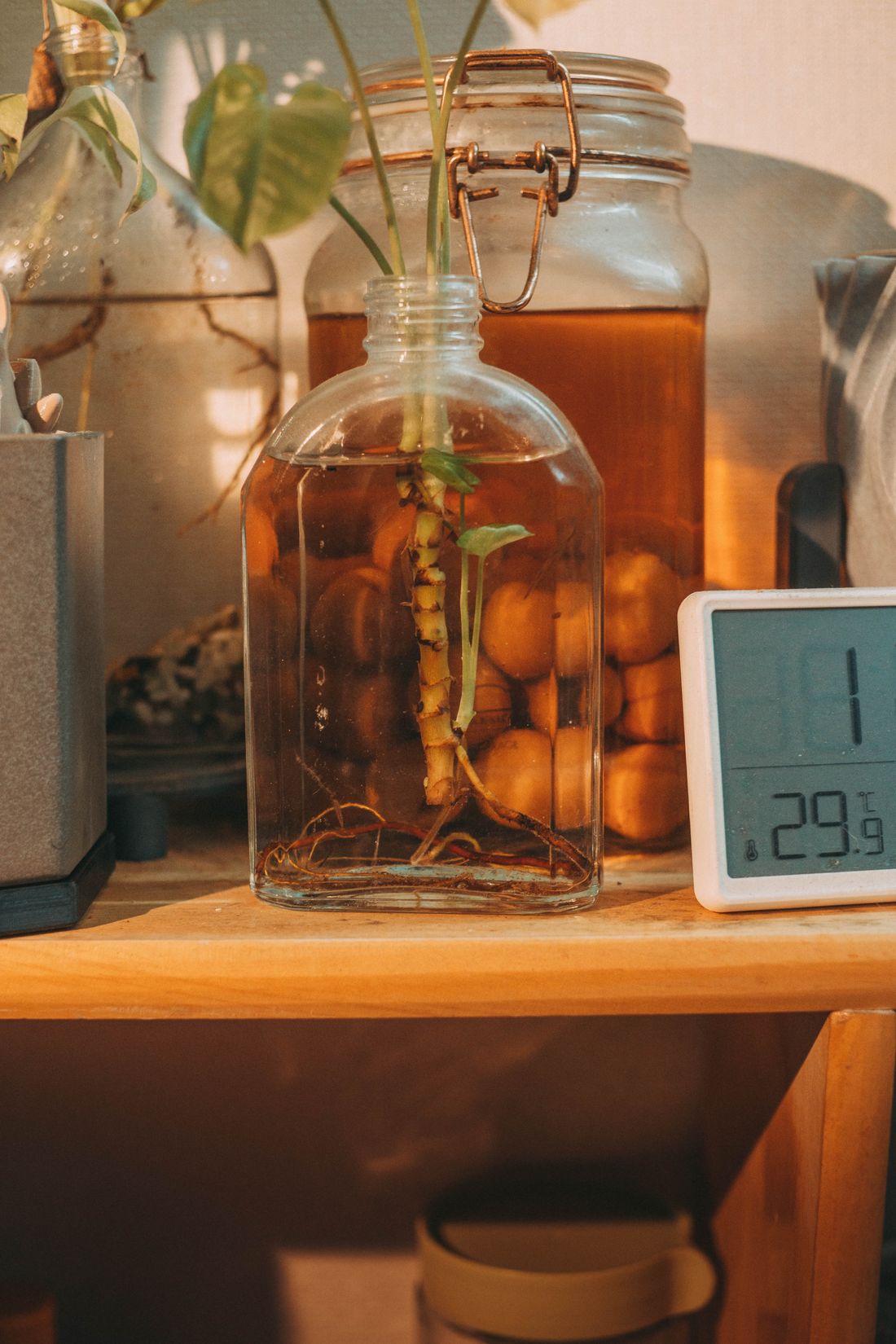
Here are eight plants that have their own page on this site, with the comfortable band our care data holds for each. These are not survival limits, but the range inside which the plant is not being asked to cope.
| Plant | Comfortable range |
|---|---|
| Sunset Jade | 10 °C to 29 °C |
| Ocean Spider Plant | 10 °C to 27 °C |
| Bird's Nest Snake Plant | 15 °C to 29 °C |
| Golden pothos | 16 °C to 29 °C |
| ZZ plant | 16 °C to 30 °C |
| Swiss cheese plant (Monstera) | 16 °C to 29 °C |
| Peace lily | 16 °C to 29 °C |
| Fascinator Prayer Plant | 16 °C to 27 °C |
The sources disagree more than the plants do
Read the two spreads next to each other. Across these eight plants the lower bound moves by six degrees, from 10 to 16. Across the six published sources it moves by eleven, from 10 to 21.
Counted a different way, by how many of the eight a given room temperature actually suits:
| Hold the room at | Left outside | Inside its band |
|---|---|---|
| 8 °C | Sunset Jade, Bird's Nest Snake Plant, ZZ plant and 5 others | 0 of 8 |
| 10 °C | Bird's Nest Snake Plant, ZZ plant, Swiss cheese plant (Monstera) and 3 others | 2 of 8 |
| 13 °C | Bird's Nest Snake Plant, ZZ plant, Swiss cheese plant (Monstera) and 3 others | 2 of 8 |
| 15 °C | ZZ plant, Swiss cheese plant (Monstera), Golden pothos and 2 others | 3 of 8 |
| 16 °C | None | 8 of 8 |
| 21 °C | None | 8 of 8 |
| 27 °C | None | 8 of 8 |
| 29 °C | Ocean Spider Plant, Fascinator Prayer Plant | 6 of 8 |
| 30 °C | Sunset Jade, Bird's Nest Snake Plant, Ocean Spider Plant and 4 others | 1 of 8 |
Eleven degrees where the count is eight out of eight, and that is the finding. It is also most of the range a heated home sits in anyway.
So the biggest single factor in whether you think your home is too cold is not which plant is standing in it. It is which article you happened to open.
Run the same comparison on humidity and it comes out the other way round. There the published advice is reasonably consistent and it is the plants that spread, far enough that these same eight share no comfortable humidity at all. One thermostat setting suits every plant in the table above. No single humidity does.
The reason is visible once you look at what each number is describing. Twenty-one to twenty-seven degrees is a comfort range: it is where these plants do well. Ten degrees is closer to a floor: it is where the plant starts to be in trouble. Both get published under headings that say minimum, and a reader with an 18 °C flat comes away believing something is wrong when nothing is.
Cold is the reason a perfect window can still fail
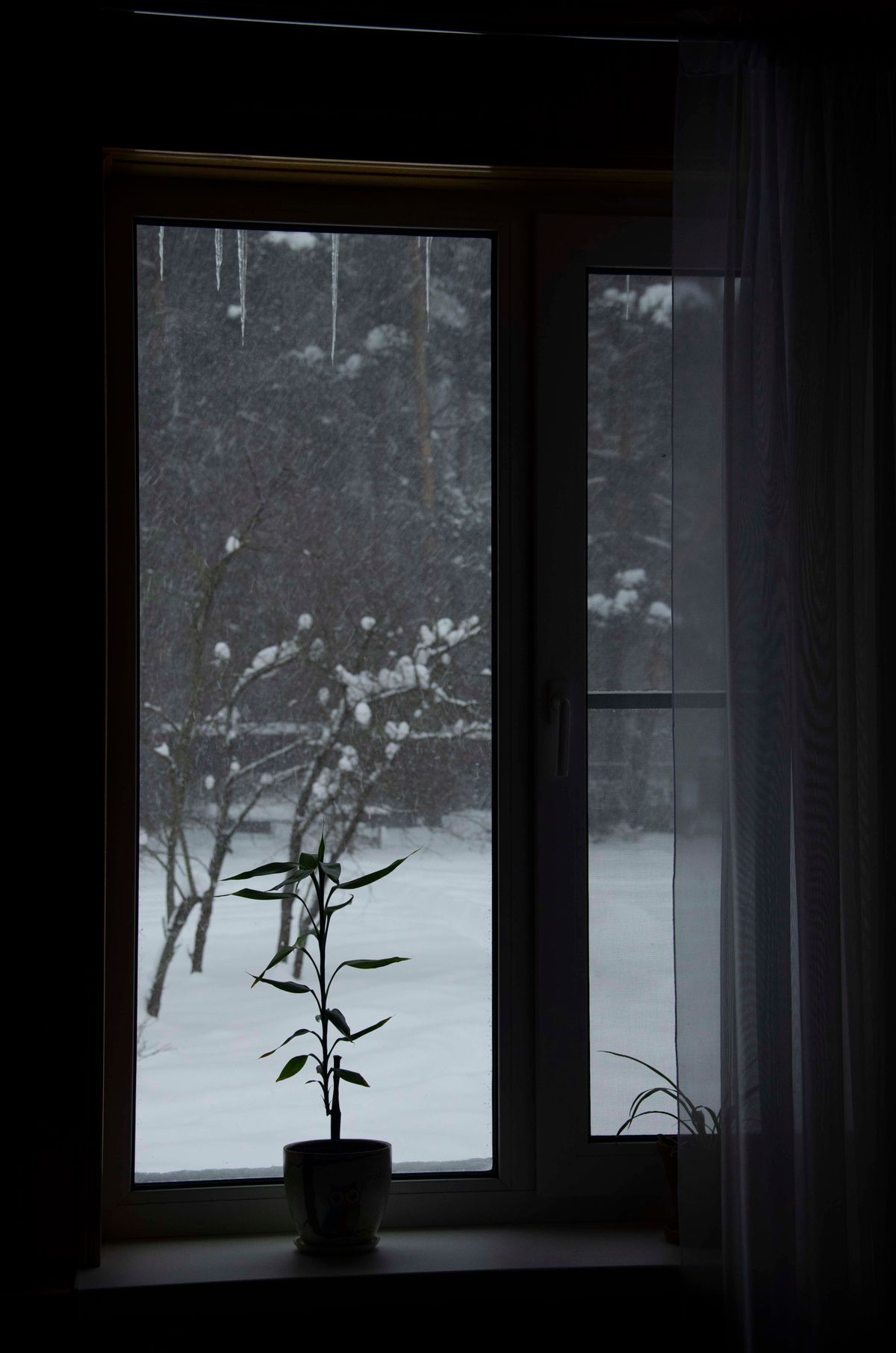
The card above is a north-facing windowsill in winter, the kind that often has a radiator under it. The light there is ideal for a peace lily, a genuinely good reading of 3,640 lux, and the spot still comes back at 44 out of 100. Nothing is wrong with the light. The temperature alone fails it.
This is the part that gets missed when light is treated as the whole question. A windowsill is the coldest surface in most rooms and it is also where the light is, so the two things people optimise pull against each other in exactly the season when it matters. If your plant looks unhappy on a bright sill in January, moving it into more light is the wrong correction.
Nor does it take a windowsill in January. A room deliberately cooled to sleep in does a milder version of the same thing all year, which is why the bedroom page ends up being about the thermostat rather than about the nightstand.
The eleven degrees the published minimums span, run against that one sill:
| Hold the sill at | Verdict |
|---|---|
| 10 °C | Not the best fit right now, 44/100 |
| 13 °C | Not the best fit right now, 44/100 |
| 16 °C | Worth a try, 64/100 |
| 18 °C | Worth a try, 67/100 |
| 21 °C | Great fit, 100/100 |
Nothing improves between 10 and 13 °C, because below the band the plant is already coping rather than growing. The distance from the coldest published minimum to the warmest is the distance from a failing spot to a perfect one, on a sill whose light never changed.
Our page on why plants die in winter covers the other three things that change at the same time, and none of them involve moving the pot.
The same cold reading does one more thing you will not see on the plant: it suspends two pieces of care rather than adjusting them.
- A cold alert on an outdoor plant holds back the repot hint and the feeding schedule until it clears, on the reasoning that a plant with nowhere to recover to should not be asked to spend anything.
- The threshold is 10 °C at night: the lowest comfortable bound in the table above, and the line the forecast has to cross both coming in and going back out.
One honest boundary before you act on any of this: we estimate indoor temperature rather than measure it, working it out from local weather adjusted for being indoors. A cheap thermometer on the sill will beat us at reading your January nights. What it cannot do is the part above: tell you which of your plants that reading rules out.
By GrowSpot · Published August 12, 2026 · Last updated August 30, 2026
