Search for houseplants that are hard to kill and you get the same five or six names from every result on the page: snake plant, ZZ plant, pothos, cast iron plant, peace lily. The lists agree because they are answering a question that has a stable answer, which is roughly “which houseplants tolerate the widest conditions in general”. That is a real question. It is just not the one you have. You have a specific corner, in a specific room, with a specific amount of light arriving at it, and the plant does not care what the average room looks like.

Worth a try
It can work here with a little care.
A little dim, but workable
Comfortable temperature
Humidity suits it
Airflow doesn't suit it
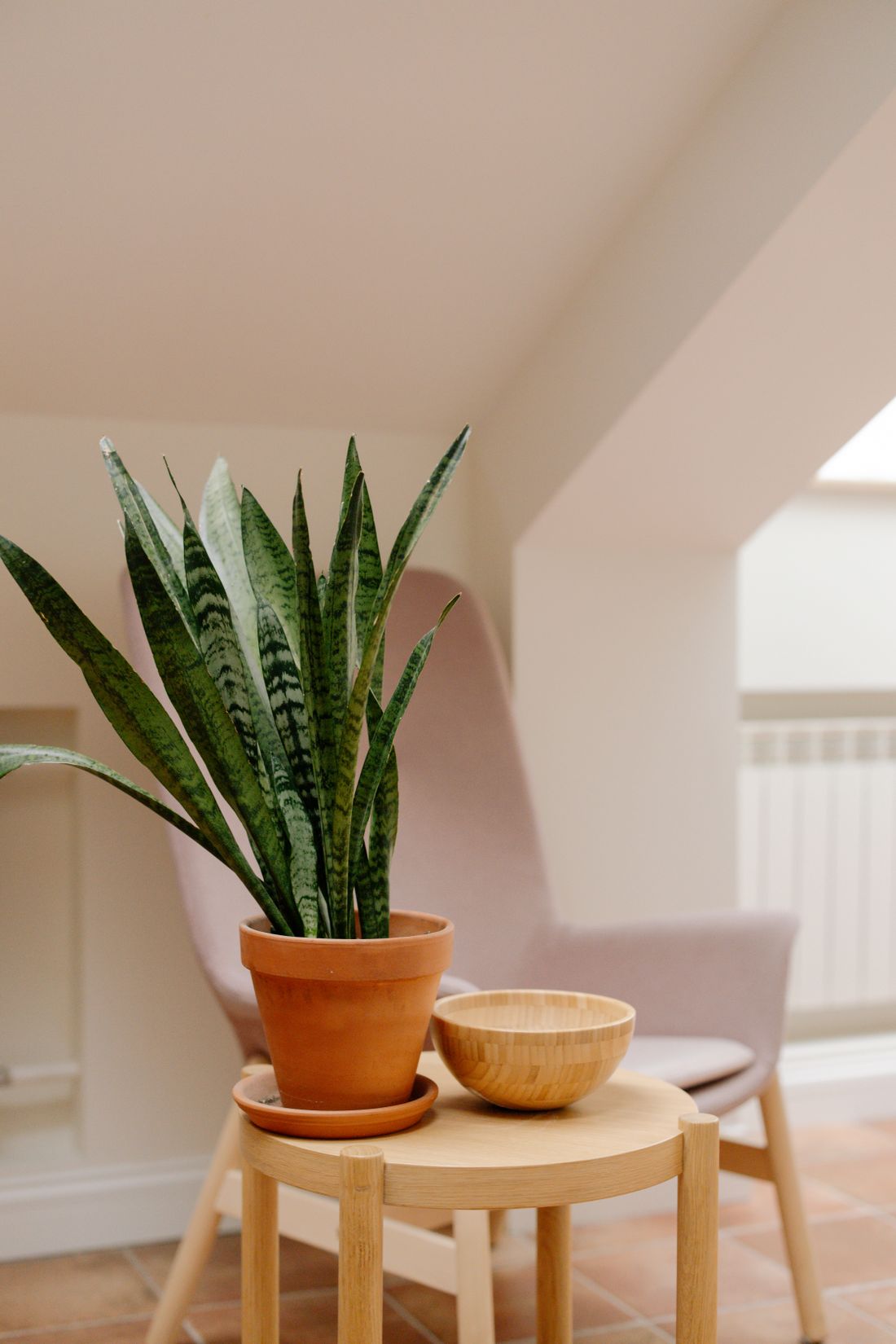
The lists agree because they left out the spot
A snake plant genuinely is difficult to kill on a windowsill. Four metres back from the nearest window, in a room where the lights go on at dusk, it is not difficult to kill so much as difficult to notice dying: it holds its shape for months while doing almost nothing, and by the time the lower leaves go soft, the cause is half a year upstream. That is the failure mode all five of these plants share. They do not wilt on cue. They stall.
Scored across five ordinary spots further down this page, a snake plant is only worth a try in full sun on a south sill, only worth a try again at the back of the room with no direct sun all day, and a great fit at exactly one of the five: two metres in from a north window. One peak in the middle, and the same verdict on either side of it.
The lists themselves half-admit this. Here is one extension service’s easy-houseplant page quoted twice per plant: once for the adjective, and once for the light condition it attaches in the next line.
| Plant | How Iowa State describes it | What the same page says about light |
|---|---|---|
| Snake plant · iastate.edu | “nearly indestructible plant” | And: “Grow in low to direct light.” |
| ZZ plant · iastate.edu | “nearly indestructible” | And: “do exceptionally well in low light.” |
| Golden pothos · iastate.edu | “one of the easiest and most forgiving houseplants you can grow!” | And: “Grows in low to moderate light.” |
| Spider plant · iastate.edu | “one of the easiest houseplants to grow” | But: “adaptable to various environmental conditions but prefers indirect light”. |
| Cast iron plant · iastate.edu | “endures heat, dust, low light, and lack of water better than most” | The only entry on the page whose easiness is stated as a list of conditions rather than as a temperament. |
| Peperomia · iastate.edu | “will tolerate neglect but will rot if over-watered.” | Tolerant and fragile in the same sentence, which is what “hard to kill” usually means in practice. |
| Dragon tree · iastate.edu | Not called easy at all | Its entry is a condition: “moderate to indirect light (low light may be tolerated, but plants will bend and stretch)”. |
So “hard to kill” is not a property that lives inside the plant. It is the overlap between what the plant will accept and what the room actually provides, on all four of the things that decide it: light, temperature, humidity and air movement. A wide overlap means you can be careless and get away with it. A narrow one means the plant is fine and the spot is wrong, which reads to almost everyone as a plant that died for no reason.
That overlap can be measured, and measuring it is the only part of this we can add. Below is the same five-name list, put through our fitness engine at five ordinary indoor spots. The plants do not change between rows. Only the spot does.
The same five plants, five ordinary spots
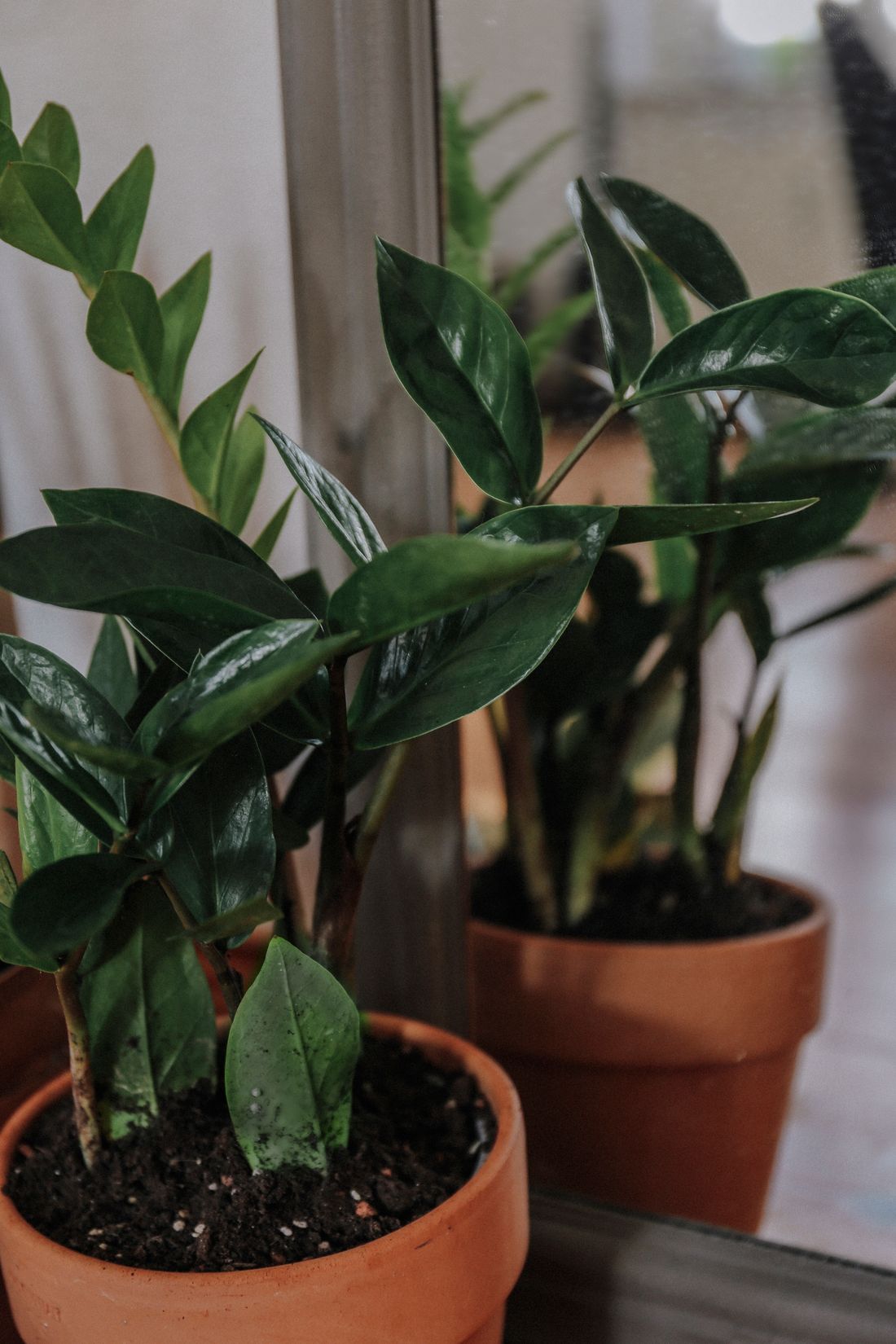
Read down a column and you are watching one plant peak at a single spot and fall away on both sides of it. Read across a row and you are looking at what a single spot in your home does to five different plants at once. The second reading is the useful one, because the spot is the thing you actually chose.
What that table moves is the spread, not the ranking. With the sun full on a south sill the five split furthest apart — the snake plant and the ZZ at 66, golden pothos and the cast iron plant at 45, the peace lily at 43 — and the gap closes as the light drops: two metres in from a north window all five score 100, and four metres in with no direct sun all five score 63. Golden pothos and the cast iron plant never separate from each other anywhere on the table. No list that omits the spot can tell you whether the name you picked made any difference at all.
| Spot | Estimated light | Snake plant | ZZ plant | Golden pothos | Cast iron plant | Peace lily |
|---|---|---|---|---|---|---|
| South sill, straight into the sun | 13,000 lux | Worth a try (66) | Worth a try (66) | Not the best fit right now (45) | Not the best fit right now (45) | Not the best fit right now (43) |
| 1 m in from a south window | 10,000 lux | Worth a try (67) | Worth a try (67) | Worth a try (63) | Worth a try (63) | Not the best fit right now (46) |
| East sill, morning sun only | 6,500 lux | Worth a try (69) | Worth a try (69) | Worth a try (67) | Worth a try (67) | Worth a try (66) |
| 2 m in from a north window | 1,764 lux | Great fit (100) | Great fit (100) | Great fit (100) | Great fit (100) | Great fit (100) |
| 4 m in, no direct sun all day | 125 lux | Worth a try (63) | Worth a try (63) | Worth a try (63) | Worth a try (63) | Worth a try (63) |
Light is not the only way to lose one
Almost every hard-to-kill list is implicitly a low-light list, which quietly assumes that light is the only thing a beginner gets wrong. It is the most common thing, not the only one. A flat in winter with the heating on runs dry enough to bother several of these plants, and a room that drops close to single figures overnight will finish one of them outright while the others carry on.
Every name on those lists has a published limit underneath it, and the limits are easier to check than the reputations are.
| Published by | The limit it names | In its own words |
|---|---|---|
| plants.ces.ncsu.edu | Peace lily: below 40 °F | “Extended periods below 40 degrees F can damage leaves, stems and roots.” |
| hgic.clemson.edu | Peace lily: below 60 °F | “Try to avoid temperatures below 60 °F as cold damage may occur.” |
| plants.ces.ncsu.edu | ZZ plant: below 60 °F | “In some areas, it may be possible to grow this plant in a container outdoors if it is brought in once the temperature falls below 60 degrees F.” |
| plants.ces.ncsu.edu | Snake plant: around 50, unit not given | “It tolerates low humidity and cool temperatures around 50 degrees.” |
| plants.ces.ncsu.edu | Cast iron plant: no direct sun | “Cast iron plants prefer partial to full shade and are intolerant of direct sun.” |
The first two rows are the same plant. One extension service puts the peace lily’s floor at 40 °F and another at 60, and twenty degrees is the difference between an unheated hallway being fine and being the reason it died.
| Hold the room at | Left outside | Inside its band |
|---|---|---|
| 20% | ZZ plant, Golden pothos, Cast iron plant and 1 other | 1 of 5 |
| 30% | Golden pothos, Peace lily | 3 of 5 |
| 40% | Peace lily | 4 of 5 |
| 50% | None | 5 of 5 |
| 60% | Snake plant, ZZ plant | 3 of 5 |
The clearest place to watch that happen is a room that gets abandoned on a schedule: on a classroom sill the cold-tolerant names and the heat-tolerant names turn out to be two separate lists. The table above takes the same five names and counts how many of five humidity settings each one survives. A plant that clears all five is genuinely forgiving. A plant that clears two is a good plant that needs you to be right about where you put it.
One caution about the tables, since the same caution belongs on every one of them: the scores are an estimate from a model of your conditions, not a reading taken in your home. What rooms really provide, measured rather than modelled, is published separately: 204 readings across 104 spots, running from 33 lux indoors to the top of the scale. The tables are good for comparing rows against each other, not a substitute for measuring the spot you have.
What forgiving actually buys you
Width buys you the right to be wrong. What that looks like in practice is three specific reprieves:
- A fortnight without the humidifier is not a decision you have to make correctly.
- A cold night after the heating goes off does not cost you the plant.
- Moving it across the room to make space does not quietly restart the clock.
A plant that clears two settings of five gives you none of those three, and you have quietly signed up to a maintenance job you were told you were avoiding.
This is also why the honest version of the advice runs backwards from the usual one. The usual version starts with the plant and hopes the room cooperates. Starting from the spot is both easier and shorter: find out what your spot gives, then take the list of things that survive it. That list is usually longer than people expect, and it is almost never the same list as the one on the search results page, because that one was written for the average room and you do not live in the average room.
Check the spot, then pick from what survives it
You can check a spot in a couple of minutes without installing anything: our free spot checker runs in the browser, takes a light reading through your phone camera and scores it on the same four dimensions used in the tables above. There is a limit on how many spots you can save on the free tier, but the check itself costs nothing and does not need an account.
If the number that comes back is lower than you expected, that is the normal result, and the measured spread across a single room shows why: the drop from the window to the middle of the floor is far steeper than adapted eyes report. If the spot turns out to be genuinely dark rather than merely dim, the shortlist changes again, and the low-light shortlist and the windowless answer both start from the same place this page does: the spot first, the plant second.
By GrowSpot · Published August 18, 2026 · Last updated August 30, 2026
