Search this and the answer arrives as a list of twenty or twenty-five plants. The toxicity side of those lists is usually right, because everyone is reading the same ASPCA database. The light side is where they get loose: “low light” is treated as one place, when in a real home it covers everything from a north windowsill to the far corner of a room, and those two spots are nothing like each other.
So this page does the two questions separately, and then puts them together.

Not the best fit right now
The plant's fine, this spot just isn't a match.
Too dim here
Comfortable temperature
Humidity suits it
Airflow suits it
Light is a deal-breaker here. The other three cannot make up for it.
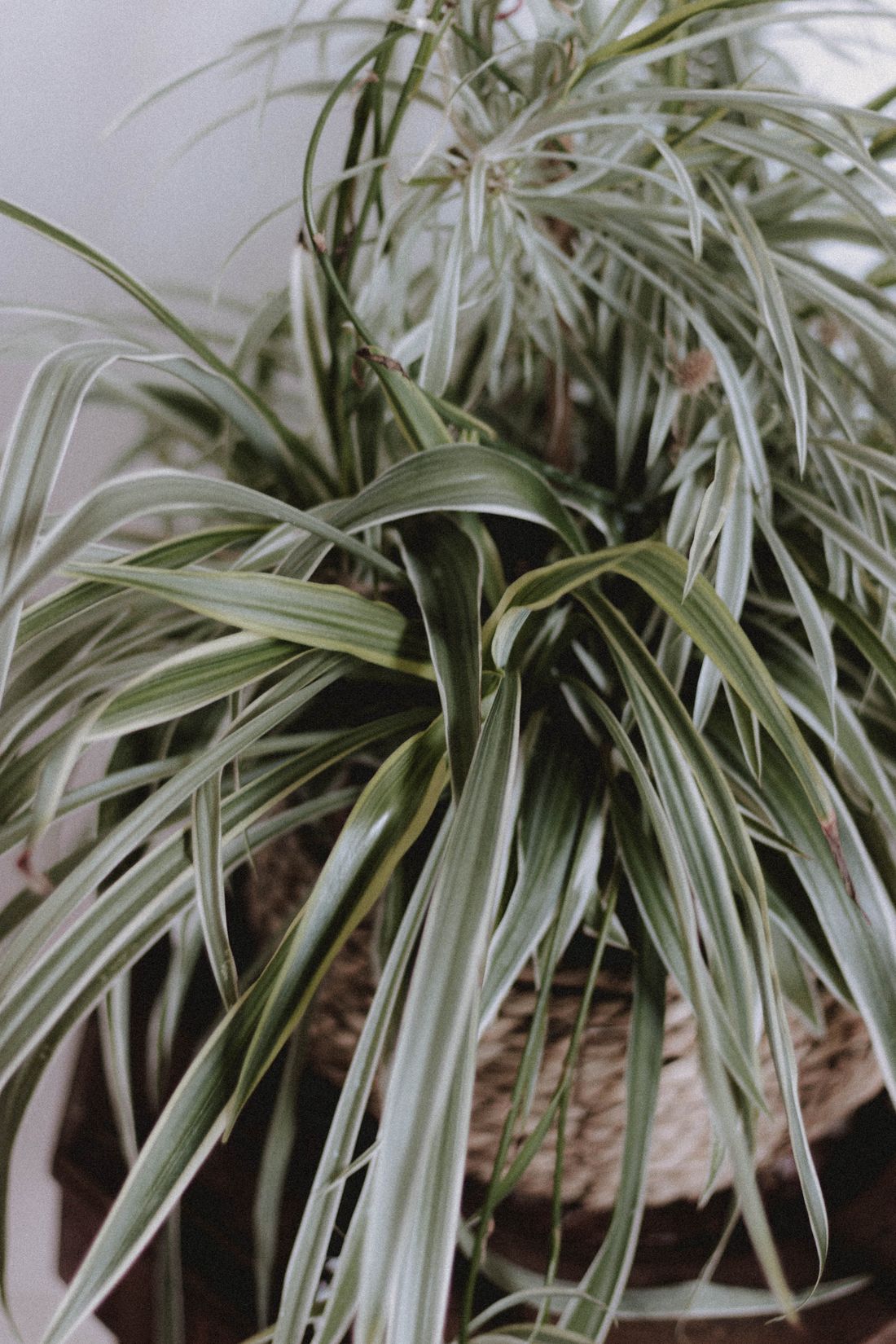
Do the three plants Google names actually work in low light?
When we ran this search in August 2026, the AI Overview answered with a cast iron plant, a parlor palm and a spider plant. Those answers move, so treat the three names as an example rather than a fixed target. All three are on the ASPCA’s non-toxic list, so that half is sound. Here is how each one scores across a north window and one genuinely dark corner.
| Spot | Estimated light | Cast iron plant | Parlor palm | Spider plant |
|---|---|---|---|---|
| North sill | 3,640 lux | Great fit (100) | Great fit (100) | Great fit (100) |
| 1 m in from a north window | 2,800 lux | Great fit (100) | Great fit (100) | Great fit (99) |
| 2 m in | 1,764 lux | Great fit (100) | Great fit (100) | Worth a try (68) |
| 3 m in | 1,111 lux | Great fit (100) | Great fit (100) | Worth a try (65) |
| A corner 4 m from any window | 125 lux | Worth a try (63) | Worth a try (63) | Not the best fit right now (45) |
All three are on a full hundred at the sill and within a point of it a metre in, the first correction: a north window is not a dim spot. They start to separate two metres back, where the spider plant picks up a flag and the other two are still on a full hundred, and the gap opens in the corner, where the cast iron plant and the parlor palm keep scoring and the spider plant does not. Our care data puts the spider plant in the medium-light category; the far half of the room is where that matters.
That is the whole reason to score a spot rather than a room. “Low light” was doing the work of two very different places in that table, and they are a factor of twenty-nine apart. A north sill is bright with no direct sun; a corner four metres out is the dim one. If the shelf you have in mind is the second kind, the cast iron plant and the parlor palm are the safer bet in both senses of the word. Filling a ceiling hook instead of a shelf? The hanging version of this question is its own page.
The overlap is smaller than the lists suggest
The safe half looks like the settled one: the ASPCA publishes an entry per species, and these are its own words on the plants that come up most in this search.
| Plant | What the ASPCA files it as | As written |
|---|---|---|
| Spider plant · aspca.org | Non-toxic | “Non-Toxic to Dogs, Non-Toxic to Cats”. Filed as Chlorophytum comosum, Asparagaceae, with no clinical signs listed. |
| Boston fern · aspca.org | Non-toxic | “Non-Toxic to Dogs, Non-Toxic to Cats”. Filed as Nephrolepis exalta bostoniensis, Dryopteridaceae. |
| Parlor palm · aspca.org | Non-toxic | “Non-Toxic to Dogs, Non-Toxic to Cats”. Filed as Chamaedorea elegans, Palmae. |
| Golden pothos · aspca.org | Toxic | “Toxic to Dogs, Toxic to Cats”. Principle: “Insoluble calcium oxalates”. Signs: “Oral irritation, intense burning and irritation of mouth, tongue and lips, excessive drooling, vomiting, difficulty swallowing.” |
| Peace lily · aspca.org | Toxic | “Toxic to Dogs, Toxic to Cats”, with the same principle and the same list of signs as the pothos above. |
| Snake plant · aspca.org | Toxic | “Toxic to Dogs, Toxic to Cats”. Principle: “Saponins”. Signs: “Nausea, vomiting, diarrhea.” |
Here is the part that matters more than any recommendation. These are among the most commonly suggested low-light houseplants, and every one of them is listed by the ASPCA as toxic to cats and dogs.
- ZZ plant and peace lily, both genuine low-light plants and both toxic.
- Heartleaf philodendron and Chinese evergreen, the two most common “it survives anything” recommendations.
- Snake plant, mild but listed. Its actual light range is here, and it is narrower than its reputation.
- Golden pothos and monstera, which need more light than a dim corner anyway.
None of that makes them bad plants. Plenty of households keep them with cats and nothing happens, because a cat has to chew one to be affected. It does mean that if you searched for cat-safe on purpose, the popular low-light shortlist is mostly not it, and that is worth knowing before the pot is on the floor.
Which low-light plants are actually safe for cats?
These are the plants our care data places in the low-light category that the ASPCA also lists as non-toxic to cats and dogs. It is a shorter list than the usual twenty-five, because we only include plants the ASPCA has actually entered.
The ASPCA is one publisher. Four others answer the same question, and they are worth putting side by side, because they disagree both about which plants belong on a safe list and about what being on one is worth.
| Published by | What it says about how far a safe list goes | In its own words |
|---|---|---|
| poison.org | A guide, not a ruling | “Every situation is different; these lists are just a guide.” |
| homegarden.cahnr.uconn.edu | Its safe list and the ASPCA’s disagree | “Although eating or touching these plants is unlikely to cause illness, any plant might cause a reaction in certain sensitive individuals.” |
| vet.cornell.edu | One small leaf can be the whole event | “Ingesting just a small leaf of some common ornamental plants such as poinsettias could be enough to make a cat ill, and swallowing a sizable amount could prove fatal.” |
| plants.ces.ncsu.edu | Parlor palm: severity low, sap and fruit | “The pulp contains crystals that irritate the skin of sensitive individuals.” |
| plants.ces.ncsu.edu | Non-toxic, and then a step past it | “It is non-toxic and can be safely used in homes with pets or children.” |
Read the last row twice. A university extension moves from “non-toxic” to “can be safely used in homes with pets” inside a single sentence, and that is exactly the step this page is asking you not to take.
- Cast iron plant (Aspidistra elatior), the most forgiving of the group.
- Parlor palm (Chamaedorea elegans) and the metallic palm (Chamaedorea metallica).
- Bird’s nest fern (Asplenium nidus), plus hart’s tongue fern, maidenhair spleenwort, and the holly ferns (Cyrtomium falcatum and Cyrtomium fortunei).
- The spikemosses (Selaginella), including Krauss’s, peacock, ruby red and the frosty fern. Small, humidity-hungry and better in a terrarium or a bathroom than on an open shelf.
- Two Masdevallia orchids, for the cool and shaded end of the range.
The ferns and spikemosses come with a condition the lists rarely attach: they want humidity as much as they want shade, so a dim bathroom suits them and a dim living room in winter often does not. Light is the dimension people check, and it is not always the one that decides.
The parlor palm on that list has more range at a real window than a dim-corner framing suggests. At an east window it scores 99 at one metre and a full hundred at two and three metres back, and 67 on the sill itself, where the light runs slightly brighter than it wants. A cat-safe plant that does not need the windowsill leaves the sill free for something that does.
How dim is the spot you actually have?
We put a phone down in six places in one ordinary living room on a clear day:
| Spot | Reading |
|---|---|
| At the bright window | 20,000 lux |
| 1 m from the window | 15,000 lux |
| 2–3 m away, in window shade | 3,500 lux |
| Middle of the room | 570 lux |
| Darker side of the room | 119 lux |
| The dark corner | 18 lux |
Line that against the table. The middle of that room, at 570 lux, is comfortable for a cast iron plant or a parlor palm. The dark corner at 18 lux is not low light, it is effectively no light, and nothing on any cat-safe list survives it long term. Both readings come from a measurement of six spots in one living room.
By GrowSpot · Published August 2, 2026 · Last updated August 30, 2026
