Bedrooms get furnished around the bed, which means plants get the leftover spots: the nightstand, the dresser, the shelf across from the window. The light in there behaves like any room: it collapses within a couple of meters of the glass. But when we scored those leftover spots, the collapse turned out not to be where the plants fail. The sill is not the only good spot in a bedroom. The spots the window cannot see are the bad ones.
So the useful way to plan bedroom plants isn’t a plant list. It’s a spot map.

Worth a try
It can work here with a little care.
Just the right amount of light
A little cool, but workable
Humidity suits it
Airflow suits it
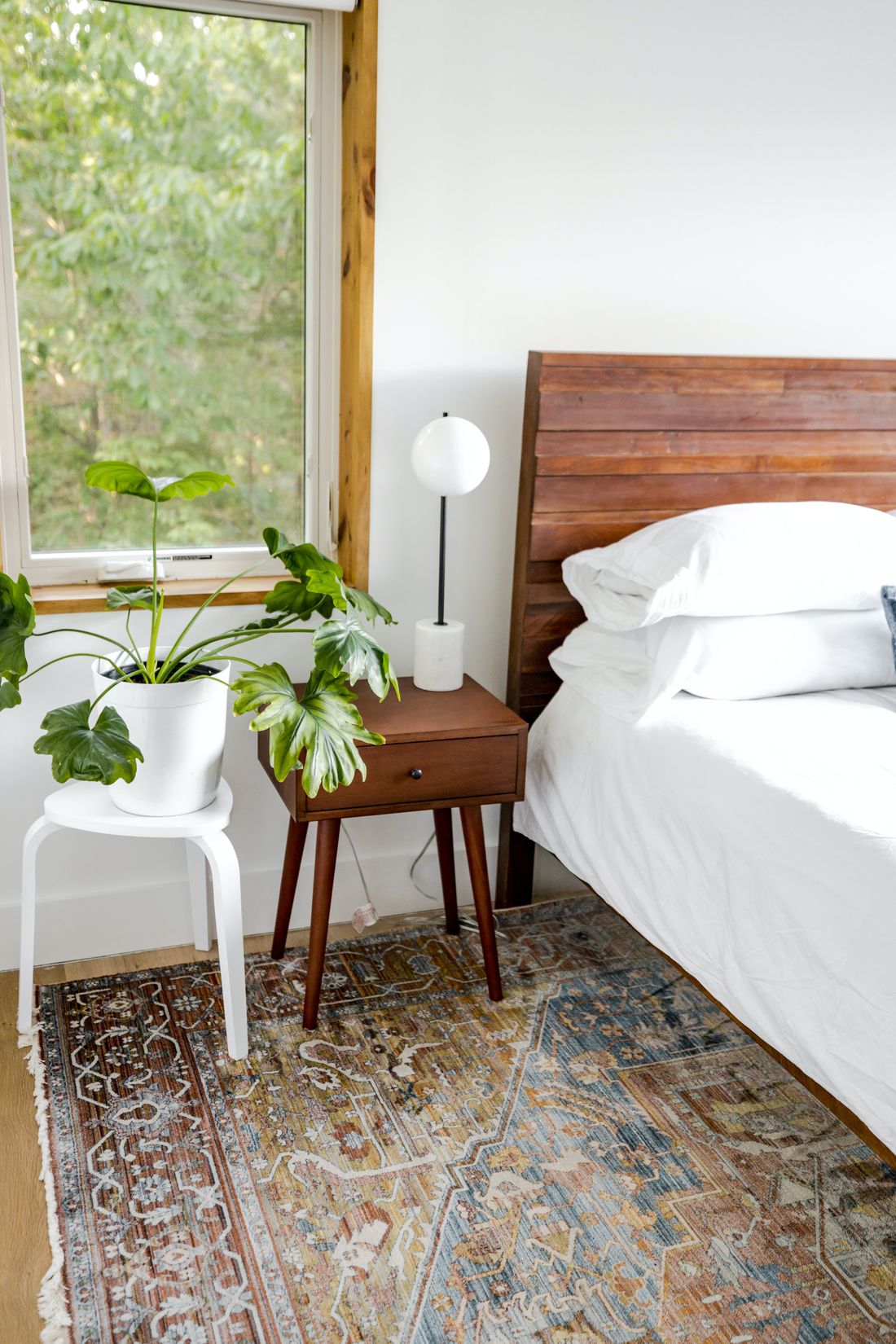
The bedroom spot map
- Windowsill / right beside the window: legitimate growing territory. Pick by direction: north, south, east, west.
- Dresser or shelf a couple of meters from the window: the steep middle of the curve, tolerator territory.
- Nightstand on the far side / any spot the window can’t “see”: usually closer to a dark corner than people expect.
- The whole room at night: a bedroom is the one room people deliberately cool down, and that turns out to cost more than any of the spots above. It has its own section further down.
The cliff is the sightline, not the distance
| Where in the bedroom | Estimated light | What the light is doing | Verdict |
|---|---|---|---|
| North sill, against the glass | 3,640 lux | Just the right amount of light | Great fit, 94/100 |
| Dresser, 2 m in from a north window | 1,764 lux | Just the right amount of light | Great fit, 94/100 |
| Nightstand, 3.5 m in from a north window | 882 lux | Just the right amount of light | Great fit, 93/100 |
| A shelf the window cannot see | 198 lux | A little dim, but workable | Worth a try, 62/100 |
Carry a snake plant from the sill in that first row to a nightstand three and a half metres back and the light falls to under a quarter of what it started with. The verdict does not move, and the score slips a single point. What moves it is the fourth row, where the spot can no longer see the window at all: same room, same plant, and the verdict changes.
Before our own numbers: two extension services publish a figure for this exact window, and they are not close to each other.
| Published by | What it gives a north window | In its own words |
|---|---|---|
| fieldreport.caes.uga.edu | 200 ft-c | “A northern windowsill can measure light levels as low as 200 ft-c on a clear winter day, which is optimal for some plants, such as the African violet.” |
| extension.illinois.edu | 75 foot-candles | “Low light levels (sometimes referred to as 75 foot-candles) come from not getting any direct light, such as a north window or being 8 feet or more away from any other light source.” |
| fieldreport.caes.uga.edu | And it doubts the room entirely | “Although most plants grown indoors will not grow in a northern room, they may tolerate it for short periods of time.” |
Both of those cut against what this page concludes, and it is worth saying so plainly. Illinois puts a north window and eight feet from any window in the same sentence, as one light level; Georgia doubts the room will grow anything at all. Our own reading of the same room disagrees with both, and the rest of this page is that disagreement, scored spot by spot rather than argued.
Those sill figures are estimated from the window’s direction and the distance back rather than measured in your bedroom, and the readings actually taken with a meter are published as 159 readings at 137 real spots, where the middle half of the indoor ones spans 241 to 2,690 lux.
So the line worth finding in your own bedroom is not how many paces you are from the glass. It is whether the plant, sitting where it sits, has the window in view. A tolerator on a dresser across the room is fine. The same plant on a nightstand tucked behind the bed, facing a wall, is not.
The room gets cold at night, and that costs more than the nightstand
Everything above is about where in the bedroom a plant stands. The thing that acts on all of those spots at once is the thermostat, because a bedroom is the room people turn down on purpose to sleep in. So we held the good spot, the north sill in the first row of that table, stood a ZZ plant on it and moved nothing but the temperature. It is a great fit at 22 °C, at 20 and at 18; only worth a try at 17 and at 16; and not a fit at all at 15 or at 13.
The top of the rating ends at 18 °C. Not at some winter emergency figure, and not on a draughty sill: at eighteen, on the good spot, with everything else about the spot held right. Below that the plant is workable rather than dying, and it stays workable for another two degrees before it drops out properly below 16.
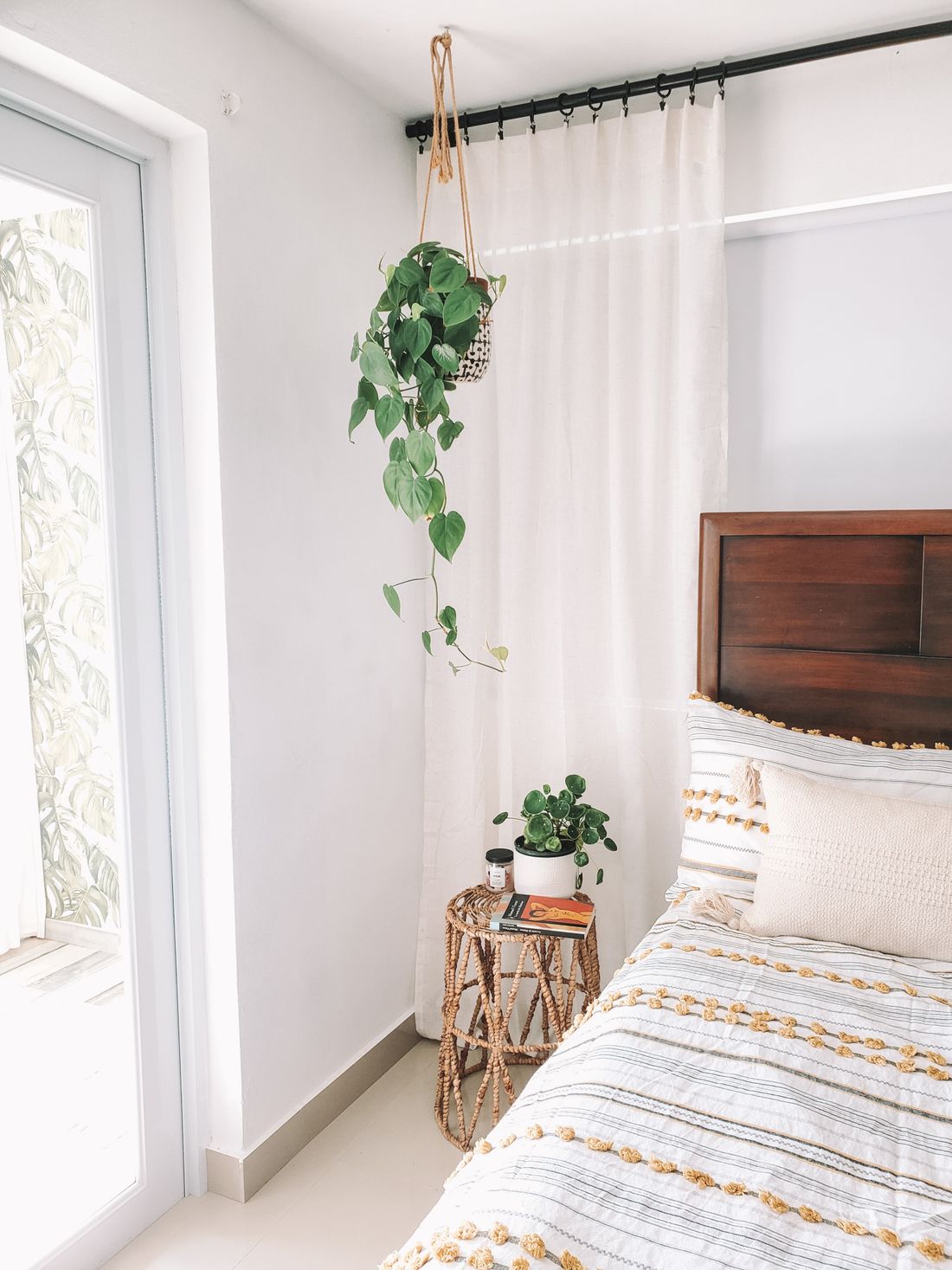
The band from just under 18 down to 16 is worth being precise about, because it is not a death sentence and it is where a cool bedroom actually sits. A plant scored there keeps going. What it has lost is the top of the range, where the spot was doing everything it could for it, and that shows up as slower growth rather than as a plant in trouble.
Two of them do not care
That was a single plant. Stand five of them on the same sill on a 17 °C night, with the light identical for all five, and the room stops being one answer (one of the five is a peperomia, and which kind matters at a north window):
| The plant on the bedroom sill | What the warmth is doing | Verdict |
|---|---|---|
| Snake plant | A little cool, but workable | Worth a try, 66/100 |
| ZZ plant | A little cool, but workable | Worth a try, 64/100 |
| Peace lily | A little cool, but workable | Worth a try, 64/100 |
| Peperomia | Comfortable temperature | Great fit, 92/100 |
| Spider plant | Comfortable temperature | Great fit, 94/100 |
Three of the five are demoted by a temperature nobody would call cold. The spider plant and the peperomia keep their rating: 17 °C is inside their ideal band. It is the same finding as the sightline one, arriving from the other direction: the room does not have a verdict, the spot and the plant together do.
Note that the other three land close together rather than in an order. Nothing in that column tells you the snake plant is hardier here than the peace lily, and the usual advice would have told you it was. They are simply all below their band at 17 °C, and the other two are not.
Which makes the practical advice short. If you sleep warm, all five are fine and you can pick on looks. If you turn the room down at night, or the heating goes off and the room drifts, the spider plant and the peperomia hold their rating on that sill at 17 °C. For rooms that go properly cold rather than merely cool, the cold-draft guide covers the bottom end, and the minimum-temperature page has the floor for each of them.
What genuinely works
At the window
- Pick by direction: the north/south/east/west guides apply as-is
 Spider plant, if the room runs cool at night
Dresser / mid-room tier
 Snake plant
 ZZ plant
 Pothos, heartleaf philodendron
 Peace lily
Far from the window, the honest answer mirrors the dark-corner page: rotate, add a small grow light, or don’t force it. A bedroom with no window at all is the windowless-room case outright.
What won’t work here (honestly)
- Sun-lovers anywhere but the sill. A succulent on the dresser is on a slow countdown.
- Humidity-lovers next to AC or heating vents: a common bedroom placement, and moving dry air is rough on thin leaves.
- Buying for the “empty spot that needs something.” The emptier a bedroom spot looks, the further from the window it usually is.
And the oxygen thing, briefly
You’ll meet two claims: plants purify bedroom air, and plants dangerously consume oxygen at night. At household scale, both are overstated, and the research that gets cited for the first one says so itself. A few pots move air chemistry far too little to matter either way. Keep plants in the bedroom because you like waking up to them; pick spots they can live in.
| Published by | What it says | The figure |
|---|---|---|
| drexel.edu | 100 to 1,000 per m² | “it would take between 100 and 1,000 … per square meter of floor space to compete with the air cleaning capacity of a building’s air handling system or even just a couple open windows in a house.” The elided word is the one our own copy rule will not let us print. |
| drexel.edu | Orders of magnitude | “the rate at which plants dissipated VOCs in a chamber was orders of magnitude slower than the standard rate of air exchange in a building — thus proving the plants’ overall effect on indoor air quality to be irrelevant.” |
| drexel.edu | The plain version | “Plants are great, but they don’t actually clean indoor air quickly enough to have an effect on the air quality of your home or office environment.” |
| yardandgarden.extension.iastate.edu | Little effect | “In reality, these houseplants have little effect on air quality in the home or office.” |
| yardandgarden.extension.iastate.edu | Why the study does not carry | “The highly controlled testing environment of the study just doesn’t directly translate to our ‘real world’ conditions.” |
| nature.com | 10–1000 per m², in the paper itself | “necessitating the placement of 10–1000 … per m² of a building’s floor space for the combined VOC-removing ability by potted plants to achieve the same removal rate that outdoor-to-indoor air exchange already provides in typical buildings” |
| usu.edu | One plant per 100 square feet | “To clean indoor air it is necessary to use one potted plant per 100 square feet space.” |
| epa.gov | No evidence, at a reasonable number | “There is currently no evidence, however, that a reasonable number of houseplants remove significant quantities of pollutants in homes and offices.” |
Map your bedroom in a minute
If you want this answered for your own spot rather than in general, the free spot checker estimates it from your window direction and distance, in your browser. It reads the temperature and the humidity at that place too, which is the half of this page a plant list cannot give you.
Every lux figure above is an estimate for an indoor position on a clear day, and every verdict comes from our own scoring, with the temperature, humidity and airflow declared in each caption rather than measured in your room. We have not logged a bedroom through a winter, so the 17 °C night is a figure we set and scored, not one we recorded. Care facts stated rather than scored are standard horticultural consensus.
By GrowSpot · Published July 23, 2026 · Last updated October 19, 2026
