Scored at 21 °C and 45% humidity, a ZZ plant comes back 100 out of 100 on a north sill, one metre back and two metres back, and 99 at three metres, at 1,111 lux. Beside it a sunset jade scores 43 on the same sill. The question is not the window; it is the closet.
For once the search results are not fighting. The ZZ turns up on every unkillable list too, and against the other four names at five spots it ties for the highest score at every one of them. A ZZ plant in a north-facing window gets recommended by care sites, garden centres and the people answering questions in plant groups, and our own numbers agree with them: on a north sill this plant scores a full hundred, with all four dimensions inside their bands.
One line in those results is worth pulling out, though, because it is the kind of claim this plant attracts. A well-known houseplant writer says of the ZZ that it could probably be grown in a closet. That is affection rather than measurement, and it is the sentence that ends up killing them.

Great fit
This plant should be happy in this spot.
Just the right amount of light
Comfortable temperature
Humidity suits it
Airflow suits it
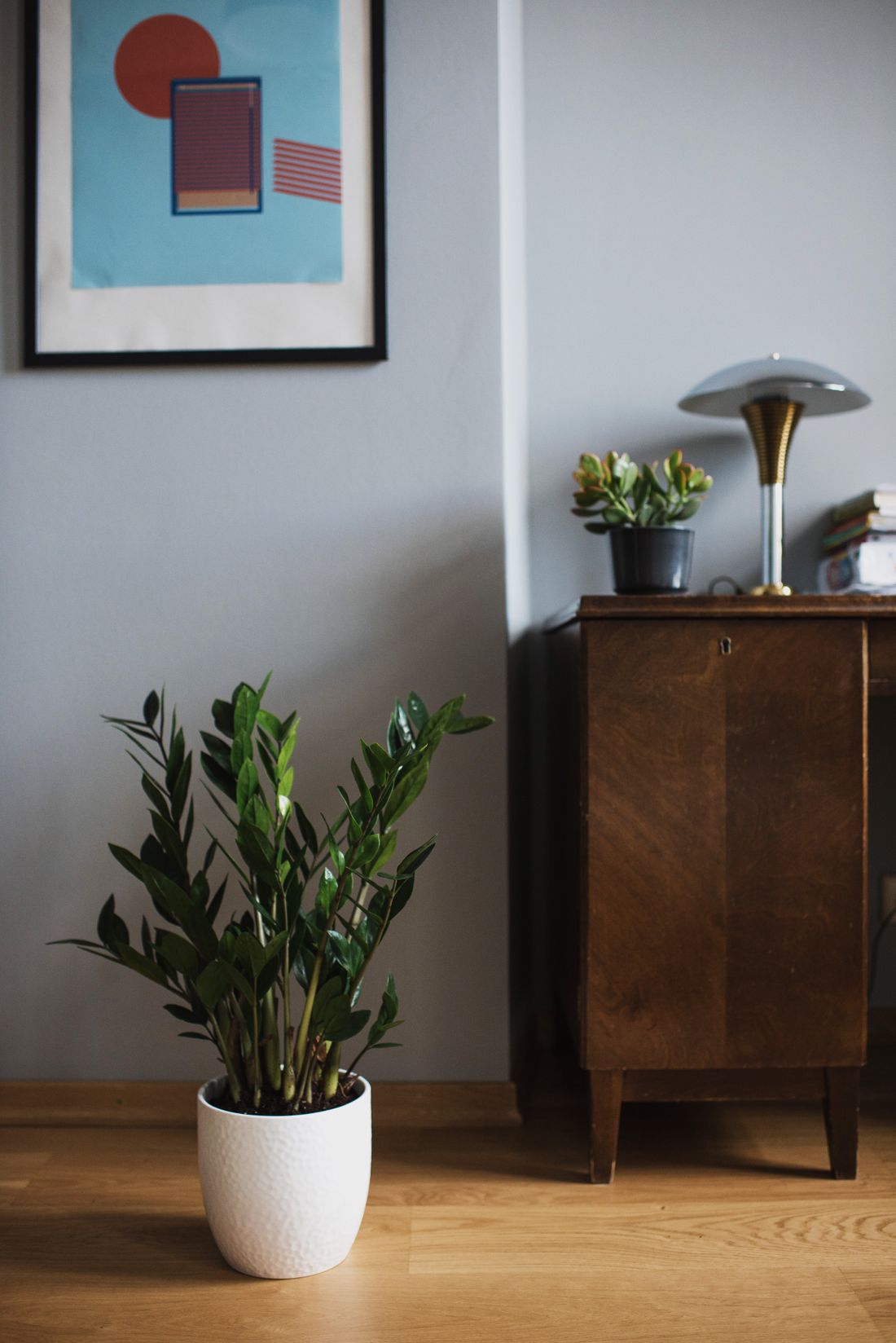
Is a north window enough light for a ZZ plant?
Before our own scoring says anything: we gathered every published figure we could find for a ZZ plant. 5 of them, from 4 separate sources, in 3 different units. They are reproduced below exactly as each source writes them, and nothing here is converted.
| Who publishes it | What it says a ZZ plant needs | What the figure is |
|---|---|---|
| theplantrunner.com | 300–800 lux | True low-light crew (ZZ, snake plant, cast-iron plant, some ferns) |
| growlightmeter.com | 5 – 10 PPFD / DLI | ZZ Plant |
| houseplantjournal.com | 100 FC (20 µmol) foot-candles | minimum indirect light level |
| houseplantjournal.com | 200 FC (40 µmol) foot-candles | good indirect light level |
| houseplantsnook.com | 50–100 foot-candles | chart fc level |
More than enough, and it stays that way across the room. All four distances we scored, from the glass out to three metres, come back as a great fit with nothing flagged. A north window is among the most reliable placements we can point at for this plant.
That is the part worth being precise about, because the reputation runs past it. The score does eventually fall, and this is where it goes: full marks hold down to about 400 lux, the verdict drops to workable under that, and below roughly 90 lux the light dimension fails outright. A north room is not where this plant runs out. A room without a usable window is.
The numbers by distance
The same plant scored at four distances from the same north window, in a room at 21 °C and 45% humidity:
| Distance from the glass | Estimated light | What the light is doing | Verdict |
|---|---|---|---|
| 0.3 m, against the glass | 3,640 lux | Just the right amount of light | Great fit, 100/100 |
| 1 m back | 2,800 lux | Just the right amount of light | Great fit, 100/100 |
| 2 m back | 1,764 lux | Just the right amount of light | Great fit, 100/100 |
| 3 m back | 1,111 lux | Just the right amount of light | Great fit, 99/100 |
| Distance from the glass | ZZ plant | Sunset jade |
|---|---|---|
| 0.3 m against the glass3,640 lux | 100/100 | 43/100 |
| 1 m back2,800 lux | 100/100 | 43/100 |
| 2 m back1,764 lux | 100/100 | 42/100 |
| 3 m back1,111 lux | 99/100 | 41/100 |
Those light figures are estimates rather than meter readings, built from the window direction, the distance, and typical clear-day conditions.
Notice how small the numbers are compared with the same table for a south or west window. A north sill at 3,640 lux is roughly a quarter of what a south sill delivers, and for this plant that quarter is the right amount.
The 3,640 is an estimate for a north sill, not a reading from one, and what a meter returns across 104 real spots is published beside it: 204 readings, median 2,349 lux indoors.
Where the closet claim breaks
In the one room we measured properly, the dark corner read 18 lux. A closet, with the door mostly shut, is darker than that corner.
Set that against the table above. The lowest light where this plant still scores a full hundred is about 400 lux, and it stops scoring at all below roughly 90. The dark corner of a bright room is 18 lux, well under both, and a closet is below the corner. The gap between the sill and the closet is not a matter of degree; it is a different situation entirely.
What the closet story is really recording is that ZZ plants take a very long time to die. They store water and energy in the rhizome, so a plant in the dark spends months looking unchanged while it runs down a battery it cannot recharge. Slow decline reads as survival right up until it does not.
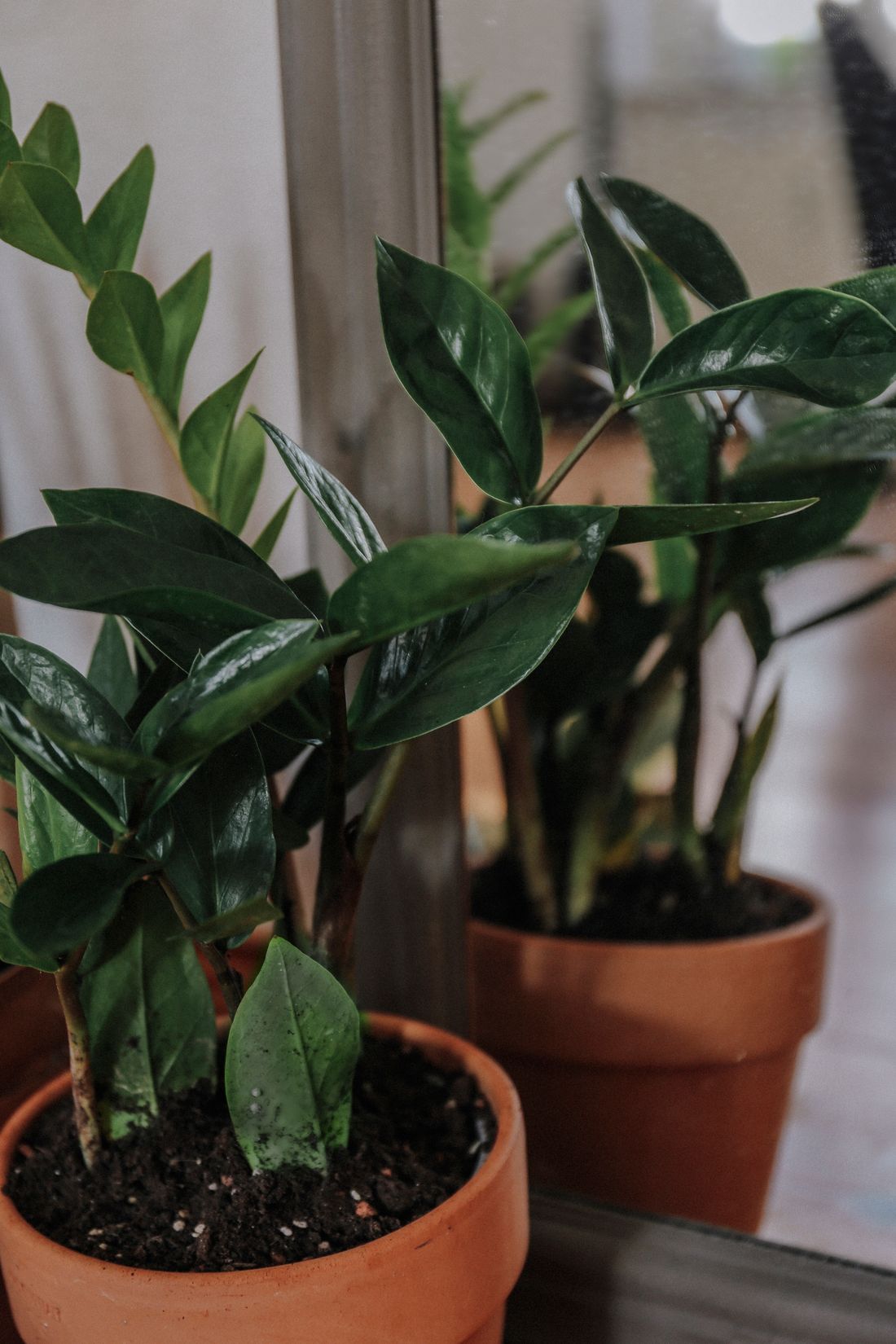
There is also a second thing wrong with a closet, and it has nothing to do with light. Take the north-window spot from the table above and score it four times with only the air changing: sealed still air leaves it only worth a try, while light air, moderate air and a strong draught are all a great fit, with moderate air reading 100 out of 100.
So a cupboard fails on two dimensions at once, and the second one is invisible. Nobody looks at a shut door and thinks about air, which is part of why the closet line survives being repeated: the plant declines for a reason the person watching it has no way to see.
A ZZ plant is on every list of plants that handle a cold draft, and it is fine with the air. Its floor of 16 °C is the highest of the four names on those lists, which plants that tolerate cold drafts scores side by side.
How a ZZ plant tells you the spot is too dim
It does not wilt and it does not brown, which is exactly why the signals get missed.
- Nothing happens. Months with no new stems is the main symptom. A healthy ZZ in adequate light pushes new spears from the base through the growing season.
- New growth comes out stretched. Long gaps between leaflets and stems that lean toward the window are the plant reaching. Stretching is a placement symptom.
- Yellowing at the base while the soil stays wet. In a dim spot the plant uses far less water, so the same watering routine that worked in a bright room now leaves the pot wet for too long. The dim spot and the rot arrive together, and the rot gets the blame.
What else that sill will take
A north sill that scores a hundred for a ZZ plant scores the same for a snake plant, which shares its drought-adapted build. Both are working comfortably at light levels where most foliage plants have given up.
The contrast is sharper than people expect, but it does not show up at the glass. Put a monstera on that same sill and it scores a hundred too. Move both of them two metres into the room and the monstera falls to 68 while this one has not moved. Same window, same day, and the whole difference is in how far back each one survives.
Not everything takes that sill. A jade plant in the same spot scores 40 out of 100, and unlike this one it has nowhere better to go in the room.
That sill takes more than these three, and the same guide is equally blunt about what a north window will not carry.
By GrowSpot · Published July 31, 2026 · Last updated August 30, 2026
