Scored with our own data for the bird’s nest variety, a snake plant does best between 400 and 6,500 lux. Every spot from 1,111 lux three metres inside a north window to 5,000 lux a metre from an east window scores 99 or 100; a south sill at 13,000 lux drops to 66, and a corner at 125 lux to 63.
People search for this in lux because they have already read the qualitative answer five times and it did not help. “Bright indirect light, tolerates low light” is true of a snake plant and also true of about forty other houseplants, so it cannot tell you whether the shelf you are looking at will work.

Worth a try
It can work here with a little care.
A bit bright, but workable
Comfortable temperature
Humidity suits it
Airflow suits it
How many lux does a snake plant need?
Before our own scoring says anything: we gathered every published figure we could find for a snake plant. 8 of them, from 7 separate sources, in 3 different units. They are reproduced below exactly as each source writes them, and nothing here is converted.
| Who publishes it | What it says a snake plant needs | What the figure is |
|---|---|---|
| theplantrunner.com | 300–800 lux | True low-light crew (ZZ, snake plant, cast-iron plant, some ferns) |
| houseplantjournal.com | 100 foot-candles | Sansevieria — minimum indirect light |
| houseplantjournal.com | 200 foot-candles | Sansevieria — good indirect light |
| growlightmeter.com | 5 – 10 PPFD / DLI | Snake Plant |
| extension.arizona.edu | 25–75 foot-candles | listed under the heading "Low Light (25–75 fc)" |
| apps.apple.com | 500 lux | per-plant figure — thrives at this level |
| houseplantsnook.com | 50–100 foot-candles | chart fc level |
| soltech.com | approximately 64–98 PPFD / DLI | Snake Plant FAQ — target PPFD by size |
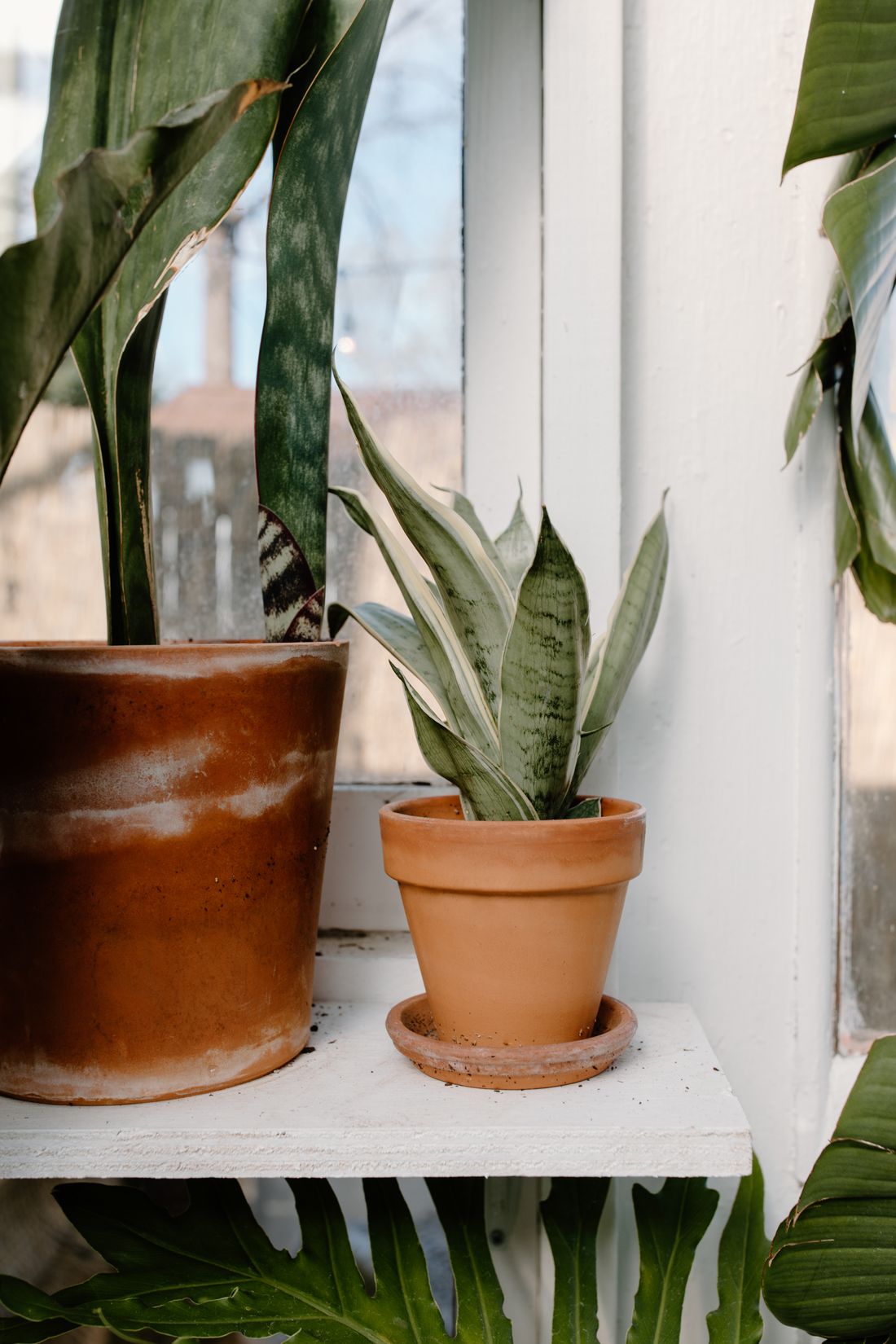
In our care data a snake plant sits in the low-light category, and in scoring it comes out ideal from roughly 400 lux up to around 6,000 lux. Below that it is still alive but flagged, and above it the plant is fine but no longer at its best. That upper flag is the surprising half.
Nine spots, scored
These are all indoor spots at typical clear-day conditions, with temperature, humidity and airflow set to the plant’s own preferences so that the only thing changing between rows is light.
Every row, one plant each (9)
| Spot | Estimated light | What the light is doing | Verdict |
|---|---|---|---|
| South sill, against the glass | 13,000 lux | A bit bright, but workable | Worth a try, 66/100 |
| West sill | 7,800 lux | A bit bright, but workable | Worth a try, 68/100 |
| East sill | 6,500 lux | A bit bright, but workable | Worth a try, 69/100 |
| 1 m in from an east window | 5,000 lux | Just the right amount of light | Great fit, 100/100 |
| 3 m in from an east window | 1,984 lux | Just the right amount of light | Great fit, 100/100 |
| North sill | 3,640 lux | Just the right amount of light | Great fit, 100/100 |
| 2 m in from a north window | 1,764 lux | Just the right amount of light | Great fit, 100/100 |
| 3 m in from a north window | 1,111 lux | Just the right amount of light | Great fit, 99/100 |
| A corner 4 m from any window | 125 lux | A little dim, but workable | Worth a try, 63/100 |
Read the last two columns rather than the numbers and the shape is obvious. The three spots most people would call the good ones, the south, west and east sills, are all flagged. The spots that score perfectly are the north window and the middle of a room.
The west sill row is the one worth following up, because the fix is a single step back. At the glass it is only worth a try at 68 out of 100; a metre back it is 98, and at two and three metres 100.
One metre, and a flagged sill becomes a perfect spot. It stays perfect for the two metres after that, which is the width of the band the nine-spot table could only hint at. The west-window page follows that one window all the way in.
What that means for the two things everyone says
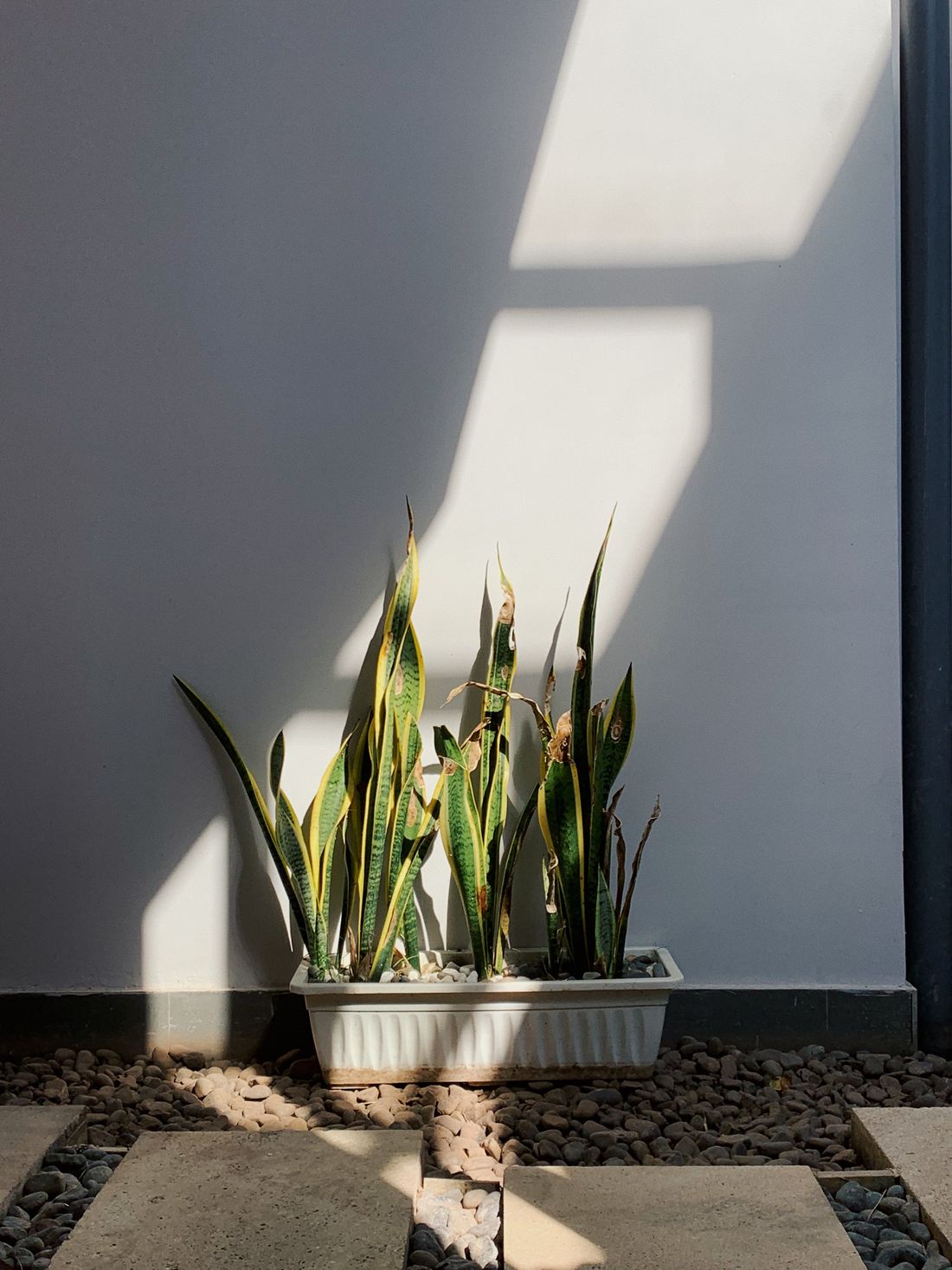
“It tolerates low light” is true, and it is doing a lot of work. Tolerating is not the same as growing, but the line falls much further out than a north window. Here is where the line actually falls, walking away from a window the sun never reaches directly:
| Distance from the window | Estimated light | Verdict |
|---|---|---|
| 1 m back | 500 lux | Great fit, 98/100 |
| 2 m back | 315 lux | Worth a try, 67/100 |
| 3 m back | 198 lux | Worth a try, 65/100 |
| 4 m back | 125 lux | Worth a try, 63/100 |
| 5 m back | 79 lux | Not the best fit right now, 47/100 |
One metre in from a window with no direct sun is still perfect. Two metres is already flagged, and by five it has run out. The four-metre row, at around 125 lux, is where the plant switches to holding: it stays green, it stays upright, and it does very little else. A year in that spot looks almost identical to the day it arrived. That is a legitimate way to use the plant, and it is not what most people think they are buying.
“Brighter is better” is the half that is wrong. Every sill in the table except the north one is flagged, including the south one at 13,000 lux. The plant is not dying there and the verdict says so plainly. It is simply past the point where extra light buys anything, and a shade-adapted plant moved suddenly into a bright sill is the usual way people scorch one.
What do 650 and 5,000 lux look like in a real room?
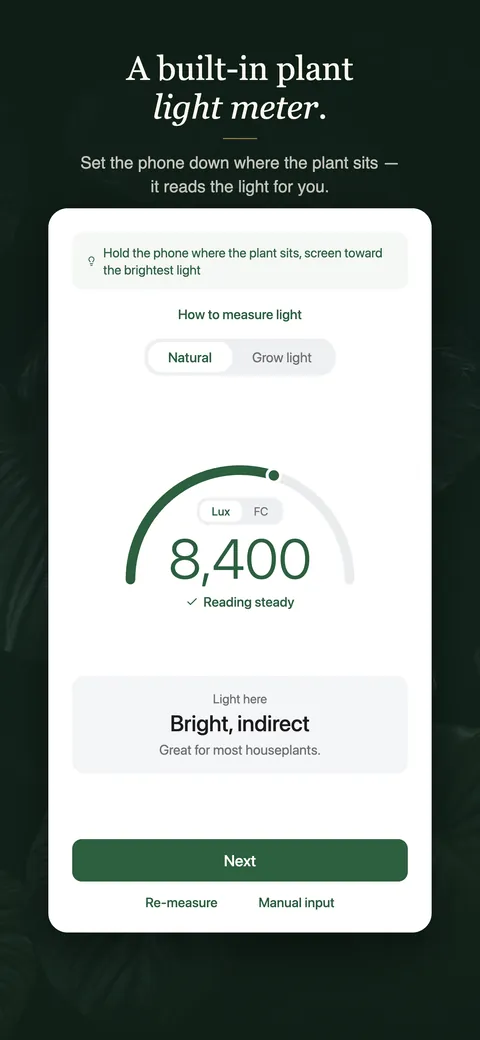
Numbers like 650 and 5,000 mean very little until you have stood somewhere and know what they feel like, which is the problem, because they do not feel like anything. So here are six places in one ordinary living room, read on a clear day:
| Spot | Reading |
|---|---|
| At the bright window | 20,000 lux |
| 1 m from the window | 15,000 lux |
| 2–3 m away, in window shade | 3,500 lux |
| Middle of the room | 570 lux |
| Darker side of the room | 119 lux |
| The dark corner | 18 lux |
Line that up against the table. The middle of that room, at 570 lux, is close to a snake plant’s ideal. The dark corner at 18 lux is not a low-light spot, it is a no-light spot, and no amount of tolerance covers it. The 570 and the 18 both come from the same measured room.
What about putting it outside?
A plant that reads slightly too bright on a south sill sounds like a candidate for a shadier spot, not a sunnier one, so it is worth checking what the sunnier direction actually costs. At 13,000 lux on the sill it is worth a try at 66 out of 100; at 45,000 on a balcony and 80,000 outdoors it is not a fit at all, at 42 both times.
Both outdoor spots fail, and they fail on light rather than on heat. The sill is a little brighter than this plant asks for; a balcony is several times brighter than that. Sold as a plant that tolerates anything, it still has a ceiling, and outdoors clears it easily.
Why the published numbers disagree with each other
Search this and you will find optimal ranges quoted as roughly 3,200 to 5,400 lux, with tolerance down to around 500. Our own scoring calls 650 lux ideal rather than merely tolerable, and 650 lux is dimmer than any sill this page scores. That is a real difference and worth being straight about.
Both can be defended, because they are answering slightly different questions. A range built around fastest growth will sit higher than one built around the plant being comfortable and unstressed. What neither of them can tell you is whether your shelf clears the bar, and that is the only version of the question that changes what you do next. The same table built for a jade plant is the mirror image of this one, with no row where the light is right, which shows how much of the answer belongs to the room and how much to the plant.
Put those numbers against one real window and the answer lands further into the room than most advice suggests: about three metres back from south-facing glass.
The disagreement is not specific to this plant. Published advice is written in tiers while a room is written in numbers, and the four tiers with a box to type your own reading into is the general version of this page.
Are snake plants safe for cats?
Snake plants are listed by the ASPCA as toxic to cats and dogs. It is a mild toxicity rather than a dangerous one, and it is still worth knowing before the pot goes on a low shelf in a house with a chewer. This is the one fact on this page that does not depend on your spot at all.
By GrowSpot · Published August 2, 2026 · Last updated August 30, 2026
