The short answer: on the sill, yes — emphatically. A north window holds about 3,640 lux of steady, burn-proof sky light, and the engine scores a monstera 99/100 there, still 98 at a metre. The “weak north light” warnings describe the room, not the sill: by two metres the reading is 1,764 lux and the score is 68.
The top result for this question is a Reddit thread where the accepted answer is blunt: a north window is not at all sufficient, monsteras need direct light. Further down the same page, a plant blog states that north-facing windows are the best-facing windows for plants like the monstera. A grow-light retailer splits the difference and says north may not be enough, especially in winter.
These are not three opinions about one spot. They are three spots being given one name. A monstera pressed to a north sill and a monstera three metres into the same room are in different worlds, and the difference is much larger than it looks to a person standing between them. Nobody in that thread says which of the two they mean.

Great fit
This plant should be happy in this spot.
Just the right amount of light
Comfortable temperature
Humidity suits it
Airflow suits it
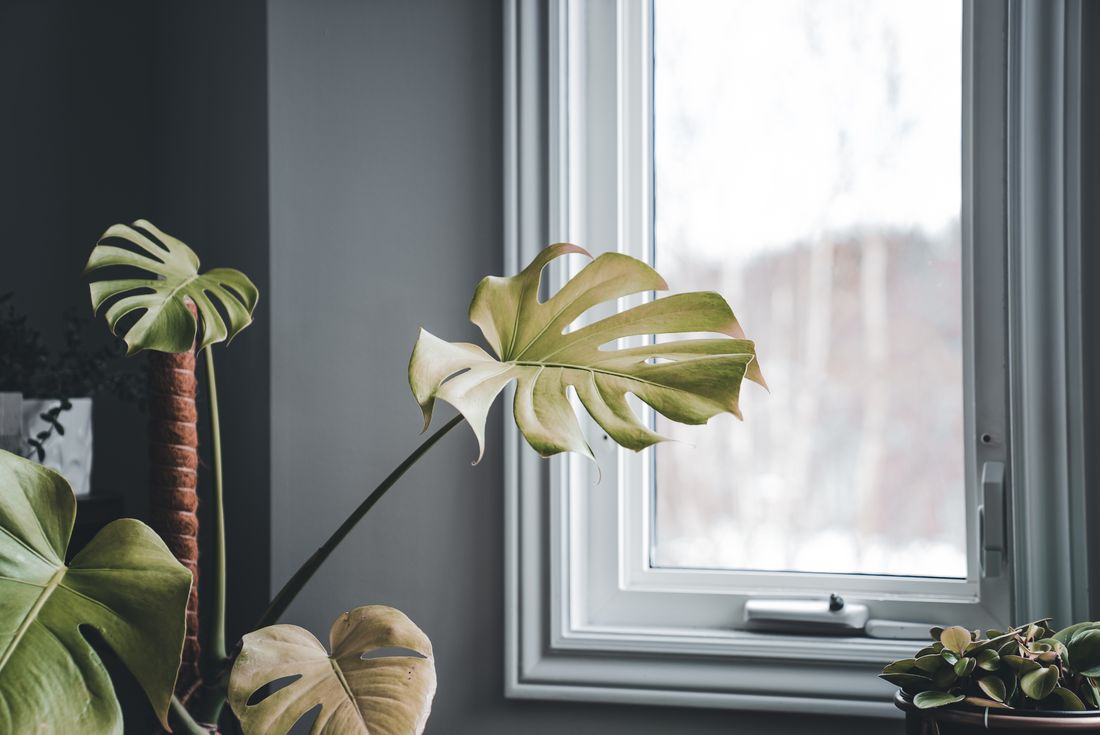
Can a monstera live in a north-facing window?
Before our own scoring says anything: we gathered every published figure we could find for a monstera. 9 of them, from 5 separate sources, in 3 different units. They are reproduced below exactly as each source writes them, and nothing here is converted.
| Who publishes it | What it says a monstera needs | What the figure is |
|---|---|---|
| theplantrunner.com | 800–2,000+ lux | Standard foliage plants (pothos, Philodendron, Monstera deliciosa …) — a general band, not a single-species figure |
| theplantrunner.com | 1,500–5,000 lux | Light-hungry aroids & Ficus divas (Fiddle Leaf Fig, variegated Monstera) |
| growlightmeter.com | 8 – 12 PPFD / DLI | Monstera |
| houseplantjournal.com | 100 FC (20 µmol) foot-candles | minimum indirect light level |
| houseplantjournal.com | 200 FC (40 µmol) foot-candles | good indirect light level |
| houseplantsnook.com | 50–100 foot-candles | chart fc level |
| houseplantsnook.com | 200–400 foot-candles | chart fc level |
| soltech.com | around 288–325 PPFD / DLI | Monstera FAQ — large / extra-large plant PPFD |
| soltech.com | 80–500 PPFD / DLI | Monstera — Photone's published PPFD range, cited by Soltech |
Yes, and not marginally: right against the glass it scores 99/100, and a metre back into the same room scores 98/100, with no dimension flagged at either distance. A north sill is not a compromise placement for this plant. The spot scores as an ideal fit, and the fall only begins past the first metre.
The first change shows up around two metres, and it is a downgrade rather than a failure: the light dimension gets flagged as dim, the overall verdict drops to workable, and it stays there at three metres. The plant keeps going in all four spots. What changes is how well.
How far into the room can it go?
It can go the whole three metres: 99/100 against the glass, 98/100 at a metre, 68/100 at two metres and 65/100 at three. The one real step down sits between one and two metres. Here is the same plant scored at four distances from the same north window, in a room at 21 °C and 50% humidity:
| Distance from the glass | Estimated light | What the light is doing | Verdict |
|---|---|---|---|
| 0.3 m, against the glass | 3,640 lux | Just the right amount of light | Great fit, 99/100 |
| 1 m back | 2,800 lux | Just the right amount of light | Great fit, 98/100 |
| 2 m back | 1,764 lux | A little dim, but workable | Worth a try, 68/100 |
| 3 m back | 1,111 lux | A little dim, but workable | Worth a try, 65/100 |
| Distance from the glass | Monstera | Bambino fiddle leaf fig |
|---|---|---|
| 0.3 m against the glass3,640 lux | 99/100 | 63/100 |
| 1 m back2,800 lux | 98/100 | 62/100 |
| 2 m back1,764 lux | 68/100 | 44/100 |
| 3 m back1,111 lux | 65/100 | 43/100 |
Those light figures are estimates rather than meter readings, built from the window direction, the distance, and typical clear-day conditions. Your room will differ. What matters is not the exact digits but the shape: a wide comfortable band nearest the glass, then a long shallow slope rather than an edge.
The clearest way to see that the shape belongs to the plant rather than to the window is to put a different plant in it. A Bambino fiddle leaf fig at these identical four readings scores 63 where this monstera scores 99, and it fails outright where this one is merely flagged. Same window, same lux, opposite answers.
That shape is the part most of the advice gets wrong in both directions. The people who say a north window is fine are right, and they are right further into the room than they usually claim. The people who say it is not enough are describing a spot several metres back, and even there the plant does not die.
Why the disagreement online is so wide
Because both camps are describing the same window from different distances: 99/100 at the glass, 68/100 two metres in, and neither side says which of the two they are standing at. A north window has no direct beam at any point in the day, which makes it the most consistent exposure in the house and also the dimmest. Consistency is what the people calling it ideal are responding to: nothing scorches on a north sill, nothing swings, and a plant that is placed correctly stays placed correctly.
Scarcity is what the people calling it insufficient are responding to, and it is the weaker of the two cases. Both groups are describing the same window. Neither of them says how far into the room they are standing, which is the one number that decides the answer.
What changes as you move back
Nothing for the first metre: the score barely moves from the glass to one metre back, 99/100 to 98/100. Past about two metres the verdict drops to workable at 68/100, and workable has a specific meaning for this plant. That two-metre mark is the dim edge of the plant's whole range rather than something particular to north windows, which is easier to see when all four orientations are scored together.
- New leaves come slower and smaller. Growth follows available light, and the far half of a north room is the low end of what this plant can work with.
- Fenestration stalls first. The splits and holes are a mature-leaf feature that a plant will not spend energy on when the light budget is tight, so they go before anything else looks wrong. The full version of why leaves do not split is here.
- Reaching. Long bare stem between leaves is the plant walking toward the window. It is a light problem with a distance answer, not a fertiliser problem.
Does it hold in winter?
On the sill, yes: 99/100 in March, June and September, and 98/100 in December. Two metres back is where the season starts to matter: a great fit in June, and only worth a try in March, September and December. One of the sources above hedges its answer with a season: north may not be enough, especially in winter. That is a testable claim, so here it is tested. The engine takes a date and a latitude, so everything else can be held still: the same plant, the same north window, latitude 40 degrees, four months of one year.
On the sill nothing moves. The light falls by more than half between June and December, from 4,368 lux down to 2,124, and the score never leaves the high nineties. A north sill at this latitude has no bad season for this plant. Two metres into the same room it is a different story: March reads 1,753 lux, June 2,117, September 1,759 and December 1,029.
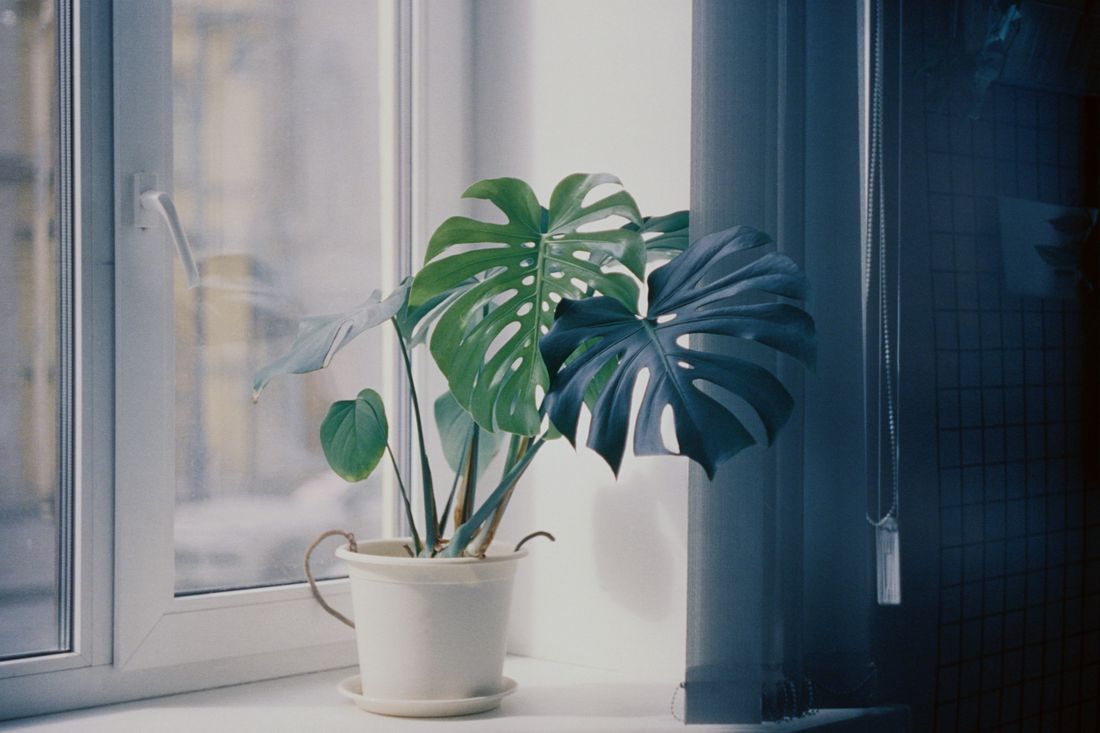
That is where the winter warning belongs. June is still a great fit back there and December is only worth a try. Set those two runs beside each other and the answer arrives on its own: December on the sill and June two metres back are within a few lux of one another. The worst month at the glass is worth about as much as the best month in the room. So the seasonal warning is the distance warning restated. If your monstera is on the north sill, winter changes nothing. If it is out in the room, winter is when you find that out.
If the sill is not available
Two metres back still works at 68/100, and three metres at 65/100, so the fallback is a real placement rather than a consolation prize. Sometimes the window end of the room is occupied by a radiator, a desk, or a cat, and if the only free spot is further than three metres, the honest options are to change the light or change the plant.
A grow light turns any spot in the room into a viable one. Otherwise, plants that genuinely want that light level exist and are not consolation prizes: a ZZ plant scores 100/100 from the glass to two metres in, and so does a snake plant.
In a south-facing window this plant runs the other way: flagged on the sill, and clear of the flag from one metre back. Same plant, opposite instruction, and both are about distance rather than the room.
If neither the sill nor one metre back is free, the answer is a different plant rather than a different corner. The list of north-facing window plants separates the ones that are genuinely happy there from the ones that only hold steady.
The room is not the spot
We measured six spots in one bright living room, and the spread inside that single room is larger than the spread between any two window directions.
| Spot | Reading |
|---|---|
| At the bright window | 20,000 lux |
| 1 m from the window | 15,000 lux |
| 2–3 m away, in window shade | 3,500 lux |
| Middle of the room | 570 lux |
| Darker side of the room | 119 lux |
| The dark corner | 18 lux |
That room’s orientation was never recorded, so those are not north-window figures and we are not offering them as any. The part that travels is the shape of the fall, and it is the reason a single room can hold both a spot that works and a spot that does not. The fall itself is set out spot by spot in the six-point walk from window to corner.
Published July 31, 2026 · Last updated August 30, 2026
