Ask which plants can live near a radiator and you get a list of tough names and a warning about heat. What you do not get is a number, because the answer everybody is working from is somebody’s memory of one plant on one windowsill. So here is one radiator sill instead, held still and scored: a north-facing window, the pot against the glass, the air at 26 °C and dried to 25% by the heating.

Worth a try
It can work here with a little care.
Just the right amount of light
Comfortable temperature
Too dry here
Airflow suits it
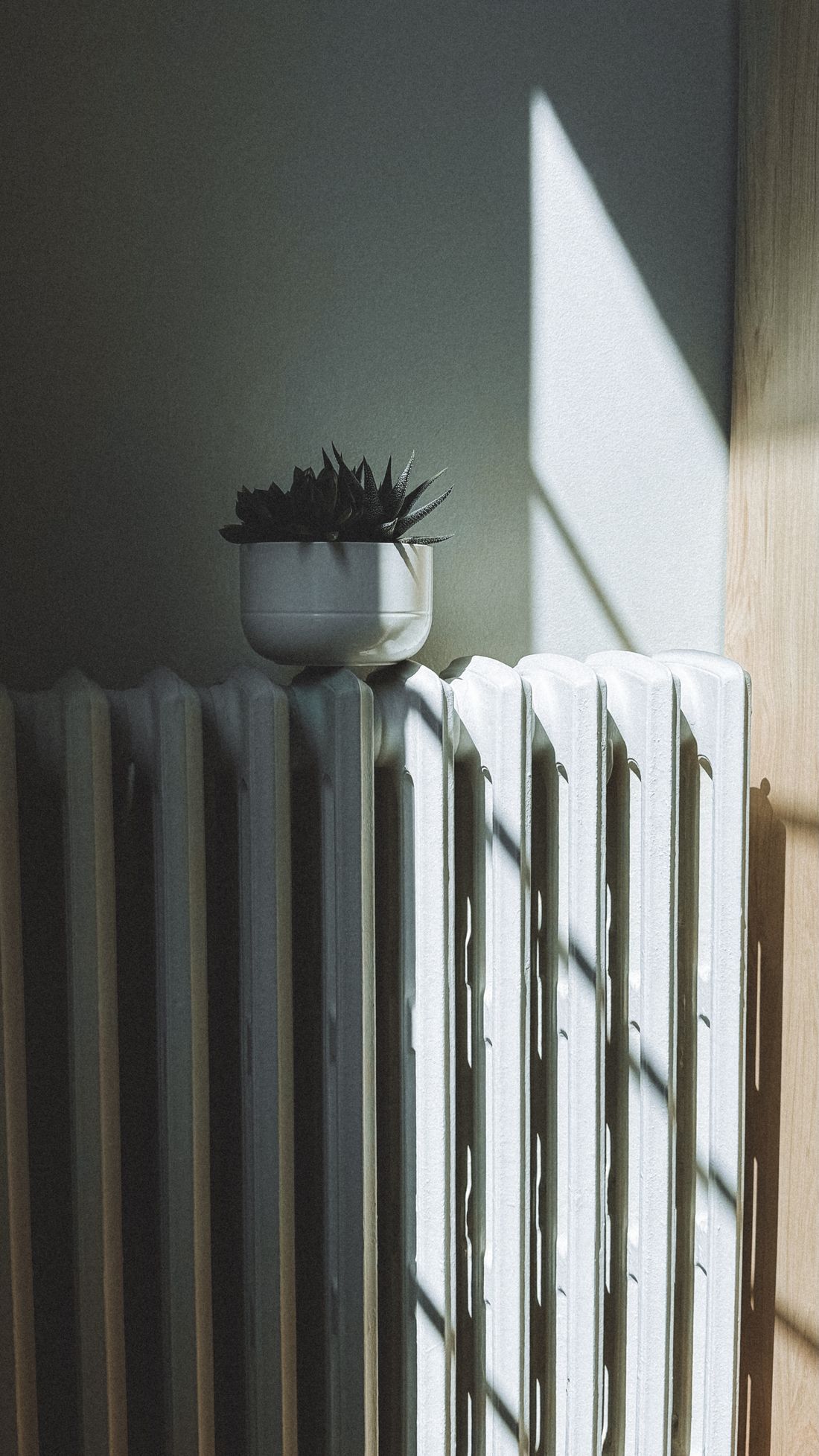
The plants the lists name, on one radiator sill
Front-page advice converges on the same handful of names. Standing all five on that one sill, the list does not sort on anything real. The snake plant is a great fit there, the ZZ and the spider plant are good ones, the peace lily is only worth a try and the aloe is not a fit at all — the counts under the south-window table below are the same five plants read on the north sill.
That spread already tells you the list is not one category. The peace lily is the interesting one: it is recommended for this spot, and it is the plant the spot takes down. The aloe is a separate story and it gets its own section further on, because what fails it here is not the radiator at all.
Every light column on this page is estimated from direction and distance; measured light, taken with a meter at real spots, lives in our published light measurements, and it is what shows how wide the indoor spread actually is.
Take the radiator apart
A radiator does two separate things to the air above it. It raises the temperature, and it drops the relative humidity. Everything written about radiators is about the first one. So hold the humidity at an ordinary 45% and move only the warmth, from 16 °C to 34 °C. Almost nothing happens.
A snake plant scores 94 out of 100 at 21 °C and 92 at 28 °C — a great fit at both — and it only gives ground at 30 °C, where it drops to 65, which is not a room with the heating on. It is a surface in contact with the radiator itself. The cold end of that same range is far more sensitive, and it is worth knowing that a sill can be too cold and too draughty at once: the same four dimensions read from the other end put the floors between 7 °C and 16 °C.
Now put the temperature back at 26 °C and move only the dryness, for the plant that dropped:
| Humidity at the spot | What the air is doing | Verdict |
|---|---|---|
| 50% | Humidity suits it | Great fit, 99/100 |
| 45% | A little dry, but workable | Great fit, 94/100 |
| 40% | A little dry, but workable | Great fit, 91/100 |
| 35% | A little dry, but workable | Good fit, 88/100 |
| 30% | Too dry here | Worth a try, 65/100 |
| 25% | Too dry here | Worth a try, 64/100 |
| 20% | Too dry here | Worth a try, 64/100 |
That is the whole story of the radiator in one column. The peace lily is comfortable at 35% and it is out at 30%, and 30% is what a heated room reads in the middle of winter. Nothing about the temperature did that. The plant is not too hot, it is too dry, and the two get confused because they arrive from the same appliance at the same time.
That 30% is ours, declared in the caption rather than measured in a house. Published figures for heated rooms sit at it or below it, and the plant figures published beside them sit above it.
| Published by | What it says | On what |
|---|---|---|
| yardandgarden.extension.iastate.edu | 40 to 50 percent | “Many houseplants prefer a relative humidity of 40 to 50 percent.” |
| yardandgarden.extension.iastate.edu | 10 to 20 percent | “the humidity level in many homes during the winter months may be only 10 to 20 percent.” |
| extension.psu.edu | Below 30% | “indoor relative humidity levels can easily fall below 30%” during the heating season. |
| extension.psu.edu | 30% to 60% | ASHRAE’s range, as quoted: “indoor relative humidity (RH) be maintained between 30% and 60%”. |
| ndsu.edu | 30 to 40 percent | “The recommended humidity level during the winter months is 30 to 40 percent.” |
| greenhome.osu.edu | 35%–50% | “35%-50% relative humidity is considered the comfortable range”. |
| extension.umd.edu | No number given | “Indoor plants, especially flowering varieties, are sensitive to drafts or heat from registers.” |
| extension.umd.edu | No number given | “Do not locate your indoor plants near heat or air conditioning sources.” |
The practical difference is large. If the heat were the problem, the fix would be to move the plant. Because the dryness is the problem, the fix can be a tray of water, a group of pots standing together, or a spot a metre to one side, and the plant keeps its window. If you want to know which of the two your own sill actually has, the free spot checker reads the temperature and the humidity at that exact place in your browser, and you can lay the phone down where the pot would go.
The window it sits under moves the score further than it does
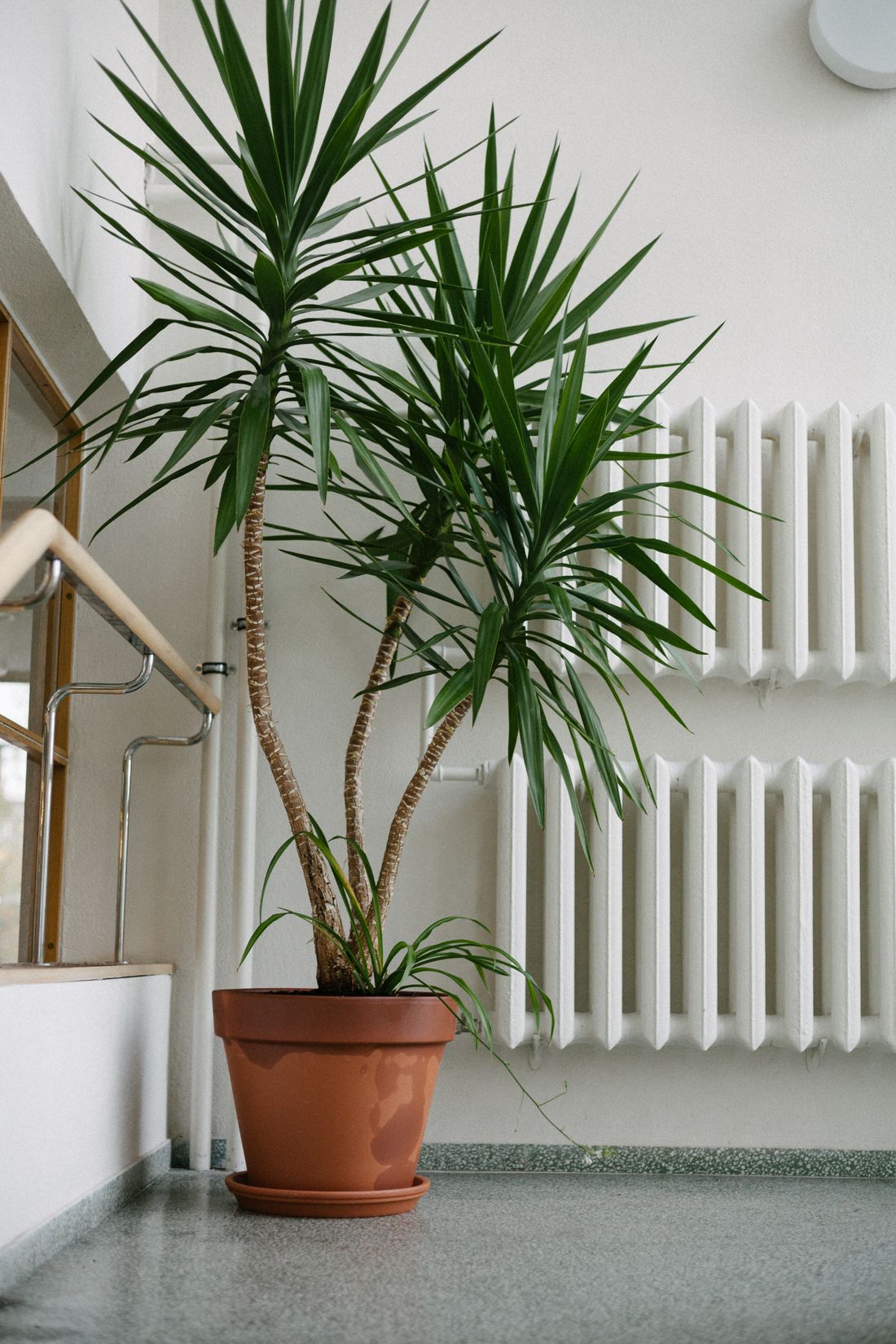
Radiators are almost always fitted under a window, which means a radiator sill is never only a radiator sill. Put the aloe from that same list of five on four of them, with the heating identical in every row and only the window changing, and it is not a fit at all under a north window while all three of the brighter ones bring it up to worth a try.
That is the same plant going from not a fit at all to workable without anybody touching the heating. It was never failing on heat. It was failing on light, on a north window, and the radiator underneath was a bystander. Published advice has aloe on the radiator list and it is right about the plant for the wrong reason, which matters because the reason is what a reader carries to their own home.
The other four move the other way, which is easiest to see by putting the same plants on the same radiator with a south window over them instead of the north one. The caption carries the north-sill counts beside them:
| The same five, on a south-facing radiator sill | What the light is doing | Verdict |
|---|---|---|
| Aloe vera | A little dim, but workable | Worth a try, 65/100 |
| Snake plant | A bit bright, but workable | Worth a try, 64/100 |
| ZZ plant | A bit bright, but workable | Worth a try, 61/100 |
| Spider plant | A bit bright, but workable | Worth a try, 60/100 |
| Peace lily | Too bright here | Not the best fit right now, 34/100 |
The aloe has gone from last place to first without the heating changing by a degree, and the peace lily has gone from a compromise to the worst score on the page. Nobody moved a radiator. So a radiator question that does not ask which window is a question with its widest variable missing. The north-facing window guide and the south-facing one work those two spreads through on their own.
And if it is a forced-air vent rather than a radiator
Central heating in a lot of homes is a vent blowing hot air rather than a panel radiating it, and the advice that ranks for that question is blunter: a vent is harmful, it dries the air to desert levels, and most houseplants want 50% humidity or more. Two of those three are worth checking against numbers.
The vent adds one thing a radiator does not, which is air actually moving. So hold the warm dry spot still and change only that, across still, light, medium and strong air.
Nor does this transfer to warm appliances in general. Run the same two columns beside a working oven and the dryness stops being the answer for two of the five plants there, which lose their rating on the warmth instead. The method carries over. The verdict does not.
The blast costs almost nothing. A snake plant asks for moderate air movement, so a vent sits one step above that and ordinary room air one step below: the same distance from right, and both score 94 out of 100 against 100 for the moderate air it actually wants. Sealed still air is two steps away, and that is the one that drops, to 65. A closed alcove with no vent is harder on this plant than the vent. Which end your own room sits at is its own page.
The humidity half of that claim does not hold either. Wanting 50% or more is a minority position among the plants we score, roughly two in five of the ones we hold a humidity range for, and the plants recommended for warm dry spots are drawn from the other three. That is the whole reason a snake plant and a peace lily disagree so sharply about the same sill.
What to do with your own radiator sill
Read the spot rather than the appliance. If the sill is under a bright window, the window is doing more than the heating and you should pick for the light first. If the sill is dim, the heat is almost certainly harmless and the dryness is the thing to check, so put a humidity-loving plant somewhere else and keep the tolerant ones there. The one arrangement worth avoiding outright is a pot sitting directly on a hot radiator cover in contact with the metal, because that is where the warmth finally starts to cost something. Dry warm air also empties the pot faster, and how far that moves the interval is a separate calculation from anything on this page.
Every lux figure here is an estimate for an indoor position on a clear day, and the verdicts come from our own scoring, with temperature, humidity and airflow declared in each caption rather than measured in your room. We have not put a meter on a radiator sill through a winter, so nothing above is a seasonal measurement, and the humidity figures are the kind of readings a heated room gives rather than a reading of yours.
By GrowSpot · Published August 14, 2026 · Last updated August 30, 2026
