The top organic result for this question, at the time of writing, is a forum thread titled “what are the damned sun requirements for jade plants?” The person goes on to explain the problem: every source says something different, some say direct, some say indirect, and theirs did fine in a bedroom anyway. Twenty people reply and they do not agree either.
That thread is the most useful thing on the page, because it describes the actual situation rather than a recommendation.

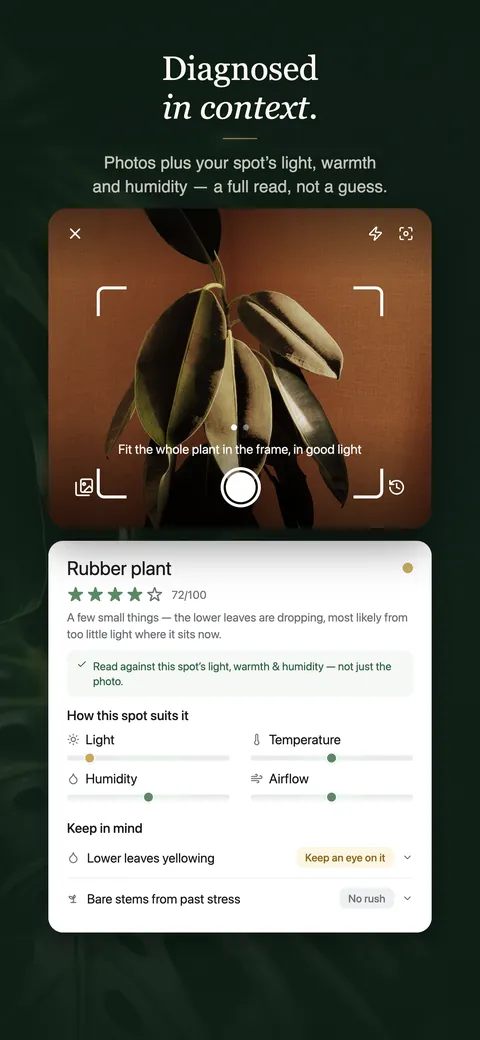
Worth a try
It can work here with a little care.
A little dim, but workable
Comfortable temperature
Humidity suits it
Airflow suits it
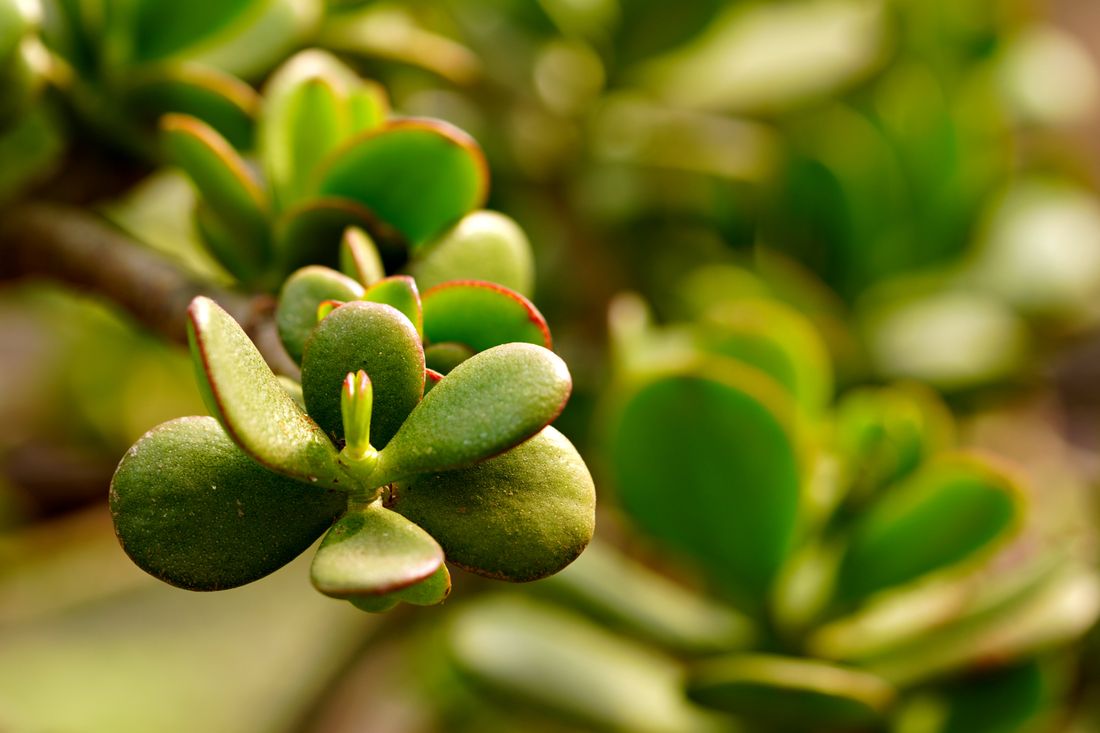
What a jade plant is asking for
A jade is a succulent from a climate with open sky. In our data its light requirement sits in the highest band we have, the same band as an aloe, and well above the band that a monstera or a pothos sits in. A fiddle leaf fig shares this top band, and its nine-spot table passes the same sunny sills and refuses the same corner. That single fact is doing all the work in the table below, and it is the fact that most care articles skip, because the qualitative vocabulary does not have a word for “more light than a window can supply.”
Everything else it wants is easy indoors. It is comfortable across a wide temperature range, it prefers dry air rather than the humidity most tropical houseplants need, and it does not mind normal room airflow. In the scoring below, temperature, humidity and airflow are all held at the plant’s own preference so that the only thing changing between rows is light.
Nine spots, scored
These are our estimates for indoor spots on a clear day, scored by the same engine that runs in the free spot checker. Read the last two columns rather than the lux figures, which look generous right up until you see what the plant does with them.
Estimates, then, rather than readings — the readings sit in a separate pile we publish, 204 of them taken at 104 real spots, where the median indoors is 2,349 lux and the median on a balcony is 8,173.
Every row, one plant each (9)
| Spot | Estimated light | What the light is doing | Verdict |
|---|---|---|---|
| South sill, against the glass | 13,000 lux | A little dim, but workable | Worth a try, 67/100 |
| 1 m in from a south window | 10,000 lux | A little dim, but workable | Worth a try, 65/100 |
| 2 m in from a south window | 6,300 lux | A little dim, but workable | Worth a try, 62/100 |
| 3 m in from a south window | 3,969 lux | Too dim here | Not the best fit right now, 46/100 |
| West sill | 7,800 lux | A little dim, but workable | Worth a try, 63/100 |
| East sill | 6,500 lux | A little dim, but workable | Worth a try, 62/100 |
| 1 m in from an east window | 5,000 lux | Too dim here | Not the best fit right now, 46/100 |
| North sill | 3,640 lux | Too dim here | Not the best fit right now, 45/100 |
| 3 m in from a north window | 1,111 lux | Too dim here | Not the best fit right now, 44/100 |
Not one row says the light is right. On our snake plant page a table built the same way produces the opposite picture, so the clearest version is to walk both plants down the same window:
Walk a jade and a shade plant back from the same south window together and they trade places: the jade is at its best pressed to the glass and falls away with every step, and the shade plant does the reverse.
Same window, the same walk back from the glass, so the window is not what changed. The plant is.
Why “a little dim” at thirteen thousand lux is not a mistake
Thirteen thousand lux is a lot of light by indoor standards. It is exactly double what the east sill in the same table gives, and more than ten times what three metres into a north room gives. Called dim, it sounds like an error.
It is a comparison to the wrong thing. Full daylight outdoors runs into six figures. A south-facing pane on a clear day passes a fraction of that, and a plant evolved for open sky reads the difference immediately. It is saying that for this particular plant, the brightest position in the house is still on the thin side, which is exactly why jade plants indoors tend to stretch, lean toward the glass and lose their compact shape rather than die outright.
If your own jade is doing that, the diagnosis is usually not watering. Our page on why a plant leans to one side covers the mechanism, and it is the same one at work here.
Why every source says something different
Look at what the published advice claims, and at what each claim leaves out:
- “At least four to six hours of light daily.” A duration with no intensity attached. Four hours on the north sill and four hours on the south sill differ by more than three times, and both satisfy the instruction.
- “Bright indirect.” A category with no distance attached. Measured on the sill, or three metres back?
- “Direct sun.” The opposite instruction, for the same plant.
- “Mine lives in a bedroom and is fine.” An outcome from one room nobody else can see.
Every one of those is describing a different threshold, and none of them says which one. The reason the argument never resolves is that the participants are answering two different questions at once: whether a jade will stay alive somewhere, and whether it will actually do well there. A jade is a succulent with water in its leaves and a slow metabolism, so the survival answer is generous and the thriving answer is strict. Both camps are telling the truth about their own question.
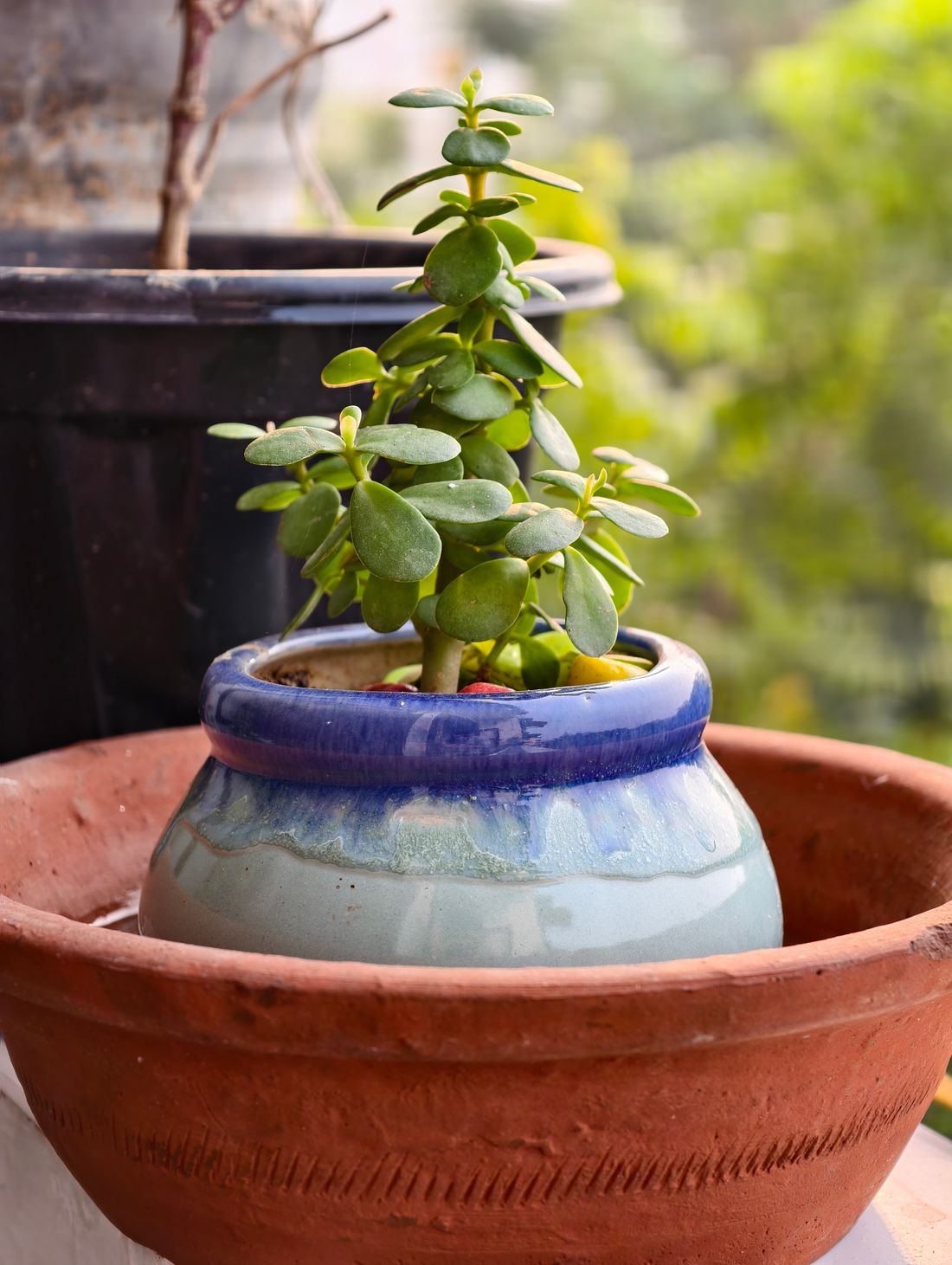
Numbers do not settle the argument by themselves, but they do separate the two questions. Everything in the nine-spot table is somewhere between survivable and comfortable. Nothing in it is thriving.
How much of this is the plant rather than the house shows up when other plants stand on that sill. The reading does not change. The complaint does:
| The plant on the sill | What the light is doing | Verdict |
|---|---|---|
| Sunset jade | A little dim, but workable | Worth a try, 67/100 |
| Aloe vera | A little dim, but workable | Worth a try, 67/100 |
| Fiddle leaf fig | Just the right amount of light | Good fit, 84/100 |
| ZZ plant | A bit bright, but workable | Worth a try, 65/100 |
| Monstera | A bit bright, but workable | Worth a try, 62/100 |
| Golden pothos | Too bright here | Not the best fit right now, 39/100 |
Four of the six land in the sixties while asking for opposite corrections: the jade and the aloe want the light stronger, while the ZZ plant and the monstera want it softer. The score alone does not tell you which. The pothos is the one this spot is plainly too bright for, at 39.
So what do you actually do with one
Give it the brightest window you have, put it on the sill rather than back in the room, and accept that indoors you are growing a slower, softer version of the plant than the one in the photographs.
The gap between those two plants is not a matter of degree. At the brightest indoor spot, 13,000 lux, a jade is only worth a try at 67 out of 100; on a balcony at 45,000 lux and outdoors at 80,000 it is a great fit at 99.
A pane of glass is most of the difference. The brightest spot in the house is a third of what the same sun delivers on the other side of it, and that third is the whole reason every indoor row on this page reads dim.
The published bands say the same thing from the other direction. What the services call the top of the indoor range is one to two orders of magnitude below what they put outdoors.
| Published by | Where the top band starts | What outdoors is |
|---|---|---|
| extension.msstate.edu | 1,000 fc and up | “High represents light conditions that are 1,000 or more foot-candles in intensity” — while the same page also heads a section “High Light (150 to 1,000 foot-candles)”. |
| extension.arizona.edu | 150–1000 fc | “high, 150–1000 foot-candles (fc)”, reached in “areas within four feet of large south-east or west facing windows”. |
| extension.illinois.edu | 300 fc | “High or Bright Light (300 foot candles)”, and above it a separate band: “Direct (1500 foot candles)”. |
| extension.illinois.edu | 10,000–12,000 fc | Outdoors, on the same page: “Outdoors, the amount of sunlight that is cast may be 10,000 to 12,000 foot-candles.” |
| open.edu | 100,000 lux | “Sunlight is extremely bright and its illuminance can reach 100 000 lux on the ground.” Overcast daylight is still “at least 5000 lux”. |
| extension.msstate.edu | 1,000 fc, then 100 a few feet in | How quickly the indoor figure falls: Not a floor but a falloff, from the same source: “The intensity of the light can drop from 1,000 to 100 foot-candles in the distance of only a few feet.” |
If you want the compact, red-edged, thick-stemmed jade, that plant lives outdoors for at least part of the year, and there is no arrangement of indoor furniture that substitutes.
Two of our pages take a jade through a single window in more detail, one for a south-facing window and one for a north-facing window, where the answer is the same at every distance. If you would rather check the spot you actually have, the free spot checker reads it in your browser, and you can lay the phone down at the exact place the pot would go.
By GrowSpot · Published August 12, 2026 · Last updated August 30, 2026
