The summary above the results says yes without hedging: jade plants love south-facing windows, because that is where the bright, direct sun these succulents want comes from, often four to six hours of it a day. It adds two sensible warnings, about moving a plant into bright light gradually and about leaves resting on hot glass.
We agree with the verdict. What the scoring adds is the shape of it, because in a room at 21 °C and 45% humidity this plant does not so much enjoy a south room as cling to the first part of it.

Worth a try
It can work here with a little care.
A little dim, but workable
Comfortable temperature
A little humid, but workable
Airflow isn't quite ideal
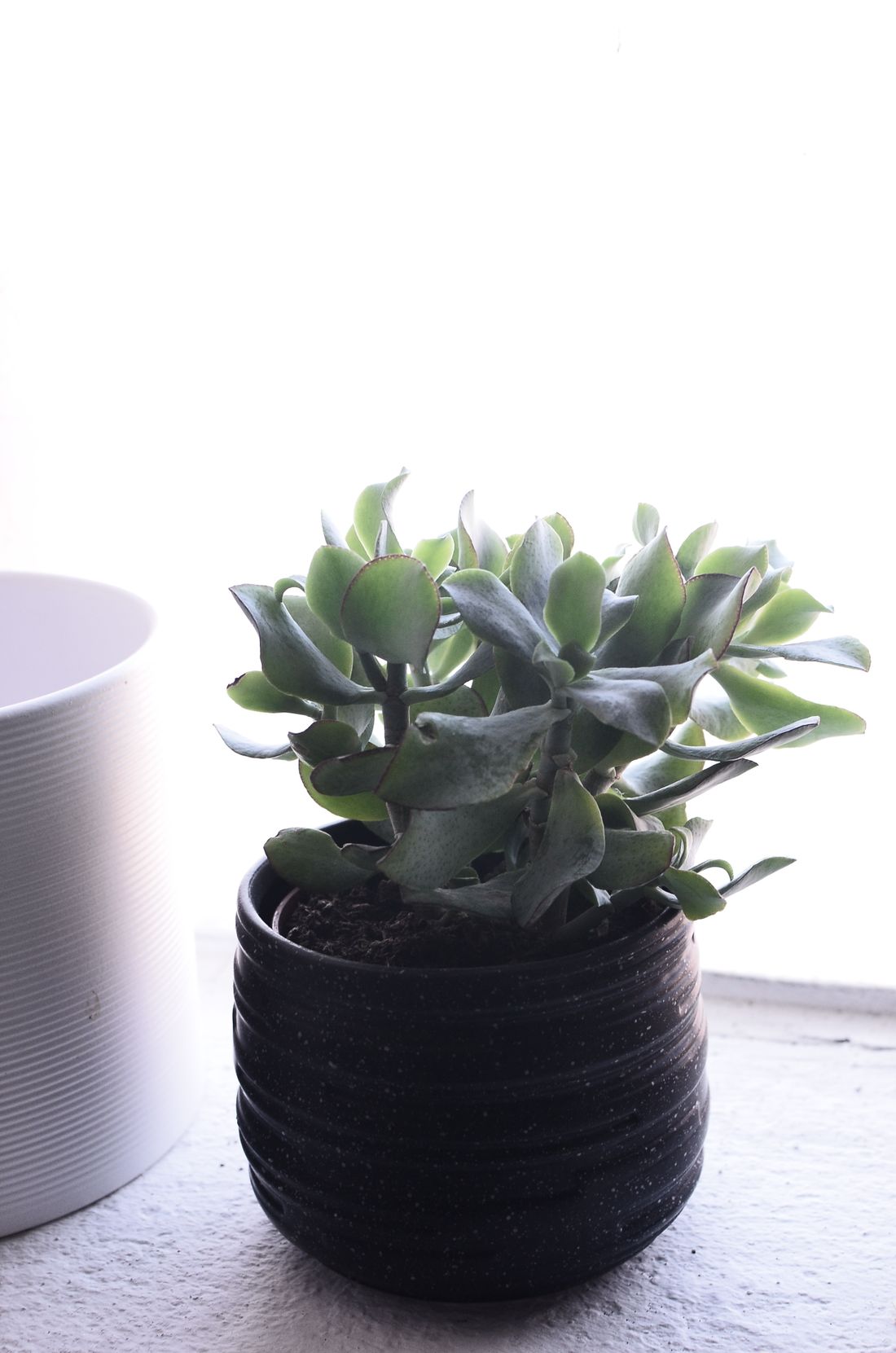
Do jade plants like south-facing windows?
Before our own scoring says anything: we gathered every published figure we could find for a jade plant. "4 of them, from 3 separate sources, all in the same unit." They are reproduced below exactly as each source writes them, and nothing here is converted.
| Who publishes it | What it says a jade plant needs | What the figure is |
|---|---|---|
| extension.arizona.edu | 150–1000 foot-candles | listed under the heading "High Light (150–1000 fc)" |
| houseplantjournal.com | 200 FC (40 µmol) foot-candles | minimum indirect light level |
| houseplantjournal.com | 400 FC (80 µmol) foot-candles | good indirect light level |
| houseplantsnook.com | 400–800 foot-candles | chart fc level |
Yes, and the sill is the minimum rather than the treat. Pressed against the glass at about 13,000 lux, the light dimension still reads as slightly below this plant’s band, not above it. The best indoor spot most homes can offer is on the dim side of what a jade actually wants.
What they say in words rather than numbers is less unanimous than the figures make it look.
| Published by | What it says | In its own words |
|---|---|---|
| hgic.clemson.edu | Full sun, or a south window | “Like many succulent plants, jades prefer the full sun or bright filtered light of a south-facing window.” |
| hort.extension.wisc.edu | Four or more hours of direct sun | “Jade plant does best with four or more hours of direct sun, but they will survive in bright, indirect light.” |
| plantfinder.mobot.org | Bright, with afternoon shade | “Plants need bright light, but appreciate some afternoon shade.” |
| ag.purdue.edu | Strong sun reddens the edges | “Although it can adapt to medium to high light conditions, it frequently develops red edges around the leaves in strong, direct sunlight.” |
| planttalk.colostate.edu | 65–75 °F by day, 50–55 at night | “Jade plants require day-time temperatures between 65 and 75 degrees Fahrenheit, and night-time temperatures between 50 and 55 degrees.” |
Four or more hours of direct sun, bright light with afternoon shade, and a warning that strong direct sun reddens the leaves are three different pieces of advice about the same sill. Our own score lands in the same uncomfortable middle.
That is worth sitting with, because it inverts the usual worry. People ask whether a south window is too much for a succulent. For this one, indoors, it is not quite enough. Put the plant on every sill in the house in turn and none of them clears the bar:
| The sill it is standing on | Estimated light | Verdict |
|---|---|---|
| No direct sun at all | 650 lux | Not the best fit right now, 38/100 |
| North window | 3,640 lux | Not the best fit right now, 40/100 |
| East window | 6,500 lux | Worth a try, 59/100 |
| West window | 7,800 lux | Worth a try, 60/100 |
| South window | 13,000 lux | Worth a try, 63/100 |
The south sill is the best of them and it is still only a Worth a try, which is why the published advice for this plant never settles on one answer. Every writer is describing a different spot on that ladder and none of them reaches the top.
The numbers by distance
| Distance from the glass | Estimated light | Verdict |
|---|---|---|
| 0.3 m, against the glass | 13,000 lux | Worth a try, 63/100 |
| 1 m back | 10,000 lux | Worth a try, 61/100 |
| 2 m back | 6,300 lux | Worth a try, 58/100 |
| 3 m back | 3,969 lux | Not the best fit right now, 40/100 |
Notice the slope. Between the glass and two metres the score only drifts down, and then it drops off a cliff. Rooms are not gradients for a plant with a high light requirement, they are a bright edge and then everything else. Checking your own sill is free and takes about a minute.
Three metres in, you are back at the north window
The same jade in a north-facing window scores 40 on the sill and 38 at the back of the room. Three metres into this south room scores 40. The north-window scoring is here.
So the far side of a south room and the whole of a north room are, for this plant, the same place. That is the clearest illustration we have of why the room label is the wrong unit. Two people can both say they keep a jade in a south-facing room and be describing spots that score 63 and 40.
Why even the sill reads slightly dim
The band this plant is scored against was set by the conditions it evolved in, which are open, unshaded, southern African sun. Outdoor daylight runs an order of magnitude above what comes through a window: tens of thousands of lux outside on a clear day against the 13,000 we estimate at the glass indoors. Glass, walls and the angle of the sun all take their cut before the light reaches a windowsill.
So the sill is not a compromise between too much and too little. Indoors it is the top of the range available, and this species is one of the few common houseplants whose appetite is still not met there. That is also why a jade that spends the summer on a balcony often looks visibly different by September, and why the same plant brought back inside slows down rather than dies.
Not everything in a south window is short of light at the sill. A fiddle leaf fig scores a hundred there, where this plant is already reading a little dim.
The plant that wants the other end of the room
The clearest way to see what a jade is asking for is to stand a shade plant next to it in the same window. Walked back together, the jade reads 63 out of 100 at the glass and 40 at three metres; the peace lily reads 40 at the glass and 94 at three metres.
The spot where the jade scores best is the spot where the peace lily scores worst. Both plants appear on lists of things that suit a south-facing room, and both lists are right; the room is just not where the answer lives.
What the score does not model
The warning about acclimating a plant slowly is real and our scoring has nothing to say about it. A jade that has spent a year in a dim corner and is moved onto a south sill in July can scorch, and the score for that sill will read 63 both before and after, because the spot did not change. The plant’s history is not an input.
The same goes for leaves pressed against glass on a hot afternoon. The score reads the room’s air, not the temperature of the pane, so treat contact with hot glass as its own thing to avoid.
A jade is one of the few that wants the unfiltered sill itself. The south window guide lists the others, along with the ones that need the beam filtered before they will take it.
How it tells you the spot is wrong
- Not enough light: stretching. Longer gaps between leaf pairs, smaller new leaves, and a stem that leans. This is what three metres back looks like after a few months.
- Plenty of light: red or bronze edges on the leaves. On this species that is a normal high-light response rather than damage, and many people grow it deliberately.
- Actual sunburn: pale dry patches with a sharp edge, usually within days of a move. That is acclimation rather than the spot being wrong.
- Soft, translucent leaves and a mushy base: water, not light.
The room is not the spot
We put a phone down in six places in one living room on a clear afternoon:
| Spot | Reading |
|---|---|
| At the bright window | 20,000 lux |
| 1 m from the window | 15,000 lux |
| 2–3 m away, in window shade | 3,500 lux |
| Middle of the room | 570 lux |
| Darker side of the room | 119 lux |
| The dark corner | 18 lux |
That room’s orientation was never written down, so those are not south-window figures and we are not presenting them as any. What carries over is the steepness. The steepness is the point, and it is set out in full in the six readings behind those numbers.
A jade makes that steepness impossible to ignore, because its band sits high enough that only the first stretch of a bright room clears it.
By GrowSpot · Published August 10, 2026 · Last updated August 30, 2026
