The short answer: not on the sill. At the glass a peace lily reads “too bright”, 43/100. The usual advice to move it back has the direction right and the distance wrong: Google’s summary of this question today says two to three feet, and at a metre, already further than that, the score is 46. It becomes workable at two metres, 66, and at three metres, 3,969 lux, the same plant scores 99/100.
The advice here is unusually firm. Avoid south and west-facing windows entirely, says one guide, because the strong afternoon sun scorches peace lily leaves. A well-known gardening magazine puts the ideal within one metre of a north, north-east or north-west window. A university extension service recommends an east or north window.
They are right that a peace lily on a south sill is in trouble. Our numbers agree with them at the glass and at a metre, and by a wide margin. The problem is what the person on the other side of the screen is supposed to do with that, when a plant group thread on the same results page opens with: I only have south windows in my apartment. Is this ok?

Not the best fit right now
The plant's fine, this spot just isn't a match.
Too bright here
Comfortable temperature
Humidity suits it
Airflow suits it
Light is a deal-breaker here. The other three cannot make up for it.
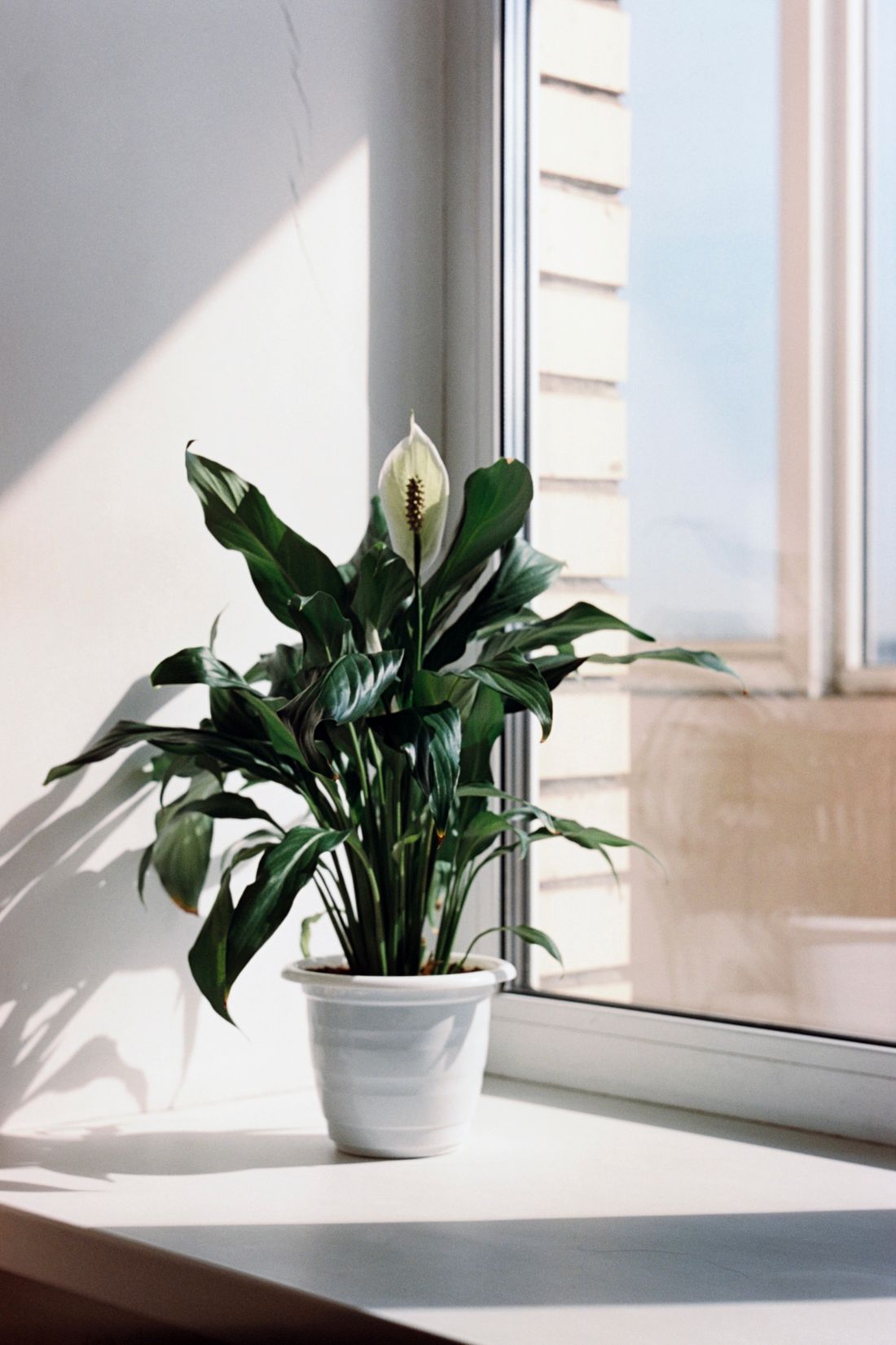
Can a peace lily live with only south-facing windows?
Before our own scoring says anything: we gathered every published figure we could find for a peace lily. 6 of them, from 5 separate sources, in 3 different units. They are reproduced below exactly as each source writes them, and nothing here is converted.
| Who publishes it | What it says a peace lily needs | What the figure is |
|---|---|---|
| theplantrunner.com | 800–2,000+ lux | Standard foliage plants (pothos, Philodendron, Monstera deliciosa …) — a general band, not a single-species figure |
| houseplantjournal.com | 100 foot-candles | Peace Lily — minimum indirect light |
| houseplantjournal.com | 200 foot-candles | Peace Lily — good indirect light |
| growlightmeter.com | 5 – 10 PPFD / DLI | Peace Lily |
| extension.arizona.edu | 75–150 foot-candles | listed under the heading "Medium Light (75–150 fc)" |
| houseplantsnook.com | 50–100 foot-candles | chart fc level |
Yes, at about three metres from the glass, where it scores 99/100 with all four dimensions in band.
At the glass and at one metre it genuinely does not work, which is the part the warnings get right. At two metres it is workable with the light dimension still flagged. The room is not the problem. The first two metres of it are.
The numbers by distance
The same plant scored at four distances from the same south window, in a room at 24 °C and 55% humidity:
| Distance from the glass | Estimated light | What the light is doing | Verdict |
|---|---|---|---|
| 0.3 m, against the glass | 13,000 lux | Too bright here | Not the best fit right now, 43/100 |
| 1 m back | 10,000 lux | Too bright here | Not the best fit right now, 46/100 |
| 2 m back | 6,300 lux | A bit bright, but workable | Worth a try, 66/100 |
| 3 m back | 3,969 lux | Just the right amount of light | Great fit, 99/100 |
The advice does not change from plant to plant, so it is worth seeing what it does to three of them at the same window. At the distance it recommends, about a metre, none of the three has moved more than a few points. They separate only further back, and not in the same way: the peace lily reaches its best at three metres, the orchid has finished improving by two, and the snake plant sold for full sun is flat across the first two metres and gains only at the far wall.
| Distance from the glass | Peace lily | Bird's nest snake plant | Moth orchid |
|---|---|---|---|
| 0.3 m against the glass13,000 lux | 43/100 | 61/100 | 64/100 |
| 1 m back10,000 lux | 46/100 | 63/100 | 66/100 |
| 2 m back6,300 lux | 66/100 | 65/100 | 94/100 |
| 3 m back3,969 lux | 99/100 | 89/100 | 94/100 |
Those light figures are estimates rather than meter readings, built from the window direction, the distance, and typical clear-day conditions.
Three metres from a south window in a normal room is usually the middle of the floor or the far wall, and it is a spot most people would look at and assume was too dark for a flowering plant. It is the one that scores.
Why the blanket advice exists
Peace lilies come from forest floors, and they are built to work in light that arrives after a canopy has taken most of it. Direct midday sun through south-facing glass is roughly the opposite condition, and this plant does not shrug it off the way a snake plant or a ZZ would.
Writing avoid south windows is a safe instruction because it cannot fail. It also throws away an entire room from someone who does not have another one, and that is a real cost paid by real people, mostly in flats.
Orchids get the same blanket warning about south windows and it splits the same way. Scored at four distances, a moth orchid clears at two metres, in another room most people had already written off.
A peace lily sits at the far end of that range, needing three metres before the flag clears. Nine spots in one house, not only this window, are scored on the peace lily light page, where the band comes out as 400 to 4,000 lux. The south window shortlist has the plants that want the opposite and belong on the sill itself.
Getting the humidity right matters more here
This is the one plant in this series whose comfortable humidity band starts at 50%, which is higher than most, and a south-facing room in summer is often the driest room in the house.
So the three-metre spot solves the light and leaves you with the other half of the job. Grouping plants together, standing the pot on a tray of damp pebbles, and keeping it away from the direct throw of an air conditioner all move that number. Brown crispy leaf edges on a peace lily that is otherwise in a sensible spot are usually about air rather than sun.
That half is worth more than it sounds. Park the plant at the three-metre spot and move only the humidity: it is worth a try at 30%, a good fit at 35%, and a great fit from 40% upward, reaching 99 out of 100 at 60%.
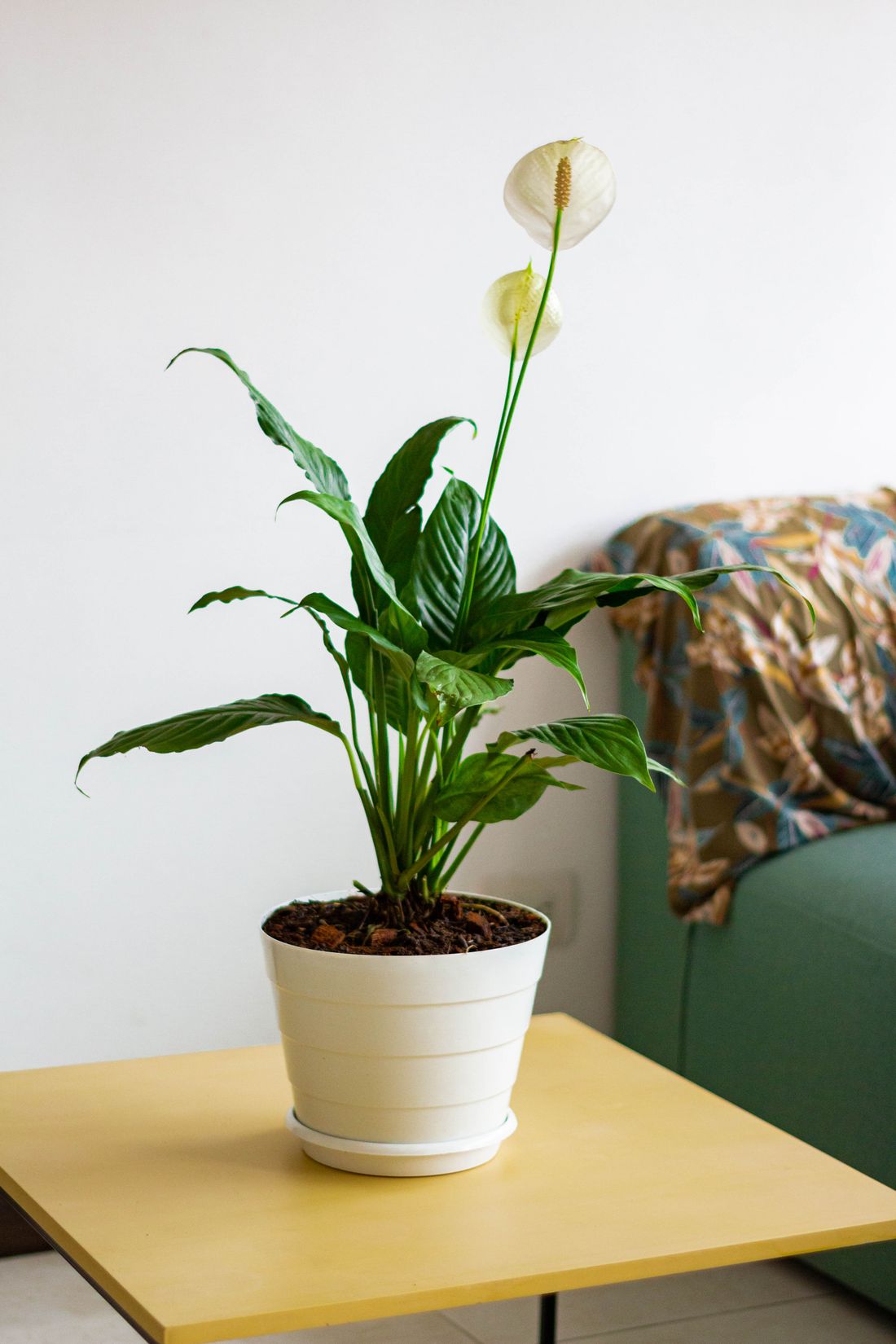
Run that same sweep at the one-metre spot instead and the entire range is worth a couple of points, because there the light has already capped the score. Humidity only becomes the thing standing in your way once the light is right, which is why this section comes after the distance one rather than before it.
A west window is a full metre kinder to this plant than a south one, because west glass delivers roughly 7,800 lux where south delivers 13,000. The west-window scoring is here, and it clears at two metres instead of three.
How it tells you the spot is wrong
The two failures look different, which is useful because it tells you which way to move it.
- Too much light: pale, washed-out leaves and bleached patches on the surfaces facing the window, with the shaded side of the plant unaffected. Move it further back.
- Too little light: deep green leaves, healthy looking, and no flowers for a year. Peace lilies keep their foliage a long way past the point where they stop blooming, so a plant that looks fine and never flowers is telling you about light.
- Drooping: this one is almost always water, not placement. Peace lilies collapse dramatically when thirsty and recover within hours. Do not move a wilting plant to a new spot before you have watered it.
A heartleaf philodendron reaches the same three-metre answer from a slightly better start: workable at one metre where this plant is still not a fit.
The room is not the spot
We put a phone down in six places in one bright living room, all six inside the same hour:
| Spot | Reading |
|---|---|
| At the bright window | 20,000 lux |
| 1 m from the window | 15,000 lux |
| 2–3 m away, in window shade | 3,500 lux |
| Middle of the room | 570 lux |
| Darker side of the room | 119 lux |
| The dark corner | 18 lux |
That room’s orientation was never recorded, so those are not south-window figures and we are not presenting them as any. What travels is the steepness, and steepness is good news here: it means a single south-facing room contains both a spot that will scorch this plant and a spot that suits it, a few paces apart. What those few paces are worth is measured in six readings across one room.
Published July 31, 2026 · Last updated August 30, 2026
