Scored for a heartleaf philodendron at 24 °C and 50% humidity, a south sill at 13,000 lux fails on light at 45 out of 100; one metre back is 63, two metres 68, and three metres back, at 3,969 lux, is 100. The distance that works is three metres, not three feet.
Search for philodendrons and south-facing windows and you will be told, in roughly this order: to use a curtain or sit the plant a few feet away; to avoid the harsh rays of a south or west window unless you provide a curtain or other shield; that one to two metres from a south window can also work, as long as the plant is not in direct midday sun; and that the leaves turn a bright chartreuse when displayed in a south-facing window with bright indirect light. On the same results page, a grower in a plant group answers a question about the best direction with: all of mine are in a north facing window.
Every one of those is a distance claim, and the distances do not match. So we scored it.

Worth a try
It can work here with a little care.
A bit bright, but workable
Comfortable temperature
Humidity suits it
Airflow suits it
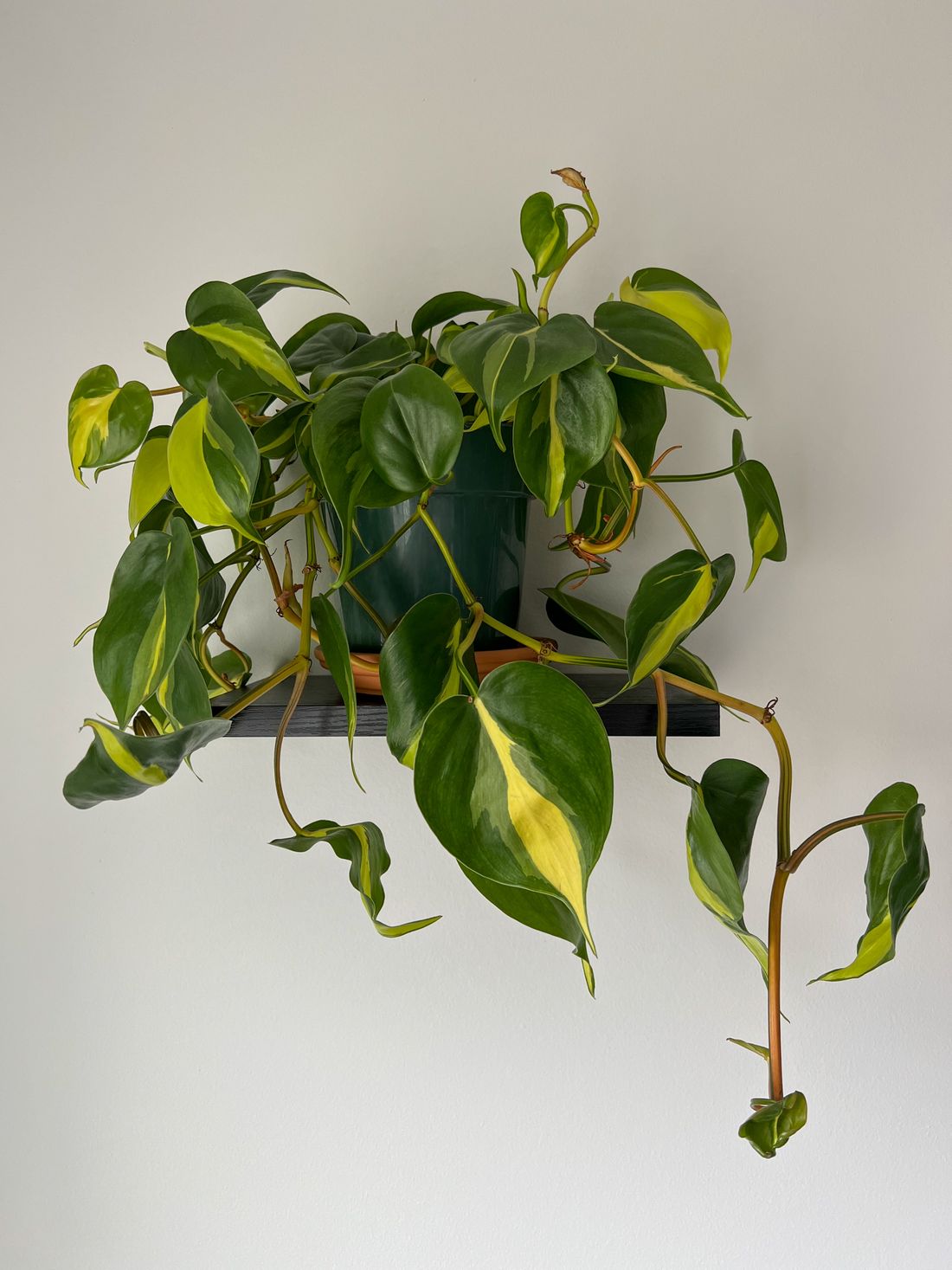
Can a philodendron go in a south-facing window?
Before our own scoring says anything: we gathered every published figure we could find for a philodendron. 8 of them, from 5 separate sources, in 3 different units. They are reproduced below exactly as each source writes them, and nothing here is converted.
| Who publishes it | What it says a philodendron needs | What the figure is |
|---|---|---|
| theplantrunner.com | 800–2,000+ lux | Standard foliage plants (pothos, Philodendron, Monstera deliciosa …) — a general band, not a single-species figure |
| theplantrunner.com | 1,500–5,000 lux | Light-hungry aroids & Ficus divas (Fiddle Leaf Fig, variegated Monstera) |
| houseplantjournal.com | 100 foot-candles | Philodendron Vines — minimum indirect light |
| houseplantjournal.com | 200 foot-candles | Philodendron Vines — good indirect light |
| growlightmeter.com | 5 – 10 PPFD / DLI | Philodendron |
| extension.arizona.edu | 75–150 foot-candles | listed under the heading "Medium Light (75–150 fc)"; carries the page' |
| houseplantsnook.com | 50–100 foot-candles | chart fc level |
| houseplantsnook.com | 200–400 foot-candles | chart fc level |
Yes, at three metres back, where it scores 100/100 with all four dimensions inside their bands.
Before that the light is flagged at all three distances: 45/100 at the glass, which is not a fit, then 63/100 at one metre and 68/100 at two, both only worth a try. The comfortable band for this plant in this window begins at roughly the point where most guides have stopped talking.
How far back does it actually need to be?
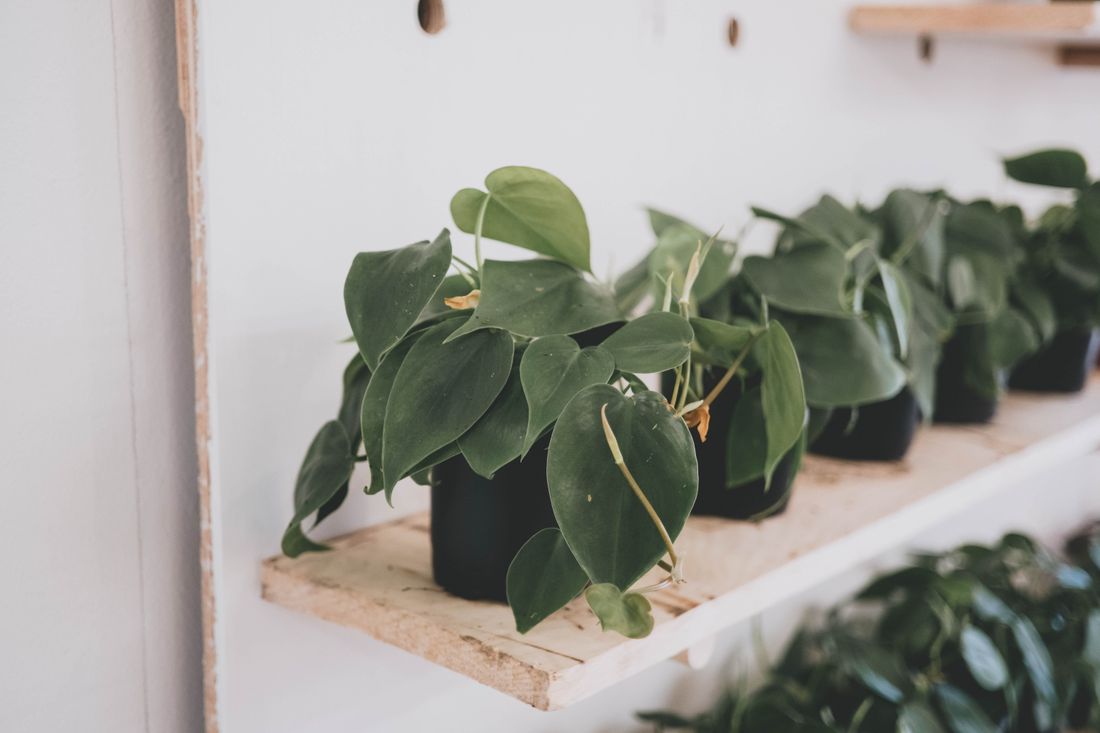
Three metres, which is about ten feet — not the three to five feet the published advice keeps landing on, and it is only there that the light flag finally clears. The same plant scored at four distances from the same south window, in a room at 24 °C and 50% humidity:
| Distance from the glass | Estimated light | What the light is doing | Verdict |
|---|---|---|---|
| 0.3 m, against the glass | 13,000 lux | Too bright here | Not the best fit right now, 45/100 |
| 1 m back | 10,000 lux | A bit bright, but workable | Worth a try, 63/100 |
| 2 m back | 6,300 lux | A bit bright, but workable | Worth a try, 68/100 |
| 3 m back | 3,969 lux | Just the right amount of light | Great fit, 100/100 |
| Distance from the glass | Heartleaf philodendron | Sunset jade |
|---|---|---|
| 0.3 m against the glass13,000 lux | 45/100 | 64/100 |
| 1 m back10,000 lux | 63/100 | 62/100 |
| 2 m back6,300 lux | 68/100 | 60/100 |
| 3 m back3,969 lux | 100/100 | 41/100 |
Those light figures are estimates rather than meter readings, built from the window direction, the distance, and typical clear-day conditions. Your window will differ, and the number that moves it most is not the compass direction but what is outside it.
The useful thing here is not the exact three, it is that the curve is still climbing at two metres. Advice that stops at a few feet is stopping while the plant is still uncomfortable.
The same three-to-five-feet figure gets handed to a snake plant at a west window, where it happens to be right: that plant clears its flag at one metre and reads 100/100 at one, two and three metres alike. The figure travels between plants and windows; the reason for it does not travel with it.
Why a shade plant reads so badly at a bright window
Because this plant’s ceiling is low, not because a south window is cruel: nothing separates 45/100 from 100/100 here except how far back it stands. Heartleaf philodendrons grow as understorey climbers. In the wild they spend their lives under a canopy, and the dark, slightly velvety leaf surface is part of how they make a living on scraps of ambient light. That is a specialisation, and specialisations cut both ways.
A plant built to harvest dim light does not simply ignore bright light. Being at a south window is not a neutral event for it, which is why the score at the glass is not merely lower but a different verdict entirely.
A peace lily lands on the same three metres from a worse start: lower than this at the glass, and still not a fit one metre back.
The curtain versus the distance
Both work, and they are not equivalent — and the middle option, a metre back with no curtain, is the one that fails at 63/100.
- A sheer curtain cuts the intensity at the glass and lets you keep the plant near the window, which matters if the window is where you want to look at it.
- Distance costs you nothing to maintain and does not depend on anyone remembering to close anything. Three metres from a south window is often the middle of the room, which is where a hanging or trailing philodendron looks best anyway.
- What does not work is splitting the difference on instinct, and it is the most common placement we see described.
Three metres is a long way into a room, so it is worth knowing which plants would rather be at the glass. Which plants belong in a south window answers that one first.
Reading the leaves
Not usually with dramatic burns — the first sign is colour: deep green fading toward yellow-green, most obvious on the leaves pointed at the window and absent from the ones behind them.
That is the same symptom the chartreuse advice was describing as a feature. Whether pale new growth is a look or a warning depends on whether you were aiming for it, and on whether the plant is also slowing down.
The room is not the spot
We put a phone down in six places in one bright living room, all six inside the same hour:
| Spot | Reading |
|---|---|
| At the bright window | 20,000 lux |
| 1 m from the window | 15,000 lux |
| 2–3 m away, in window shade | 3,500 lux |
| Middle of the room | 570 lux |
| Darker side of the room | 119 lux |
| The dark corner | 18 lux |
That room’s orientation was never recorded, so those are not south-window figures and we are not presenting them as any. What travels is that the fall is steep and early, which is exactly why a three-metre answer and a one-metre answer are not close to each other. That gap is easier to believe with the light measured metre by metre across one room.
Published July 31, 2026 · Last updated August 30, 2026
