Wait until nights are reliably above 50 °F, says the summary at the top of this search, and the horticultural society under it agrees. In Celsius that is 10 degrees, which is the same number our cold alert uses. We did not copy it: our threshold started at 4 °C and a horticulture review moved it up, on the grounds that tropical foliage starts suffering around 10 to 12 rather than at freezing.
So the temperature half is settled, and it is worth saying plainly that this is a forecast question rather than a date question. There is no month at which it becomes safe, and no last-frost date that applies to a flat in a different hemisphere. What matters is the run of nights ahead of you.
The number itself is not as settled as it looks. Five extension services cover the same move, and the ones that give it split ten degrees apart — and every one of them attaches an instruction about light, which is the half this page is about.
| Published by | The night-time number | What else it tells you to do |
|---|---|---|
| yardandgarden.extension.iastate.edu | Above 50 °F | “wait until nighttime temperatures are consistently and reliably above 50°F before moving houseplants outdoors”. On light: “Never move houseplants from indoors into full sun”, and “introduce more light over 10 to 14 days”. |
| planttalk.colostate.edu | Above 50 °F | “wait until night temperatures are above 50 degrees Fahrenheit and all danger of frost has passed”. On light: “Harden off plants by placing them in a shaded area for a few days and gradually exposing them to longer periods of sun”. |
| extension.umd.edu | Above 60 °F | “Put your plants out only after night temperatures remain above 60°F (usually mid-May or early June).” On light: “Acclimate plants to increased light by placing them in a shady area outdoors”, over “a period of two weeks”. |
| hgic.clemson.edu | Above 60 °F | “To be safe, wait until temperatures moderate in the spring and consistently exceed 60 ° F at night.” On light: “Gradually expose them to sunlight by placing them in deep shade under a tree for a few days”. |
| site.extension.uga.edu | No number given | Only the light instruction, and it names the plant in our own table: “a shade loving peace lily should not find itself in full sun out on the sidewalk.” |
| site.extension.uga.edu | A week or two | “Let the plant adjust to the new temperature, humidity, and brighter light conditions for a week or two before moving it to its final location for the summer.” |

Not the best fit right now
The plant's fine, this spot just isn't a match.
Too bright here
Comfortable temperature
Humidity suits it
Airflow doesn't suit it
Light is a deal-breaker here. The other three cannot make up for it.
What the light does when you open the door
Here is the part the temperature answer leaves out. Take one peace lily and one bright-but-shaded exposure, and walk it through the doorway without changing anything else. This is the gentle version of outdoors, shade rather than sun:
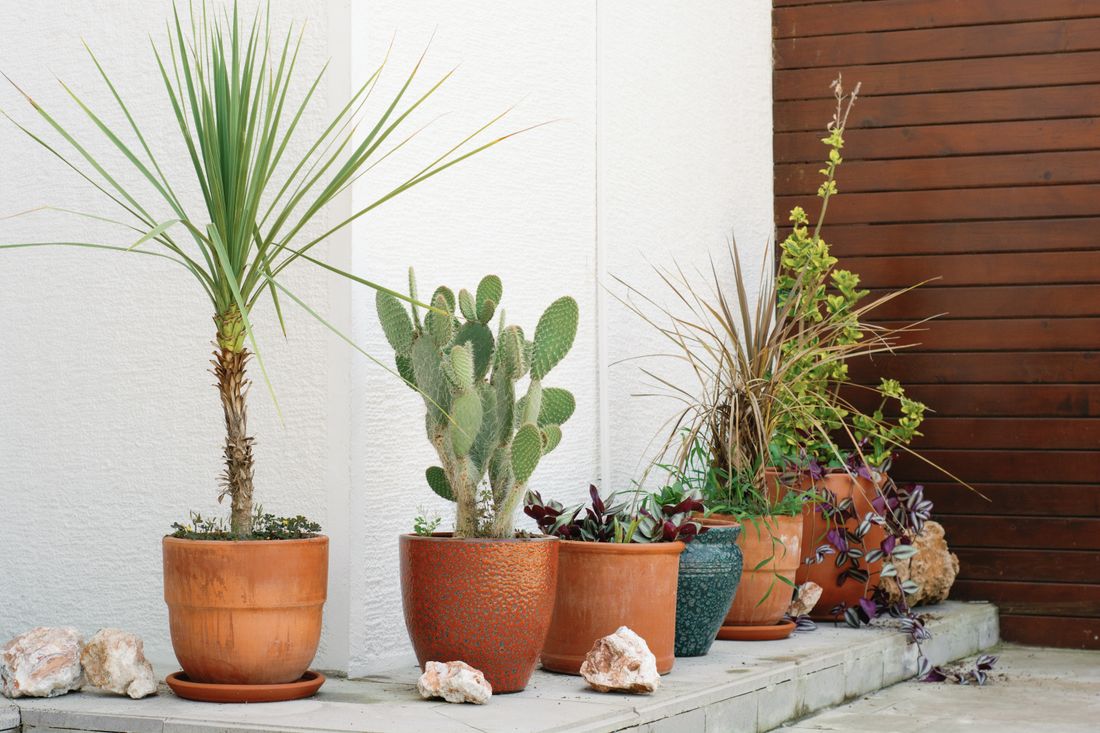
| Where it is standing | Estimated light | Verdict |
|---|---|---|
| Indoors, at the window | 3,640 lux | Great fit, 99/100 |
| On a balcony, in open shade | 7,000 lux | Worth a try, 65/100 |
| Outdoors, in open shade | 12,000 lux | Not the best fit right now, 44/100 |
Shade outside is already brighter than the sill it left, and the verdict has flipped. And that was the gentle version: the same model puts an unshaded midday spot at 80,000 lux, close to seven times the shaded row above. That gap, rather than the night-time temperature, is what damages plants in their first week out. And it does not take open sky to do it:
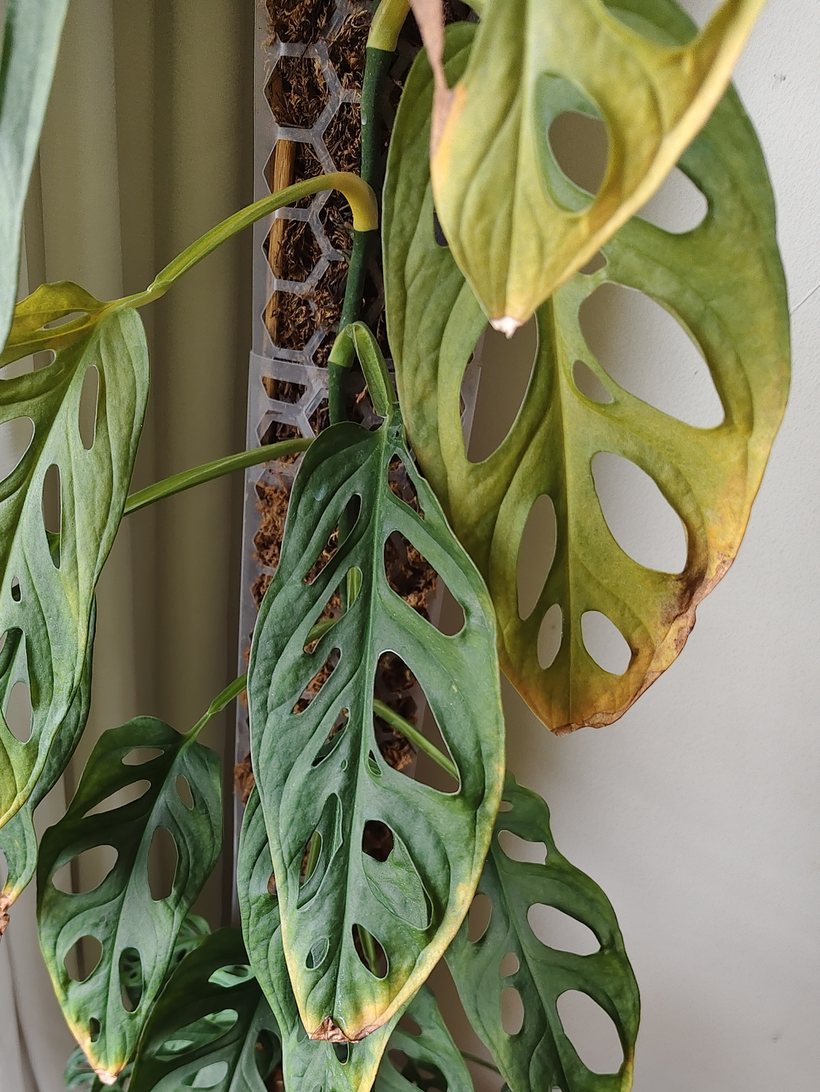
Our page on how bright a room can actually get works the indoor ceiling out in detail.
What our own meter says, across 204 readings
Everything above is our light model estimating. This is not: these are medians of readings taken with the app’s meter, on 104 different spots across 36 days. The full spread, quartiles and tier counts are published as open data on our indoor light measurements page.
| Where the reading was taken | Median reading |
|---|---|
| Indoors (49 readings, 40 spots) | 2,349 lux |
| On a balcony (25 readings, 17 spots) | 8,173 lux |
A balcony reads about 3.5 times the median indoor spot. That is measured rather than modelled, and it is not the same comparison as the table above: those rows hold one exposure constant, where these readings pool every orientation, hour and sky people take them in. Held constant, the model puts a balcony at about 1.9 times the sill. Across real homes the gap comes out wider. We are not publishing a figure for fully open ground, because we only have three readings marked that way, and three is not a number to draw a line through.
Five plants, one open spot
Now set five plants down in that unshaded midday spot, the one at 80,000 lux. The split does not follow the tough-plant reputations:
| The plant you carry out | What the light is doing | Verdict |
|---|---|---|
| Peace lily | Too bright here | Not the best fit right now, 34/100 |
| Monstera | Too bright here | Not the best fit right now, 39/100 |
| Snake plant | Too bright here | Not the best fit right now, 35/100 |
| Jade plant | Just the right amount of light | Good fit, 82/100 |
| Aloe vera | Just the right amount of light | Good fit, 82/100 |
Every row read the identical light in the identical spot, and the split is clean rather than gradual: the two succulents are comfortable, and the three that get recommended for low corners are all past their limit. Toughness indoors usually means tolerance of dimness, which is the opposite of what an open sky asks for. Shade outdoors is the fix, and it is not the same thing as shade indoors.
The watering changes at the threshold too
There is a third change, and it happens the moment the pot is on the other side of the door. Indoors, our watering model does not use the weather as it arrives: it converts the forecast day into a room equivalent first, pulling the temperature toward a room baseline, flattening the daily swing, and taking the air as still and the light as overcast. On a balcony it uses the forecast day itself, discounted for shelter at ×0.8 on the reasoning that a balcony usually has a roof, a wall, or both. Out in the open it uses the day as forecast with nothing taken off it: the real wind, the real swing between day and night, and the real sunshine.
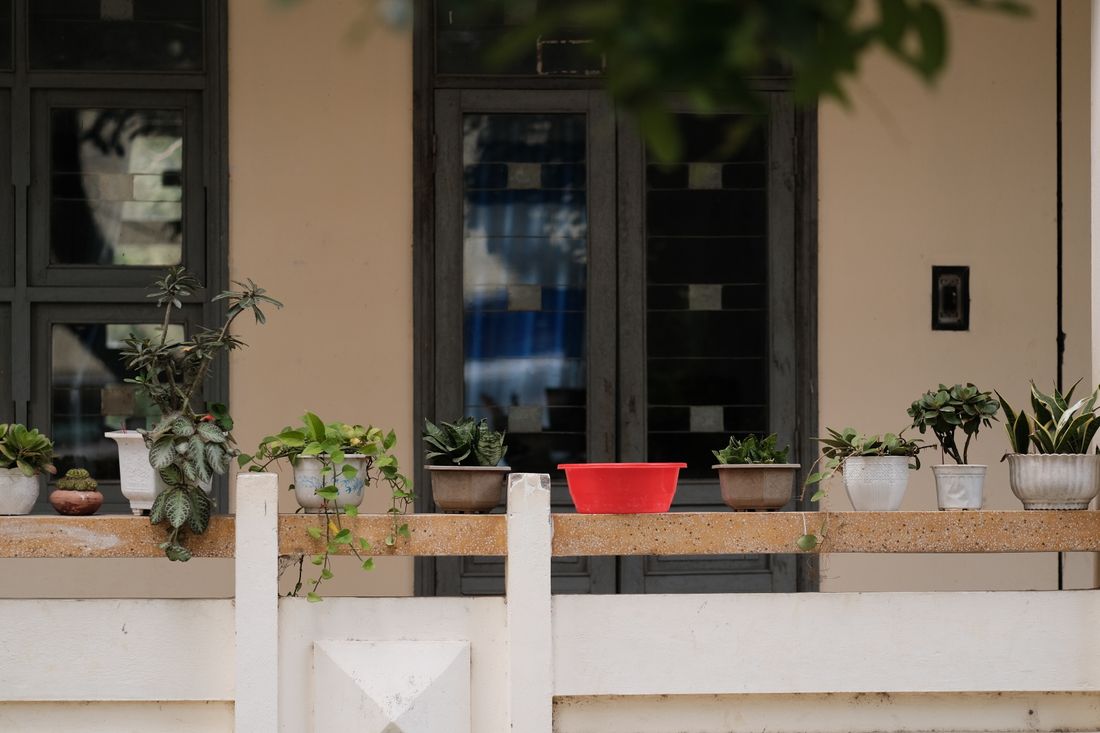
Rain, wind and snow alerts work the same way: they exist only for a plant that lives outdoors, because a wall stops all three. Heat and cold are the two that follow a plant indoors, and the five events and their thresholds are set out on the page for the journey in the other direction.
What to do with yours
Watch the nights rather than the calendar, and give it a week of shade outdoors before anything sunnier. Take a reading in the spot you are actually planning to use, with the free spot checker if you would rather not install anything, and take it at the time of day the plant will be sitting there. Then expect to water more often than you did indoors, because the room conversion stops at the door rather than because the plant is thirstier, and read what else moves that interval before you change anything else. A summer outside also settles the feeding question, since the light half of that test is cleared by open sky on any day of the year.
The verdicts here come from the same spot check the app runs, with temperature, humidity and airflow held at one set of values so the only thing moving is the one named in each table. Light figures are estimates for a clear day rather than meter readings, and the balcony discount is a calibrated model constant rather than a measurement of your balcony.
By GrowSpot · Published August 15, 2026 · Last updated August 30, 2026
