Scored for an Ocean spider plant on a hot afternoon at 28 °C and 50% humidity, a west window comes back 66 out of 100 at every distance from the sill to three metres, with light inside its comfortable band throughout. What holds the score down is temperature, and a west window in summer is where that shows.
The advice on spider plants in west windows splits cleanly and confidently. One care site says an east or west window typically has the best light to support a spider plant. Another says being in a south or west window will cause the plant to sunburn, but near is fine. A third recommends placing it a few feet away or using a sheer curtain if the only light is from a south or west window.
We scored the same plant at four distances from the same west window. The light dimension is inside its comfortable band at all four, including pressed against the glass. What eventually flags is not light at all.

Worth a try
It can work here with a little care.
Just the right amount of light
A little warm, but workable
Humidity suits it
Airflow suits it
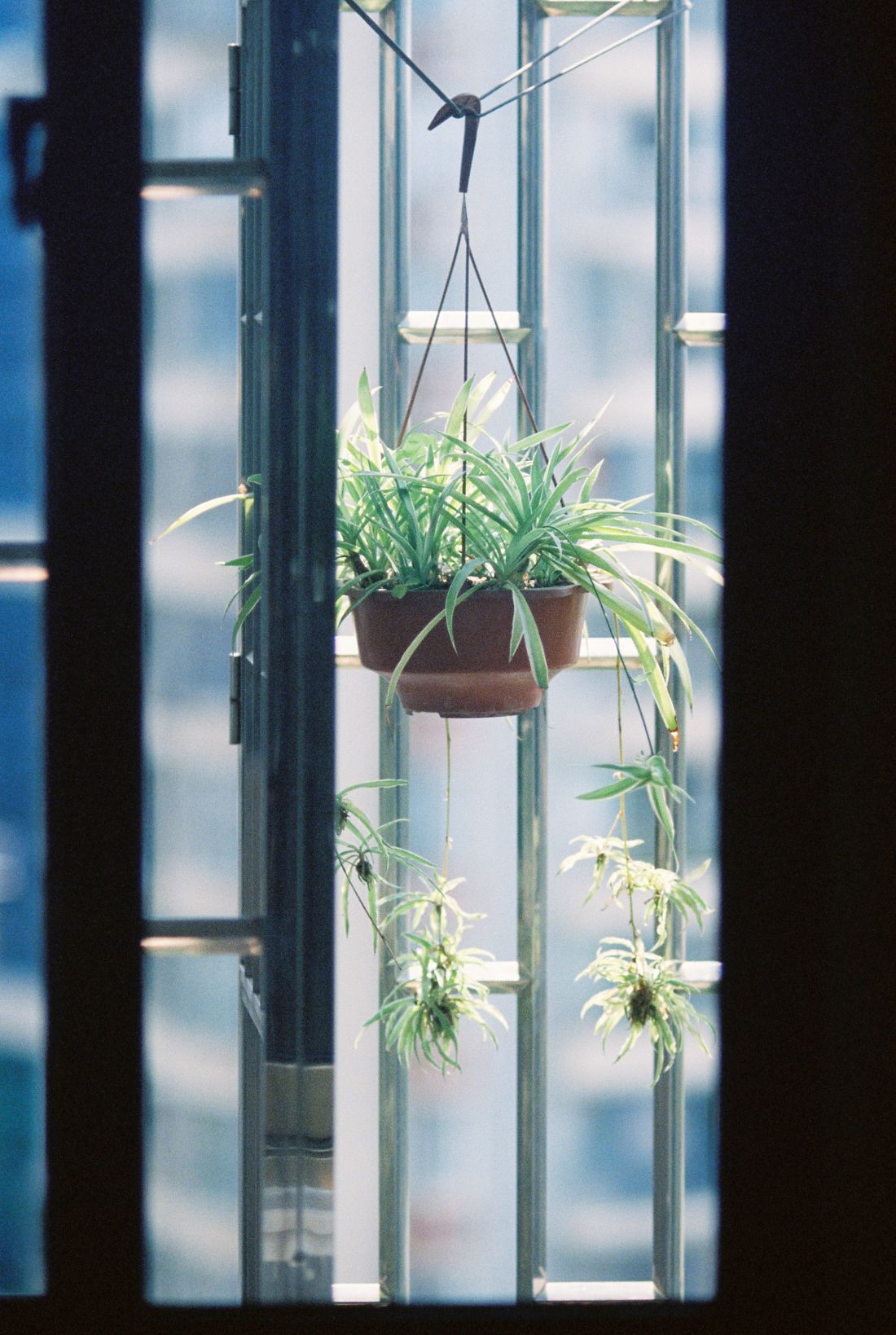
Will a west window sunburn a spider plant?
Before our own scoring says anything: we gathered every published figure we could find for a spider plant. 5 of them, from 4 separate sources, in 2 different units. They are reproduced below exactly as each source writes them, and nothing here is converted.
| Who publishes it | What it says a spider plant needs | What the figure is |
|---|---|---|
| growlightmeter.com | 5 – 10 PPFD / DLI | Spider Plant |
| extension.arizona.edu | 75–150 foot-candles | listed under the heading "Medium Light (75–150 fc)" |
| houseplantjournal.com | 200 FC (40 µmol) foot-candles | minimum indirect light level |
| houseplantjournal.com | 400 FC (80 µmol) foot-candles | good indirect light level |
| houseplantsnook.com | 100–200 foot-candles | chart fc level |
Not on the light figures, and distance does not change the answer: on the same hot afternoon it is 66/100 against the glass and 66/100 at one, two and three metres. The light dimension sits inside its band at every one of them. There is no distance in a normal room where a west window is too bright for a spider plant.
That is an unusual result and it is worth saying plainly, because it contradicts a warning that appears high in the search results and gets repeated a lot.
What flags instead: the heat ceiling
The heat, and it moves the score where distance does not. This plant is comfortable up to about 27 °C. Every other plant in this series runs to 29 or 30, so the same afternoon a snake plant shrugs off is the one that costs this plant its top marks: hold the spot and the distance still, push the air past that ceiling, and the verdict falls to the 66/100 the table below reads at 28 °C — with the light dimension unchanged at every step, because the light never was the problem.
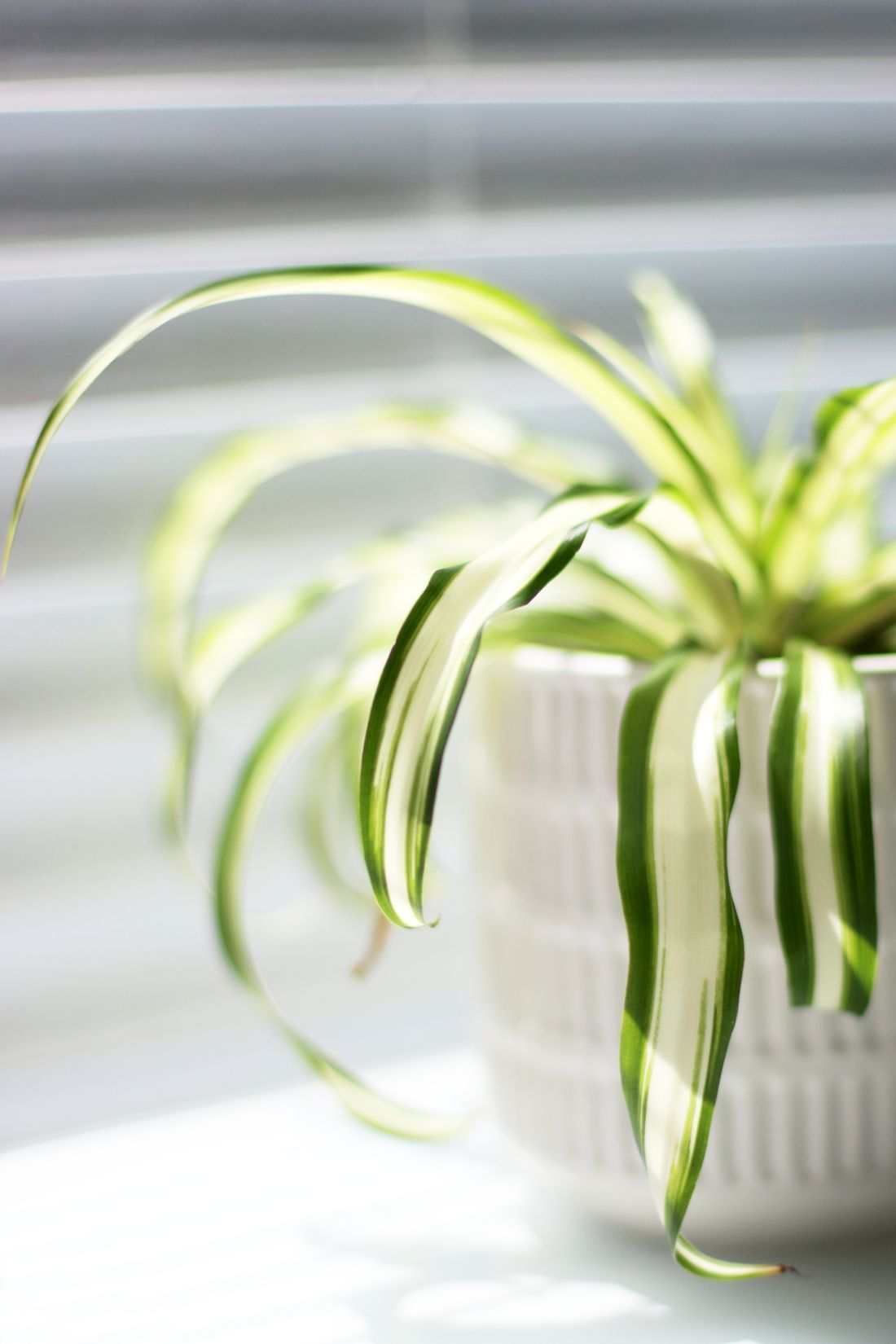
Every point that gets lost there is lost on temperature, and a tool that only reads light would report this spot as perfect right through the part where the plant is struggling. The same thing happens at the cold end of the year, where a sill with ideal light can score 44 out of 100 on temperature alone.
The light behind this is estimated rather than metered, built from the window direction, the distance and typical clear-day conditions.
Distance is the usual lever and here it does nothing. Put two plants that share the same west-window shortlist beside it and the difference is the whole point:
| Distance from the glass | Ocean spider plant | Bird's nest snake plant | Golden pothos |
|---|---|---|---|
| 0.3 m against the glass7,800 lux | 66/100 | 67/100 | 65/100 |
| 1 m back6,000 lux | 66/100 | 96/100 | 67/100 |
| 2 m back3,780 lux | 66/100 | 98/100 | 99/100 |
| 3 m back2,381 lux | 66/100 | 98/100 | 99/100 |
One column does not move at any distance, because the thing holding it down is not in the room’s light at all. Walking a plant backwards is the answer to a light problem, and this is not one.
Why brown tips get blamed on the sun
Spider plants announce trouble at the leaf tips, and they do it the same way no matter what the cause is. Crisp brown tips at a bright window look exactly like the sunburn people have been warned about, and so that is what gets recorded.
Heat stress, dry air, and a pot drying out too fast between waterings all produce the same edge. So does fluoride and salt buildup from tap water, which this plant is more sensitive to than most. None of those is fixed by moving it away from the window, which is why the move so often does not help.
It is the pet-safe one
Of the plants in this series, the spider plant is the one the ASPCA does not list as toxic to cats or dogs. That matters for a west window in particular, because a west sill at cat height is the exact placement people talk themselves out of. Hanging it instead moves the plant out of reach and into different light, which is scored hook by hook here.
Cats do chew them, and a plant in a bright window with long trailing offsets is close to designed to be chewed. That is a plant-tidiness problem rather than a safety one here.
Cat-safe and low-light are two different questions, though, and this plant only answers the first one cleanly. Our care data puts a spider plant in the medium band rather than the low one, along with a prayer plant. Take it off the hot sill and walk it back from a north window instead:
| Distance from a north window | Estimated light | Verdict |
|---|---|---|
| 0.3 m, against the glass | 3,640 lux | Great fit, 100/100 |
| 1 m back | 2,800 lux | Great fit, 99/100 |
| 2 m back | 1,764 lux | Worth a try, 68/100 |
| 3 m back | 1,111 lux | Worth a try, 65/100 |
| 4 m back | 700 lux | Worth a try, 63/100 |
Full marks for the first metre and flagged from two metres on. A corner away from the windows is dimmer again by a long way. So this plant is not short of light at a window, it is short of light in the place people mean when they say low light. Where cat-safe and low-light actually meet is a smaller set again, and it is mostly the cast iron plant and the parlor palm.
What to do with a hot west sill
If the sill runs above the high twenties on summer afternoons, the fixes are about the heat and not about the light. Backing the pot up a few feet — two to four is the usual figure — does not move the score at all: it is 66/100 at the glass and 66/100 three metres in. Distance only helps here if it carries the plant out of a hot sill pocket and into cooler room air, which is a temperature fix wearing a distance costume.
- Move it off the glass, not across the room. Half a metre out of the pocket keeps essentially all of the light and drops the worst of the heat.
- A sheer curtain is a heat tool here rather than a light tool. It cuts the pocket at the glass without costing the plant anything it needs.
- Watch the pot, not the leaves. Small pots on hot sills swing between soaked and bone dry, and that swing shows up at the tips. A larger pot buffers it.
- In winter this is a different window. The heat argument disappears entirely and the west sill becomes one of the better seats in the house.
If the sill runs hot enough to stay flagged, the honest move is often a different plant on it. What else handles an afternoon west window sorts them by whether they take the beam or want it filtered.
The room is not the spot
We put a phone down in six places in one bright living room:
| Spot | Reading |
|---|---|
| At the bright window | 20,000 lux |
| 1 m from the window | 15,000 lux |
| 2–3 m away, in window shade | 3,500 lux |
| Middle of the room | 570 lux |
| Darker side of the room | 119 lux |
| The dark corner | 18 lux |
That room’s orientation was never recorded, so those are not west-window figures and we are not presenting them as any. The point that carries is that light and heat do not fall off together. Walk two metres from a window and the light collapses while the room temperature barely moves, which is why the two dimensions need reading separately. The light half of that is measured in six spots in one room, window to corner.
Published July 31, 2026 · Last updated August 30, 2026
