Bright but indirect: more light than a dark corner gives, less than a bare south sill. On our scores a Boston fern reads its light just right from 2,000 to 9,000 lux, about 186 to 836 foot-candles. On a clear day an east window keeps it just right from the sill to 2.95 m back, a west window to 3.35 m and a north window to 1.70 m. A bare south sill puts 13,000 lux on it, a bit bright, and the fern turns just right 1.25 m back. At latitude 40, about where Denver and Beijing sit, east and north sills stay just right every day of the year. The card below sits right on an east sill at 21 °C, about 70 °F, with 50% humidity and a light breeze, and scores 91 out of 100. Its lux is modelled for a clear day from the compass direction, the distance and the date, not measured in your room.

Great fit
This plant should be happy in this spot.
Just the right amount of light
Comfortable temperature
A little dry, but workable
Airflow suits it
Read on 27 November 2026, Google’s answer box for Boston fern light requirements says medium to bright indirect light, names east windows and bright north windows, and puts a fern behind a sheer curtain or a few feet back from a south or west window. Our scores agree on east, north and south. What they add is how far a few feet has to be: 1.25 m from a south window on a clear day. A west sill reads just right on our scores for most of the year and tips into a bit bright only from 14 April to 28 August at latitude 40.
Which window is best for a Boston fern?
East, from the sill to about three metres back. Here it is at nine spots in one home on a clear day, without a date:
| Where it stands | Estimated light | What the light is doing | Verdict |
|---|---|---|---|
| North sill, against the glass | 3,640 lux | Just the right amount of light | Great fit, 91/100 |
| 1.5 m back from a north window | 2,222 lux | Just the right amount of light | Great fit, 90/100 |
| 3 m back from a north window | 1,111 lux | A little dim, but workable | Worth a try, 62/100 |
| East sill, against the glass | 6,500 lux | Just the right amount of light | Great fit, 91/100 |
| 2 m back from an east window | 3,150 lux | Just the right amount of light | Great fit, 91/100 |
| West sill, against the glass | 7,800 lux | Just the right amount of light | Great fit, 91/100 |
| South sill, against the glass | 13,000 lux | A bit bright, but workable | Worth a try, 63/100 |
| 2 m back from a south window | 6,300 lux | Just the right amount of light | Great fit, 91/100 |
| A dim corner, 1 m from the nearest window | 500 lux | Too dim here | Not the best fit right now, 43/100 |
The east and west windows hold furthest: the east one keeps it just right to 2.95 m, the west one to 3.35 m. A north window is right at the glass but runs out sooner: 3,640 lux on the sill, a little dim from 1.75 m and too dim from 4.35 m. With dates, at latitude 40, a fern 1 m back from a north window reads a little dim from 7 November to 3 February, and one 2 m back from an east window from 8 November to 2 February. The dim corner, 1 m from the nearest window, gets 500 lux and reads too dim: a Boston fern needs to see a window. A soft-leaved bromeliad such as the scarlet star reads every window here exactly as the fern does; a stiff-leaved urn plant wants the bright south sill instead.
Can a Boston fern take direct sun?
Not much of it. Here is the bare south sill through the year at latitude 40, scored on the 21st of nine months:
| The month on the sill | Estimated light | What the light is doing | Verdict |
|---|---|---|---|
| January | 13,043 lux | A bit bright, but workable | Worth a try, 63/100 |
| February | 13,981 lux | A bit bright, but workable | Worth a try, 62/100 |
| March | 13,069 lux | A bit bright, but workable | Worth a try, 63/100 |
| April | 10,413 lux | A bit bright, but workable | Worth a try, 65/100 |
| May | 8,164 lux | Just the right amount of light | Great fit, 91/100 |
| June | 7,319 lux | Just the right amount of light | Great fit, 91/100 |
| August | 10,369 lux | A bit bright, but workable | Worth a try, 65/100 |
| October | 13,959 lux | A bit bright, but workable | Worth a try, 62/100 |
| December | 12,299 lux | A bit bright, but workable | Worth a try, 64/100 |
At the glass a south window reads a bit bright from 4 August to 8 May, and just right only from 9 May to 3 August, when the summer sun stands high and less of it reaches the window. Winter is the bright season there: on 21 February the model puts about 14,000 lux at the glass, against 7,300 on 21 June. A metre back it reads a bit bright from 5 September to 6 April; 2 m back it is just right all year. In our care data its light turns a bit bright above 9,000 lux and too bright from about 18,300, a level none of these window rows reaches. A west sill crosses 9,000 from 14 April to 28 August and reads a bit bright through that stretch.
What do care guides say about its light?
Three institutional sources put it in bright, indirect or medium bright light and keep it out of direct sun:
| Who publishes it | What it says a Boston fern needs | When |
|---|---|---|
| plants.ces.ncsu.edu | Plant in bright, indirect light and warmth (60 to 70 degrees Fahrenheit). | As a houseplant |
| plants.ces.ncsu.edu | Dappled Sunlight (Shade through upper canopy all day) | One of its two light ratings |
| plants.ces.ncsu.edu | Deep shade (Less than 2 hours to no direct sunlight) | Its other light rating |
| hort.extension.wisc.edu | Boston fern is easily grown as a houseplant in medium bright light. | As a houseplant |
| hort.extension.wisc.edu | Indoors, position the plant in medium bright light, such as in an east facing window or behind a sheer curtain in south and west windows (or far enough from the window so the plant is not in direct sunlight). | Indoors, by window |
| hort.extension.wisc.edu | If growing outdoors, provide full or partial shade. | Outdoors |
| plantfinder.mobot.org | Site in bright indirect light with no direct sun. | As a houseplant |
| plantfinder.mobot.org | Tolerant of some shade. | As a houseplant |
| plantfinder.mobot.org | Part shade | Its sun rating |
The University of Wisconsin–Madison Extension names the windows our scores favour: an east one, or a south or west one behind a sheer curtain or far enough back to keep the sun off the plant. The Missouri Botanical Garden asks for bright indirect light with no direct sun and calls it tolerant of some shade; NC State asks for bright, indirect light, and its two light ratings count hours of direct sun in a garden. Indoors that tolerance has a floor: below 600 lux our scores read it too dim, and the dim corner in the first table, at 500, is already there.
Light is half of it. NC State and the Missouri Botanical Garden both ask for high humidity and suggest a tray of wet pebbles. On our scores its humidity is ideal from 60%, a bit dry from 45 to 59% and too dry below 45%; the card’s 50% is what holds it at 91.
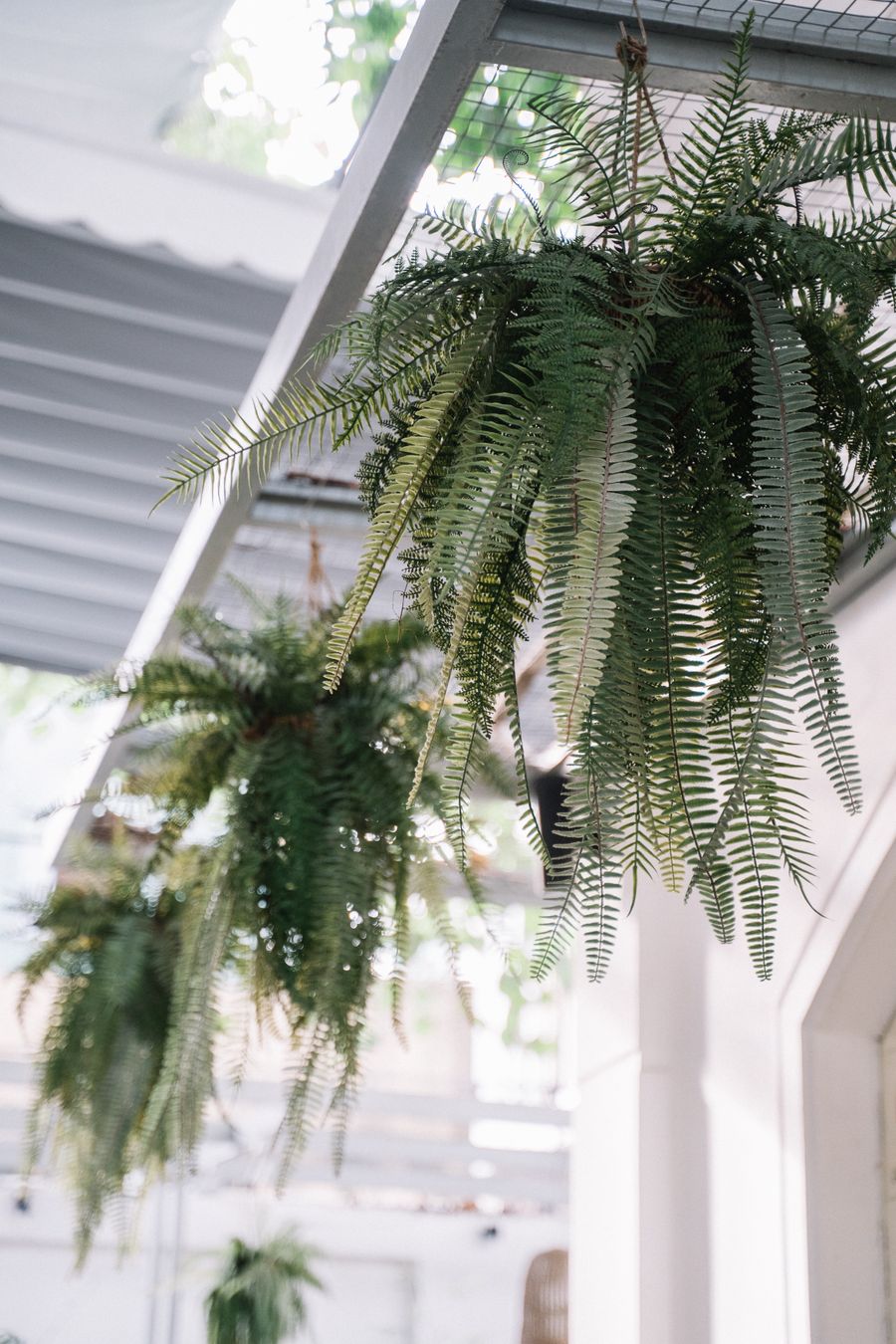
For a spot you can’t picture, the free spot checker scores a Boston fern against your local weather.
Published November 27, 2026
