It depends on the leaf, and the growers’ rule holds up. A soft, spineless bromeliad such as the scarlet star, Guzmania lingulata, reads its light just right from 2,000 to 9,000 lux, about 186 to 836 foot-candles. A stiff-leaved urn plant, Aechmea fasciata, reads just right from 6,000 to 22,800 lux, about 557 to 2,118 foot-candles. On a clear day a north sill gives 3,640 lux: just right for the first, a little dim for the second. A bare south sill gives 13,000: a bit bright for the scarlet star, which turns just right 1.25 m back, and just right for the urn plant from the glass to 2.1 m back. An east sill suits both, the urn plant only right at the glass. The card below holds a scarlet star right on an east sill at 21 °C, about 70 °F, with 50% humidity, and scores 99 out of 100. Its lux is modelled for a clear day, not measured in your room.

Great fit
This plant should be happy in this spot.
Just the right amount of light
Comfortable temperature
Humidity suits it
Airflow suits it
Read on 27 November 2026, Google’s answer box for how much light a bromeliad needs quotes the San Diego Bromeliad Society’s rule of thumb: soft leaf, soft light; hard leaf, hard light. It puts soft, spineless Guzmanias and Vrieseas in lower, softer light and stiff, spiny Aechmeas and Neoregelias, with the air plants, in brighter filtered light, and indoors it suggests an east or west window or a few feet back from a south one. Our care data splits the same way: the urn plant’s band starts at 6,000 lux, three times the scarlet star’s 2,000.
Does the soft-leaf, hard-leaf rule hold up?
Mostly. Here are eight bromeliads on the same bare south sill:
| The bromeliad | What the light is doing | Verdict |
|---|---|---|
| Scarlet star (Guzmania lingulata) | A bit bright, but workable | Worth a try, 66/100 |
| Flaming sword (Vriesea splendens) | A bit bright, but workable | Worth a try, 66/100 |
| Earth star (Cryptanthus bivittatus) | A bit bright, but workable | Worth a try, 64/100 |
| Queen’s tears (Billbergia nutans) | A bit bright, but workable | Worth a try, 66/100 |
| Urn plant (Aechmea fasciata) | Just the right amount of light | Great fit, 99/100 |
| Blushing bromeliad (Neoregelia carolinae) | Just the right amount of light | Great fit, 99/100 |
| Pineapple (Ananas comosus) | Just the right amount of light | Great fit, 100/100 |
| Pink quill (Tillandsia cyanea) | Just the right amount of light | Great fit, 99/100 |
The Guzmania and the Vriesea, the society’s soft-leaved examples, read a bit bright there and score 66, and so do queen’s tears and, at 64, the earth star. The Aechmea and the Neoregelia, its stiff-leaved examples, read just right at 99, with the pineapple at 100 and the pink quill, an air plant, at 99. Move the same eight to a north sill, at 3,640 lux, and the verdicts swap: the first four turn a great fit and the other four read a little dim, worth a try at 65. The earth star and queen’s tears, which the society’s page doesn’t name, land on the soft side in our data.
Where does an urn plant get enough light?
Close to south and west glass, or right at an east window. Here is an urn plant at nine spots in one home on a clear day, without a date:
| Where it stands | Estimated light | What the light is doing | Verdict |
|---|---|---|---|
| North sill, against the glass | 3,640 lux | A little dim, but workable | Worth a try, 65/100 |
| 1.5 m back from a north window | 2,222 lux | A little dim, but workable | Worth a try, 62/100 |
| East sill, against the glass | 6,500 lux | Just the right amount of light | Great fit, 98/100 |
| 1 m back from an east window | 5,000 lux | A little dim, but workable | Worth a try, 67/100 |
| West sill, against the glass | 7,800 lux | Just the right amount of light | Great fit, 98/100 |
| South sill, against the glass | 13,000 lux | Just the right amount of light | Great fit, 99/100 |
| 1.5 m back from a south window | 7,937 lux | Just the right amount of light | Great fit, 98/100 |
| 3 m back from a south window | 3,969 lux | A little dim, but workable | Worth a try, 65/100 |
| A dim corner, 1 m from the nearest window | 500 lux | Too dim here | Not the best fit right now, 45/100 |
A south window holds it furthest: just right from the sill to 2.1 m back, and right at the glass every day of the year at latitude 40. A metre back from an east window it already reads a little dim. With dates, a west sill reads just right from 21 February to 19 October and an east sill from 12 March to 30 September; both read a little dim through the darkest months, and a north sill reads a little dim on every day of the year. The scarlet star runs the other way: a north sill is just right every day, and a bare south sill reads a bit bright except from 9 May to 3 August, when the summer sun stands high and less of it reaches the window.
What do care guides say about bromeliad light?
Three sources put it in bright light short of direct sun, and one of them splits it by the leaf:
| Who publishes it | What it says a bromeliad needs | When |
|---|---|---|
| ask.ifas.ufl.edu | They’ll thrive on a porch, near a window, or anywhere where they receive bright, diffused light, but no direct sun. | As houseplants |
| ask.ifas.ufl.edu | will survive (but not grow) for many weeks under very low light conditions | As houseplants, in low light |
| ask.ifas.ufl.edu | A yellowish or pale green plant may indicate that the light level is too high. | Signs to read |
| ask.ifas.ufl.edu | Most prefer shade or partial shade, but some tolerate full sun. | Outdoors in Florida |
| sandiegobromeliadsociety.org | Soft leaf - soft light, hard leaf - hard light. | Its rule of thumb |
| sandiegobromeliadsociety.org | If the leaves of your plant are soft and flexible and especially if they are spineless (like Guzmanias and Vrieseas), they probably grow in the shady understory in the wild and would do best in a lower light area. | Soft-leaved kinds |
| sandiegobromeliadsociety.org | Those plants with stiffer (usually spiny) leaves (like Aechmeas and Neoregelias) or “airplants” like Tillandsias enjoy bright, filtered light. | Stiff-leaved kinds |
| lancaster.unl.edu | Bromeliads need strong light to grow well and produce flowers. | As houseplants |
| lancaster.unl.edu | You must have a very well-lit area in your home to grow these plants properly, although you can use artificial light. | Indoors |
UF/IFAS asks for bright, diffused light but no direct sun, and says a bromeliad will survive, but not grow, for weeks in very low light; Nebraska Extension says bromeliads need strong light to grow well and flower. On our scores each fits one group: the stiff-leaved urn plant reads a north sill a little dim and a bare south sill just right, while the soft-leaved scarlet star reads that south sill a bit bright. UF/IFAS also lists the signs: a yellowish or pale green plant may mean too much light, and dark green, soft, drooping leaves too little.
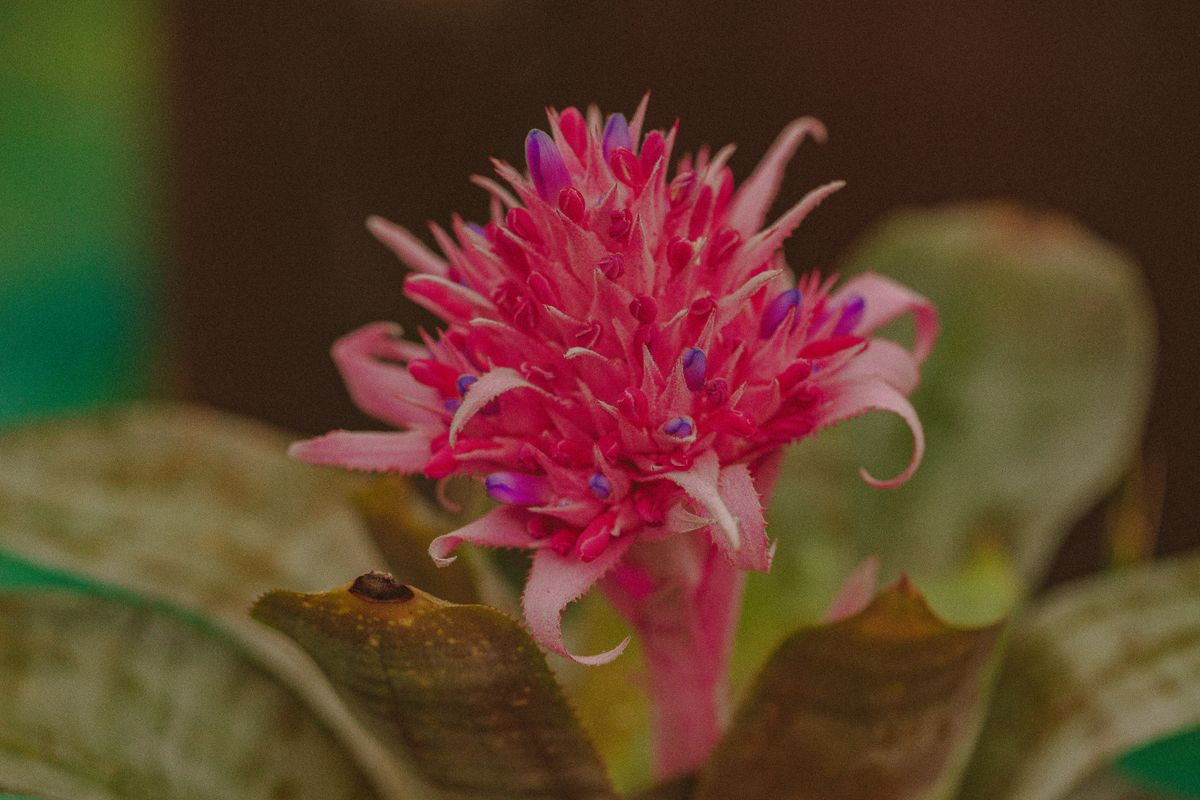
For a spot you can’t picture, the free spot checker scores a bromeliad against your local weather.
Published November 27, 2026
