Reads the spot, not the room.

The right plant for the right spot.

Plants don't live in rooms. They live in spots. Tell us about one and we'll read its whole growing environment: light, warmth, humidity, airflow.

The spot checker runs in your browser, no sign-up, nothing to install.

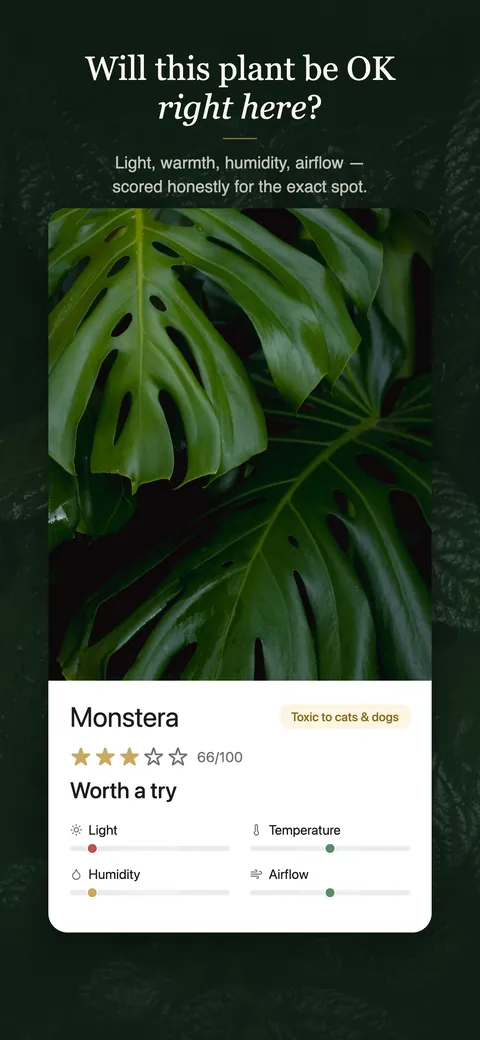
Monstera
66/100
Toxic to cats & dogs
Worth a try
Light
Temperature
Humidity
Airflow

Real output from the app: one monstera, one specific spot, scored honestly, not flatteringly.

Free web tool · no sign-up

Check a spot before you buy the plant.

Which plant? Where is this spot? When does direct sun hit it? An honest estimate
01 · In the app

Three steps to a measured answer

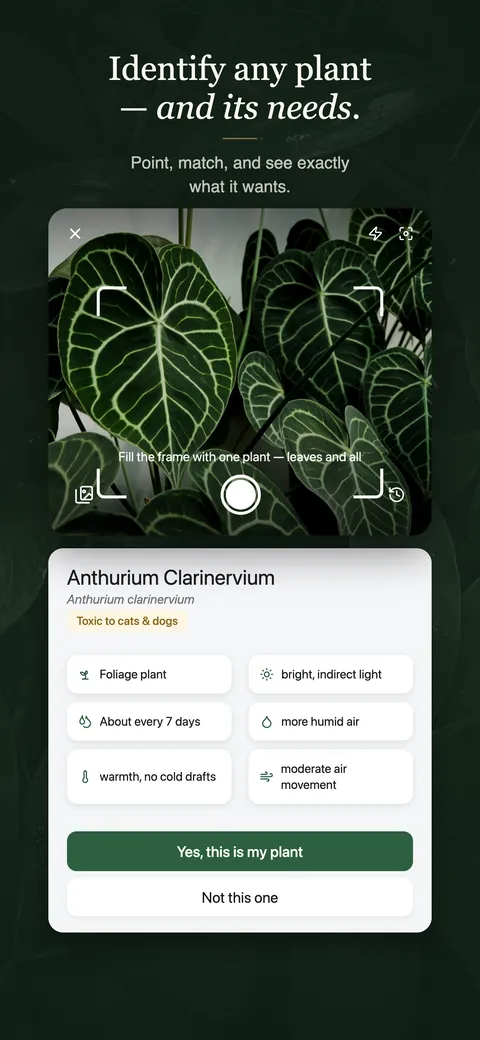
A photo match for an Anthurium clarinervium, listing the light, watering, humidity, warmth and airflow it wants, with a choice to confirm the match or reject it

Pick a plant

Photograph it, or search it by name.

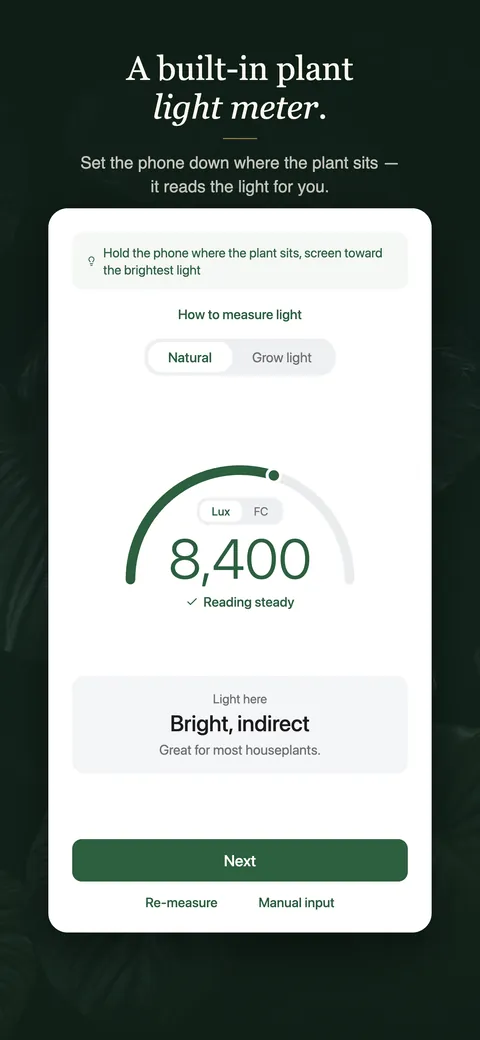
The built-in light meter reading 8,400 lux at a spot and calling it bright, indirect, with a lux or foot-candle toggle and separate natural and grow-light modes

Set your phone down at the spot

Face up, right where the plant would live. It reads in lux or foot-candles, and has a separate mode for grow lights.

A monstera scored 66 out of 100 for one spot and called Worth a try, with light, temperature, humidity and airflow each marked on its own scale

Get an honest verdict

Four dimensions, and whatever it can’t tell you.

Swipe →

Or read the plant-placement guides: what grows in a north window, a bathroom, a dark corner, how far from the glass a plant can still live, or whether a monstera really copes with a north window. All guides →

02 · See it

Where the answer stops being a number

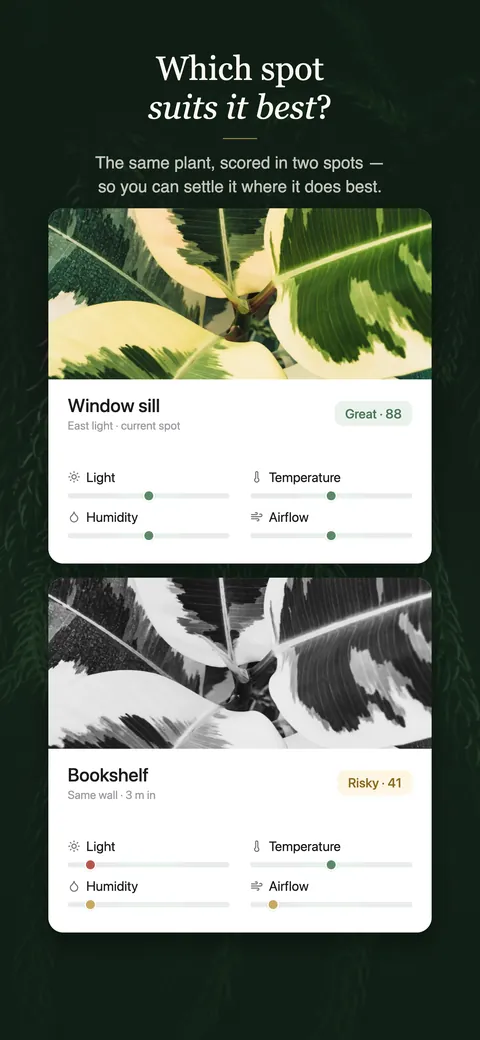
The same plant scored in two spots: a window sill at 88 called great, and a bookshelf three metres in on the same wall at 41 called risky
In the app: one plant, scored at a window sill and at a bookshelf on the same wall, three metres in.

Two spots on one wall are not the same spot

Placement advice stops at the room, and the room is the part that matters least. Light falls away fast with distance from the glass, so a shelf on the same wall as a sill can sit in a different band entirely — and the plant is the one that finds out.

How far from the glass a plant can still live →
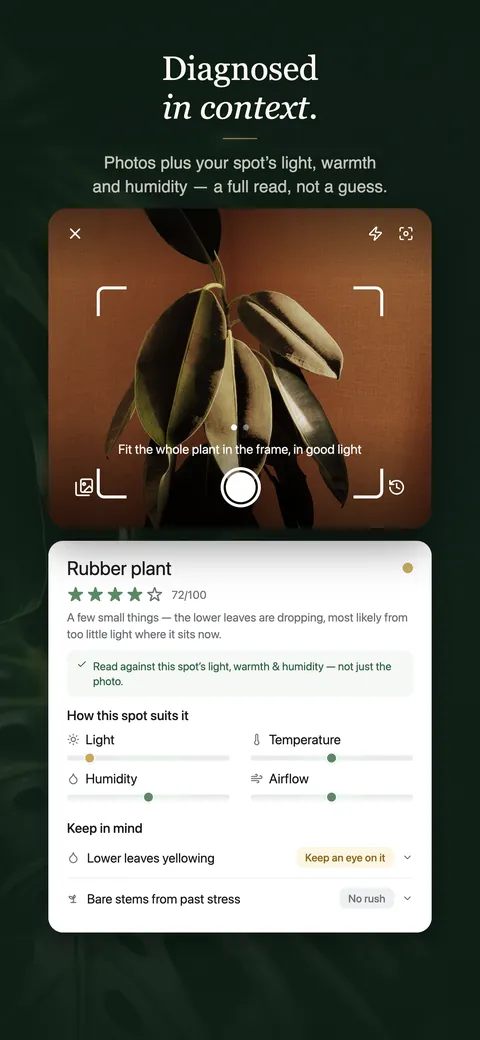
A diagnosis for a rubber plant at 72 out of 100: dropping lower leaves read against the spot’s light, warmth and humidity, with two things flagged to keep an eye on
The photo is only half of it. The other half is the light, warmth and humidity where the plant is standing.

The same symptom means different things in different light

Dropping lower leaves can be too little light, or too much water, or neither. A photo on its own cannot separate them. Read against the spot the plant actually lives in, most of those readings collapse to one — and what is left gets flagged to watch rather than fixed on the spot.

Why plants stretch, and what it means →
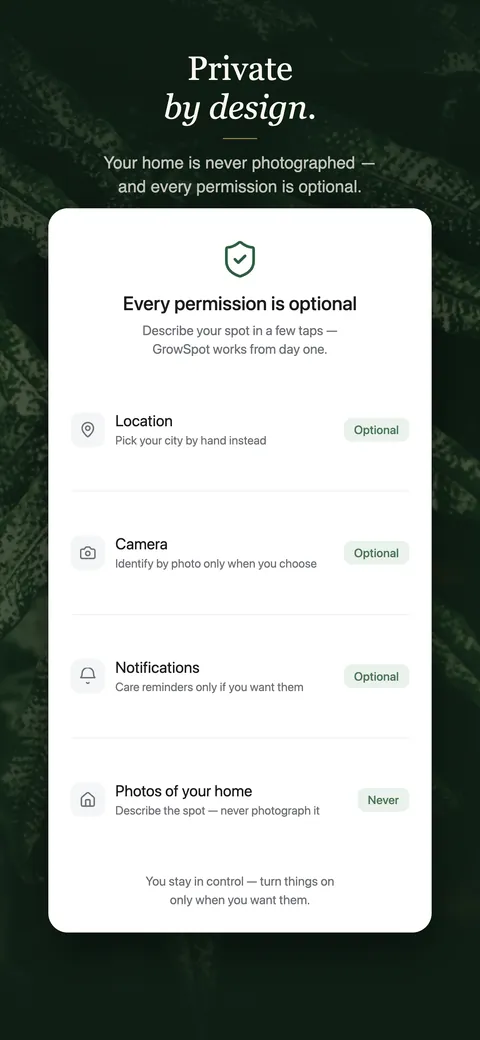
The GrowSpot permissions screen: location, camera and notifications each marked optional, and photos of your home marked never
Every permission the app can use, and the one it never asks for.
What we never ask for

Your home is never photographed

Describe the spot in a few taps and the app works from day one. Location, camera and notifications are each optional and each explains what it is for. Photos of your home are not on the list at all — the plant and the reading are enough, and the share card carries the four dimensions without carrying where you live.

Read the privacy policy →
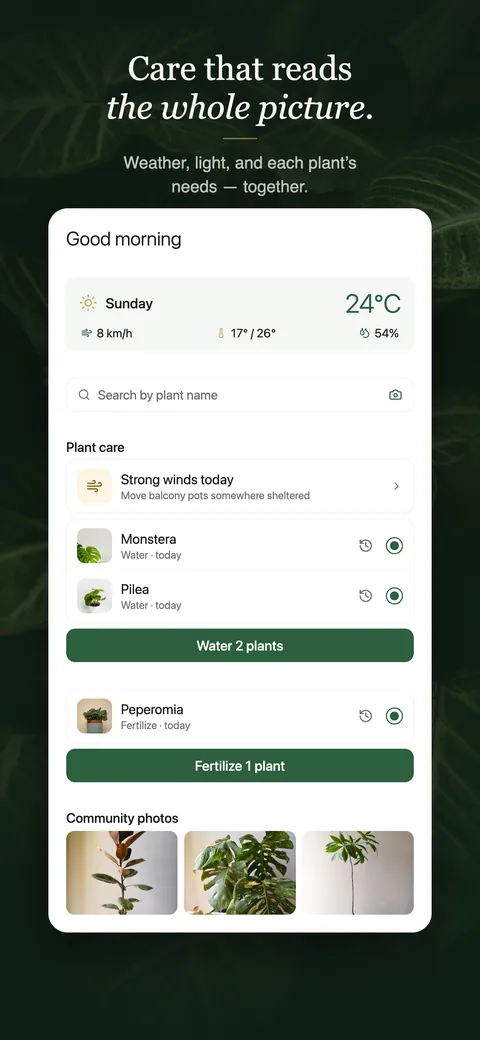
The GrowSpot home screen: the day’s weather, a strong-winds notice, and the plants due for water and feeding today
The day’s weather sits above the list, because it changes what the list means.
03 · Every day after

The reminder changes when the day does

A watering interval is not a calendar entry. Wind dries a balcony pot faster than still air, a warm spell pulls water through the soil sooner, and neither shows up in a schedule written a month ago. So the day’s weather sits at the top of the list — move the balcony pots today, the soil will dry sooner this week — and the watering and feeding due now sit under it.

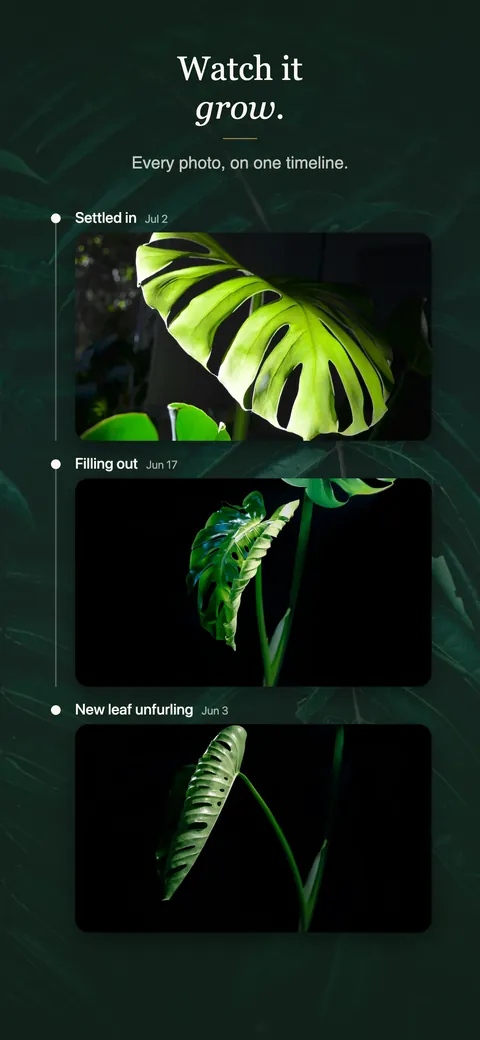
One plant’s photos on a single timeline, from a new leaf unfurling on 3 June to settled in on 2 July
The same plant, photographed over a month, on one line.
The record

A plant’s life, on one line

Two kinds of entries share it. Every spot check is kept for you, stored with the verdict it gave that day, the reading and all four dimensions, so the record holds what you were told and what the plant did next. The rest is the part only you know: repotted, pruned, a first bloom.

Photos are numbered from the plant’s own day one, so a picture carries an age rather than a date.

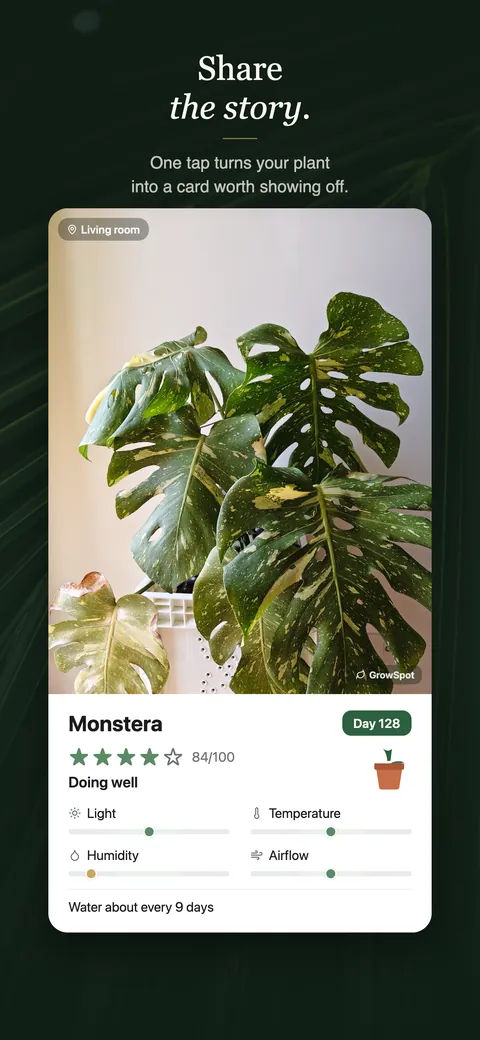
A GrowSpot share card for a monstera on day 128, scored 84 out of 100 and doing well, with light, temperature, humidity and airflow each marked on its own scale
A share card: the plant, its age, its score and all four dimensions — and the room it lives in, not the address.
04 · Together

The same plant, in other people's spots

Real photos from the people growing it, on every species page. Share one of yours and the card carries all four dimensions with it, though never where you live.

Our one rule
"When it doesn't know, it says so."

Phone sensors cannot know everything, and pretending otherwise kills plants. GrowSpot shows ranges rather than invented decimals, labels every care fact by how verified it is, and calls a gap an estimate. Where even an estimate would be a guess, it says it cannot assess yet.

Pricing

Pricing, plainly

Free
$0
forever
  • 2 spots + 2 plants
  • Every feature included: nothing locked
  • Full fit scores, care reminders, journal · 20 photo IDs a month
Get started free
Plus
14-day free trial
$4.99/month
or $29.99/year ($2.50/mo)
  • Unlimited spots
  • Unlimited plants
  • Unlimited identification
  • Unlimited diagnosis
Start free 14-day trial
14 days free, then $29.99/year · cancel anytime.

Every item on the Plus list is a number, not a feature. Nothing in GrowSpot is locked behind the subscription.

Questions

Questions, answered honestly

Is the free spot checker the same as the app?

No, and the difference is the point. This page estimates: you describe the spot, we add your weather, and you get a read on light, temperature, humidity and airflow. The app measures: you set the phone down at the spot and it reads the light that place actually gets, then keeps that answer right through the seasons. Start here. Get the app when you want the reading.

How does the light measurement in the app work?

You set the phone down at the exact spot and measure. The reading is re-tuned to weather and season through the year. Precision varies between phones, so the app claims only what it can stand behind.

Is the free plan actually useful?

Yes. It's the full app for 2 spots and 2 plants: no feature locks, no watered-down scores. Photo identification is capped at 20 scans a month on the free tier. If you grow more than that, Plus removes the limits.

What happens to my plants if I stop paying?

Nothing is deleted. Your first two plants and the spots they live in stay fully active on the free plan, exactly as before. Anything you added beyond that becomes a read-only archive: history and photos stay there to browse, you just cannot log care or edit. Resubscribe and it all comes back on its own.

Is GrowSpot on Android?

Yes, it's on Google Play as of 31 July 2026. Android folks can also claim a Founding 500 spot.

What happens to my photos?

Identification and diagnosis photos are processed to give you an answer. The light meter works on-device and doesn't keep photos. GrowSpot never asks for photos of your home, just the plant and the reading. Details in the Privacy Policy.
Find the right spot.

Free to start. Honest all the way through.

Early here? Join the Founding 500 →

QR code linking to GrowSpot on the App Store or Google Play
On your computer?Scan this with your phone to get GrowSpot.