Leave the pot alone. Unless roots are pushing out of the drainage holes, or the mix stays sodden for days after watering, the pot it came home in is fine; published repotting cycles are measured in years, not weeks.
Two other things deserve attention this week, and a bigger pot fixes neither: a spot far darker than it looks, and water standing in the sleeve it arrived in.
Your room is darker than it looks
Four extension services say when a plant needs a bigger pot, and none of them mentions the day you brought it home. What changed that day is the light.
| Published by | When it says to repot | On what sign |
|---|---|---|
| extension.psu.edu | In spring | “The best time to repot a plant is in the spring when it naturally and actively begins its seasonal growth.” |
| extension.illinois.edu | Spring or early summer | “Re-potting is best accomplished when the plant is actively growing. Typically this is done in spring or early summer.” |
| hgic.clemson.edu | Yearly to every 2–3 years | “Fast-growing plants may need repotting annually, while slow-growing plants may require repotting every two to three years.” |
| uaex.uada.edu | Every 3–5 years | “few houseplants will need repotting more frequently than once a year, and most will only need repotting once every three to five years.” |
| extension.psu.edu | On the roots | “If the roots are circling around the root ball or are so dense that it is difficult to see any potting mix in the bottom third of the root ball, it’s time to repot.” |
| extension.illinois.edu | On the roots | “Roots begin to grow through the drainage holes”; “Roots appear on the soil surface”; “The soil mass is filled with roots.” |
Eyes adjust as you cross a floor. A leaf cannot. We laid a phone flat at pot height and read six places in one ordinary living room inside a single hour, midday, clear day.
| Spot | Reading |
|---|---|
| At the bright window | 20,000 lux |
| 1 m from the window | 15,000 lux |
| 2–3 m away, in window shade | 3,500 lux |
| Middle of the room | 570 lux |
| Darker side of the room | 119 lux |
| The dark corner | 18 lux |
Twenty thousand lux at the bright window, eighteen in the far corner: 1,111 times over, inside one room. The quieter pair matters more: a window sill and the middle of the room are both sensible places for a plant, and they sit 35 times apart. A greenhouse-raised plant set two or three metres back has lost most of the light it grew in, and nothing shows for weeks.
You can do the same: phone flat where the pot will sit, at leaf height, near midday, comparing places rather than chasing one number. With no app, the shadow test gives the same tiers. Our free spot checker works the other way round: describe a place, name a plant, and it says whether they suit.

Worth a try
It can work here with a little care.
A little dim, but workable
Comfortable temperature
Humidity suits it
Airflow suits it
The pot it came in holds water you cannot see
Most plants come home in a thin plastic sleeve dropped inside a ceramic cover pot, which has no hole. Whatever runs through collects in the bottom, unseen, and roots left standing in it are how a healthy shop plant dies in its first month. That pairing is also the slowest-drying one our watering model holds, about 1.6 times slower than terracotta with a gritty mix, so the soil stays wet longer than your last plant taught you to expect.
The first watering starts with a lift. Take the inner pot out, water it over the sink until it runs out the bottom, let it drain, then set it back. After that, judge by a finger two knuckles deep, not by a calendar.
When the pot really is the problem
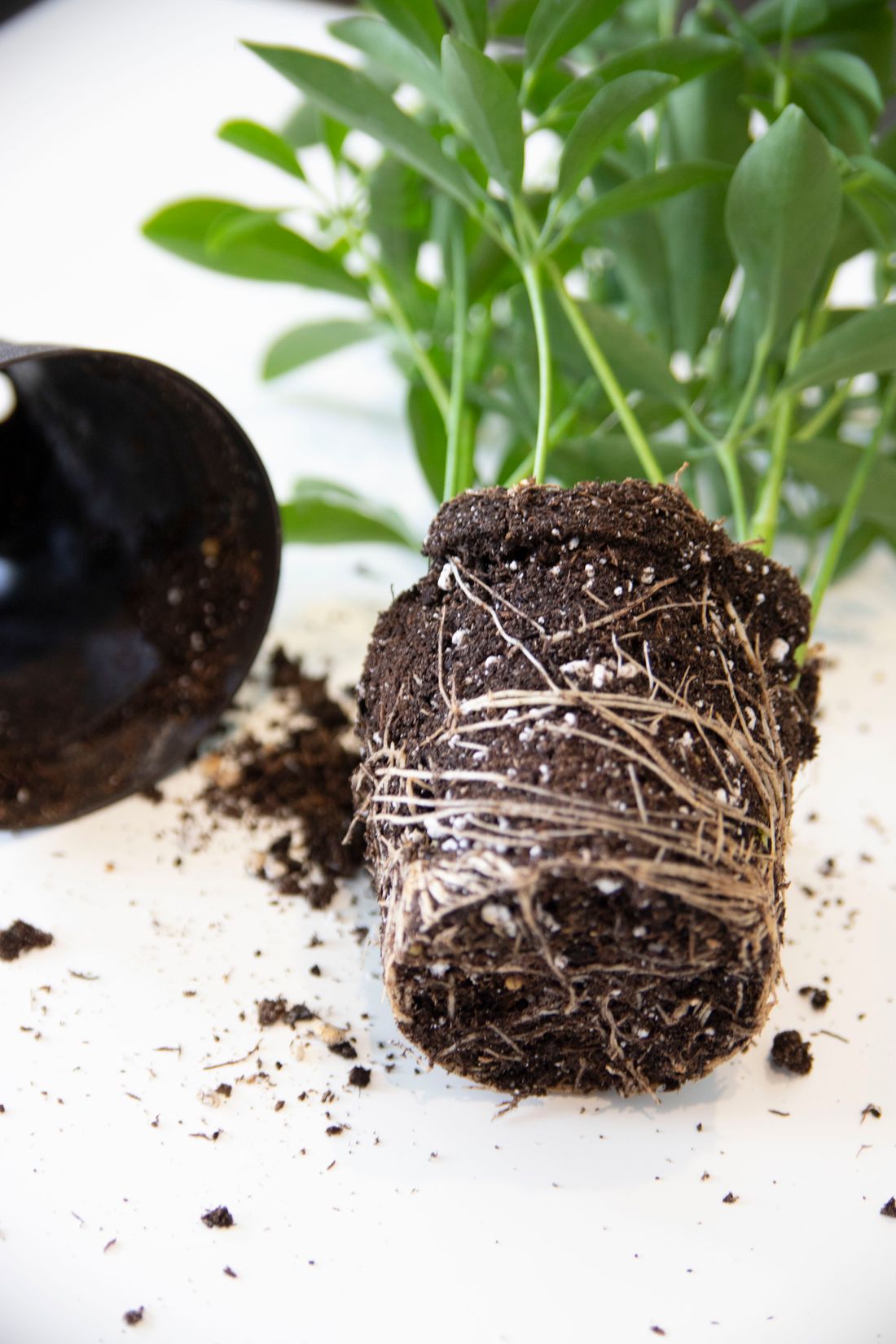
Four signs say it is out of room, and all four need you to crouch down and tip the pot:
- Roots circling out of the drainage holes in a mat
- Water running straight through in seconds
- The plant going top-heavy and tipping
- New growth stalled in a season when it should be moving
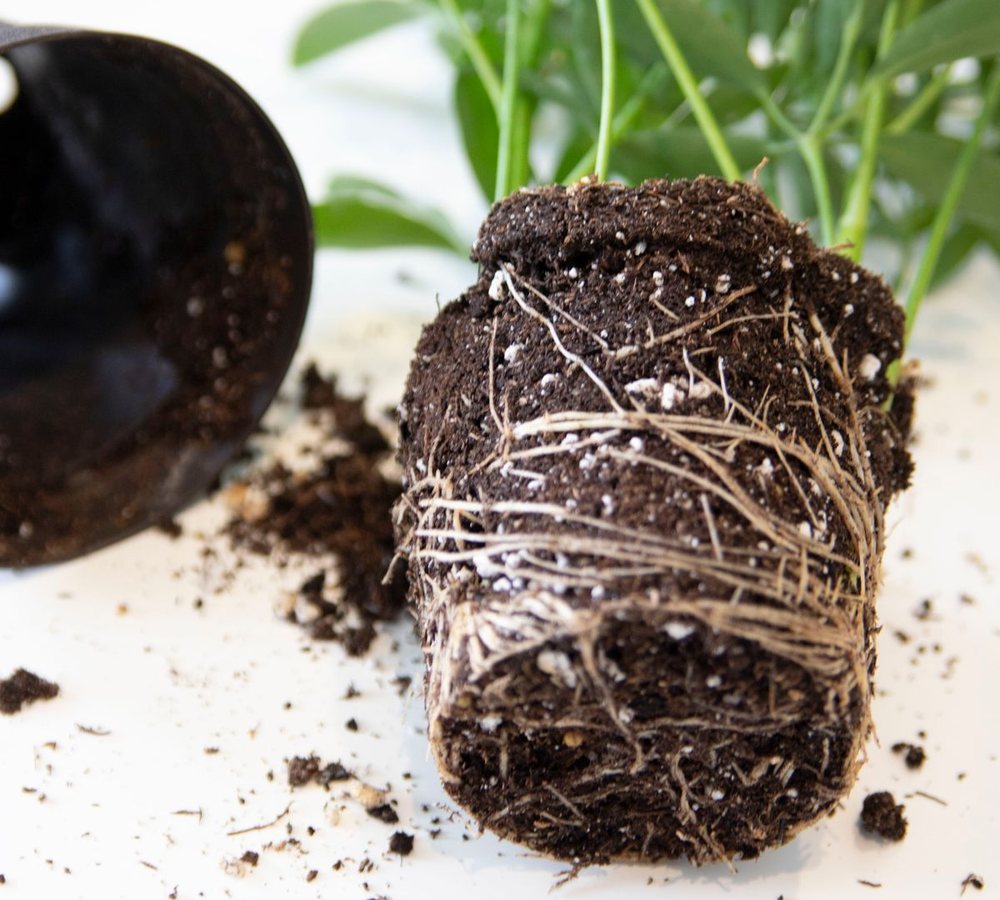
Any of those, and repotting earns its disturbance.
Even then, not this week: changing pots disturbs roots, and the move already has. Spring, one size up, is soon enough.
What the plant tells you in a fortnight
Give it a fortnight and the plant answers. New growth leaning hard one way: turn it a quarter, and keep turning. New leaves smaller or paler than the old ones: the spot is dimmer than it looks; a metre closer to the glass usually settles it. Yellowing lower leaves over soil that never dries: water less, and lift that cover pot again.
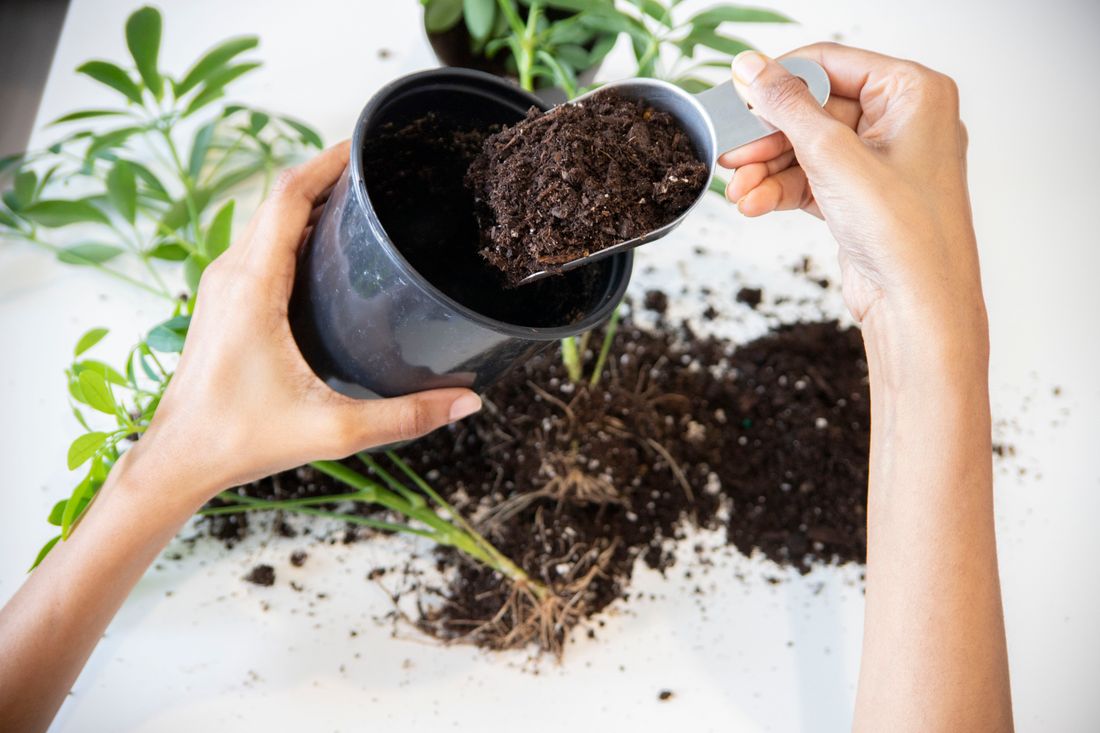
None of those ask for a bigger pot. Our own repot reminder stays quiet on a plant you just bought, since it counts from a repotting date a new plant does not have. Get the spot right this week, and the pot can wait for spring. If it is still not growing months later, the spot is the first thing to rule out again.
By GrowSpot · Published August 15, 2026 · Last updated August 30, 2026
