A snake plant reads just right from 18 to 28 °C, about 64 to 82 °F, on our scores, and worth a try, a little cool, down to 13 °C, about 55 °F. Below that it reads not the best, and so it does at 10 °C, the 50 °F that most care pages give as its limit: those pages are naming the temperature they say it survives, not one it is comfortable at. On the warm side it stays worth a try up to 33 °C, about 91 °F. The University of Arkansas files the snake plant with its medium-temperature plants, 60 to 65 °F by day and 55 to 60 °F at night, and notes it does well warmer too. The card below sits right on a north sill in a 16 °C room at 40% humidity and scores 67 out of 100. Each verdict rates the air at the spot, not the thermostat in the hall.
Worth a try
It can work here with a little care.
Just the right amount of light
A little cool, but workable
Humidity suits it
Airflow suits it
Read on 22 November 2026, Google’s answer box for a snake plant’s minimum temperature gives 50 °F as the safe low, says the plant can briefly survive 40 to 45 °F if the soil is dry, warns that freezing and frost do severe or fatal damage, and puts the ideal range at 60 to 85 °F. At 50 °F a snake plant reads not the best on our scores, at 60 °F, about 15.6 °C, worth a try, and the great fit starts at 18 °C, about 64 °F; 85 °F, about 29.4 °C, is already worth a try on the warm side.
What temperature range does a snake plant like?
From 18 to 28 °C for a great fit. Here is a snake plant on the same north sill at ten air temperatures:
| Air temperature at the sill | What the warmth is doing | Verdict |
|---|---|---|
| 5 °C | Too cold here | Not the best fit right now, 44/100 |
| 10 °C | Too cold here | Not the best fit right now, 47/100 |
| 13 °C | A little cool, but workable | Worth a try, 64/100 |
| 16 °C | A little cool, but workable | Worth a try, 67/100 |
| 18 °C | Comfortable temperature | Great fit, 99/100 |
| 24 °C | Comfortable temperature | Great fit, 100/100 |
| 28 °C | Comfortable temperature | Great fit, 99/100 |
| 30 °C | A little warm, but workable | Worth a try, 67/100 |
| 33 °C | A little warm, but workable | Worth a try, 64/100 |
| 35 °C | Too hot here | Not the best fit right now, 47/100 |
The light is the same on every row, and it suits a snake plant; only the air moves the verdict. The pages we read draw their lines in Fahrenheit, and mostly at one number:
| Who publishes it | What it says about a snake plant and temperature | What the figure is |
|---|---|---|
| thesill.com | 60°F to 75°F (16°C to 24°C) | The range snake plants thrive in |
| thesill.com | lower than 50°F (10°C) | Where they are likely to die |
| homesandgardens.com | 60°F to 75°F | What snake plants prefer |
| homesandgardens.com | down to 50°F | What they will tolerate |
| wedgewoodgardens.com | 60–85°F | Ideal temperature |
| wedgewoodgardens.com | as low as 50°F | What it can tolerate, as long as there is no frost |
| patchplants.com | above 10°C | Ideally, in a warm spot |
| plantaddicts.com | below 50 degrees F | Never move it outdoors |
| plantaddicts.com | down to 40 degrees Fahrenheit | What it can survive |
| plantaddicts.com | upwards of 100 degrees | The warm end it can survive |
| uaex.uada.edu | 55 to 60 degrees Fahrenheit at night | The medium-temperature group it lists the snake plant in, 60 to 65 by day |
Five of the six draw a line at 50 °F or 10 °C, and they don’t mean the same thing by it: The Sill expects the plant to die below it, Homes & Gardens and Wedgewood Gardens say it tolerates down to it, Patch wants it kept above it, and Plant Addicts won’t move one outdoors under it. At 10 °C the plant reads not the best on our scores, and it turns worth a try at 13 °C. The preferred 60 to 75 °F, about 16 to 24 °C, that The Sill and Homes & Gardens give starts in our worth-a-try stretch and ends inside the great fit; Wedgewood’s 60 to 85 °F runs past the great fit into worth a try on the warm side. Plant Addicts’ 40 degrees, about 4.4 °C, is a survival figure, and so is its 100.
Which houseplants take more cold than a snake plant?
A handful, and the University of Arkansas sorts them the same way our scores do. Here are nine houseplants on the same north sill in 14 °C air, about 57 °F:
| The plant | What the warmth is doing | Verdict |
|---|---|---|
| Cast iron plant (Aspidistra elatior) | Comfortable temperature | Great fit, 99/100 |
| English ivy (Hedera helix) | Comfortable temperature | Great fit, 99/100 |
| Japanese aralia (Fatsia japonica) | Comfortable temperature | Great fit, 98/100 |
| Snake plant (Dracaena trifasciata) | A little cool, but workable | Worth a try, 64/100 |
| Dwarf umbrella tree (Schefflera arboricola) | A little cool, but workable | Worth a try, 65/100 |
| Baby rubber plant (Peperomia obtusifolia) | A little cool, but workable | Worth a try, 65/100 |
| Golden pothos (Epipremnum aureum) | Too cold here | Not the best fit right now, 46/100 |
| Chinese evergreen (Aglaonema commutatum) | Too cold here | Not the best fit right now, 43/100 |
| Peace lily (Spathiphyllum wallisii) | Too cold here | Not the best fit right now, 42/100 |
The cast iron plant, English ivy and Japanese aralia are a great fit there; the snake plant, the dwarf umbrella tree and the baby rubber plant read worth a try, a little cool; and golden pothos, Chinese evergreen and peace lily read not the best. That is the University of Arkansas list in three bands. It files the cast iron plant and Japanese aralia with its cool-temperature plants and marks English ivy as doing well cool, puts the snake plant, schefflera and peperomia among the medium ones, and puts pothos, Chinese evergreen and peace lily among the plants that want 65 to 70 °F at night. In our data the first three stay worth a try down to 7 °C, the snake plant and its two neighbours down to 13, and the last three only down to 16.
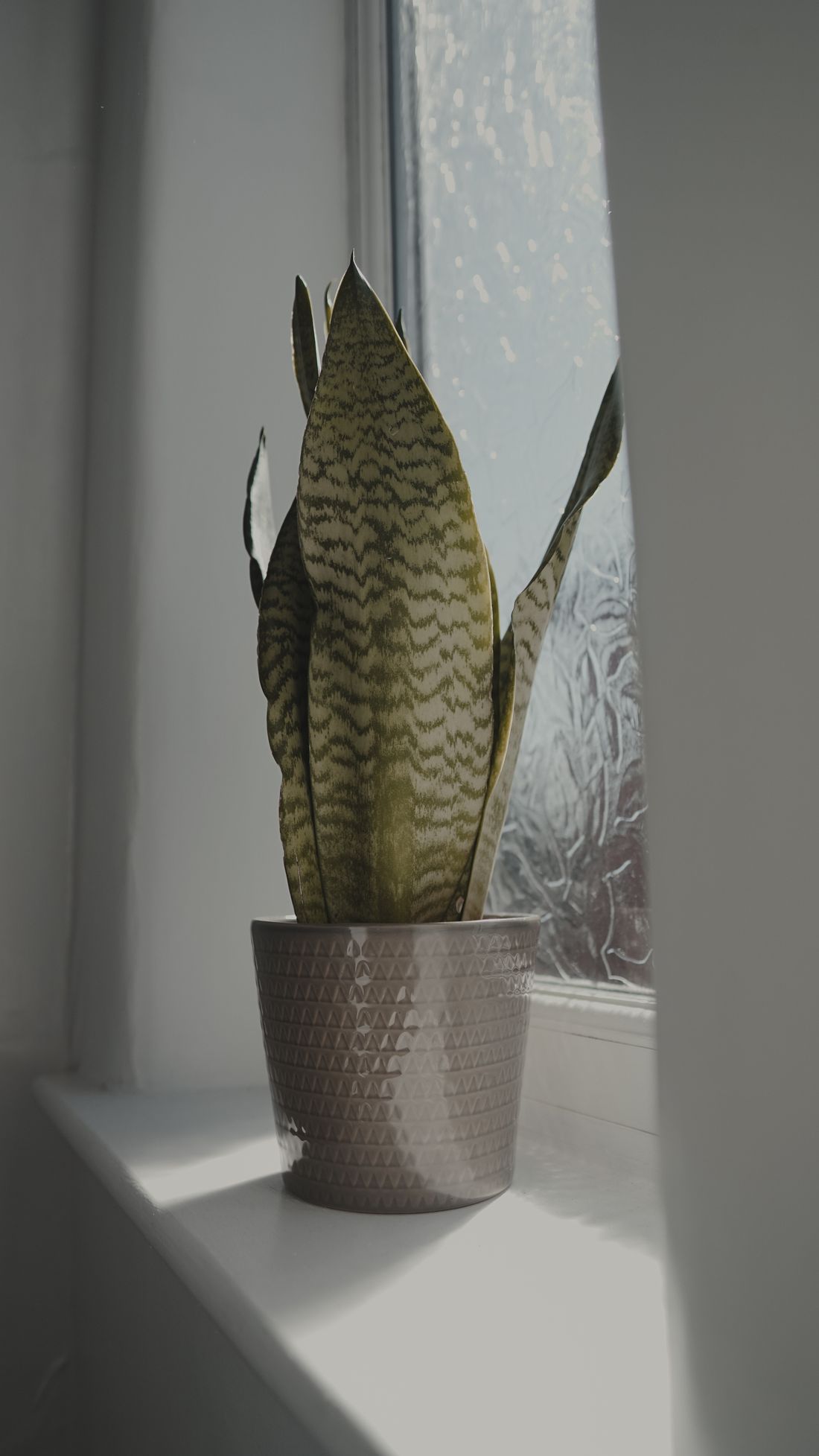
Can a snake plant live outside?
In warm weather and in shade. On our scores a snake plant outdoors in deep shade at 24 °C is a great fit; in open shade it reads a bit bright and comes out worth a try in mild weather; unshaded all day it reads too bright and comes out not the best at every temperature we ran. Plant Addicts moves it out only once nights stay above 50 degrees. Our scores set that line a little higher: at 10 °C, 50 °F, the plant still reads not the best, at 13 °C it turns worth a try, and at 18 °C it is a great fit. For a spot you can’t picture, the free spot checker scores a snake plant against your local weather.
Published November 22, 2026
