A string of pearls reads its light just right from about 6,000 to 30,000 lux on our scores, about 557 to 2,787 foot-candles. A south sill gives it on every day of the year at latitude 40, and the band holds to about 2.1 m back from the glass. A west sill gives it to about a metre back and an east sill to about 0.6 m, and both only from late winter to autumn; a north sill reads a little dim all year. Outdoors it is a great fit in open shade or morning sun and reads a bit bright in sun all day. Most of the other trailing succulents sold as strings share its band; the string of turtles, which is a peperomia, sits a band lower. The card below is a string of pearls right on a west sill at 21 °C and 40% humidity and scores 99 out of 100. The lux behind each verdict is modelled for a clear day from the compass direction, the distance and the date, not measured in your room.
Great fit
This plant should be happy in this spot.
Just the right amount of light
Comfortable temperature
Humidity suits it
Airflow suits it
Read on 23 November 2026, Google’s answer box for how much light a string of pearls needs gives bright, filtered or indirect light for about four to six hours a day, often with gentle morning sun, and places it at an east window or a few feet back from a south or west one. It adds that outdoors, partial shade is safer than strong afternoon sun. On our scores a few feet back from a south window is inside the band all year; an east sill is too, but only from March to September at latitude 40.
Which window is best for a string of pearls?
South, from the glass to about 2 m in. Here is a string of pearls at seven spots, without a date:
| Where it stands | Estimated light | What the light is doing | Verdict |
|---|---|---|---|
| North sill, against the glass | 3,640 lux | A little dim, but workable | Worth a try, 65/100 |
| East sill, against the glass | 6,500 lux | Just the right amount of light | Great fit, 98/100 |
| 1 m back from an east window | 5,000 lux | A little dim, but workable | Worth a try, 67/100 |
| West sill, against the glass | 7,800 lux | Just the right amount of light | Great fit, 99/100 |
| South sill, against the glass | 13,000 lux | Just the right amount of light | Great fit, 100/100 |
| 3 m back from a south window | 3,969 lux | A little dim, but workable | Worth a try, 66/100 |
| Outdoors, unshaded all day | 50,000 lux | A bit bright, but workable | Worth a try, 66/100 |
Given dates, at latitude 40 a south sill holds the band on every day of the year; a metre back it reads a little dim only from 29 May to 14 July, when the summer sun stands high, and two metres back from 30 March to 12 September and again from 11 to 30 December. A west sill is a great fit from 21 February to 19 October and an east sill from 12 March to 30 September; the rest of the year both read a little dim, and a north sill reads a little dim on every day. The pages we read describe the same windows in words:
| Who publishes it | What it says a string of pearls needs | What the figure is |
|---|---|---|
| plants.ces.ncsu.edu | Direct sunlight only part of the day, 2-6 hours | Its light category: partial shade |
| plants.ces.ncsu.edu | bright, indirect sunlight | Where indoor plants flourish |
| lovethatleaf.co.nz | a good 4+ hours direct sunlight daily | What it needs indoors (a New Zealand page) |
| plantura.garden | at least 6 hours of indirect light a day | What it needs |
| delineateyourdwelling.com | Bright, indirect light (4–8 hours/day) | What it needs; avoid harsh direct sun |
| delineateyourdwelling.com | East-facing windows that gets morning sun | With shade in the afternoon |
| delineateyourdwelling.com | a south-facing window with sheer curtains | Ideal, with the curtains diffusing the light |
| succulentplantcare.com | a few inches away from the window | Where to move it to lessen the intensity of the sun |
The pages split on direct sun. Love That Leaf wants four hours or more of it indoors, while Plantura asks for indirect light and Delineate Your Dwelling warns off harsh direct sun; NC State Extension files the plant under partial shade, two to six hours of direct sun a day, and says indoor plants flourish in bright, indirect light. Our scores rate how bright a spot is, not for how long, and no window indoors reaches the bright end of the band: a south sill is a great fit and stays one, and Succulent Plant Care’s few inches back from the glass costs nothing there. The east window the answer box puts first is right only in the brighter half of the year, and only within about 0.6 m of the glass; in midwinter a south sill is the one window that holds the band.
Does a string of turtles need as much light?
No, and it is the odd one out among the strings. Here are five trailing plants a metre back from the same east window:
| The plant | What the light is doing | Verdict |
|---|---|---|
| Burro’s tail (Sedum morganianum) | A little dim, but workable | Worth a try, 67/100 |
| String of pearls (Senecio rowleyanus) | A little dim, but workable | Worth a try, 67/100 |
| String of bananas (Curio radicans) | A little dim, but workable | Worth a try, 67/100 |
| String of hearts (Ceropegia woodii) | A little dim, but workable | Worth a try, 67/100 |
| String of turtles (Peperomia prostrata) | Just the right amount of light | Great fit, 99/100 |
The burro’s tail, the string of pearls, the string of bananas and the string of hearts read worth a try, a little dim, at about 5,000 lux; the string of turtles is a great fit. NC State Extension’s plant toolbox draws the same line for the turtles, filing it under dappled sunlight and partial shade and saying it can tolerate low light, while the string of pearls and the string of bananas get partial shade only. It disagrees with our data in two places: it gives the burro’s tail full sun as well, a step above the pearls, and the string of hearts dappled sunlight, a step below, where our data keeps both in the pearls’ band.
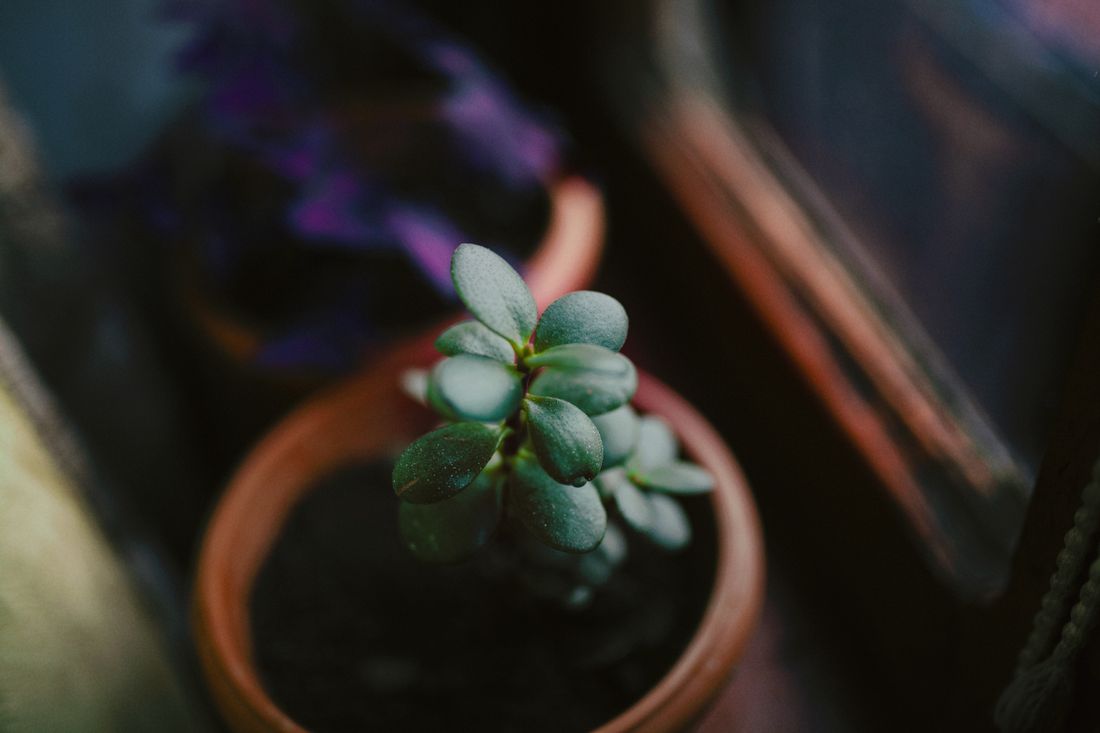
What temperature and humidity does a string of pearls like?
Room temperature, and it takes a cool winter. On our scores a string of pearls is a great fit from 16 to 28 °C (about 61 to 82 °F), worth a try from 10 to 15.9 °C, and not the best below 10 °C, 50 °F; above 33 °C, about 91 °F, it reads too hot. NC State’s 70 to 80 °F for summer sits inside the great fit, and its 50 to 60 °F for winter reads worth a try, a little cool: our scores rate one temperature at a time, so a season of cooler rest isn’t something they weigh. Its humidity reads just right from 30 to 60%, a little humid from 61 to 75% and too humid from 76%. For a spot you can’t picture, the free spot checker scores a string of pearls against your local weather.
Published November 23, 2026
